Educating Deaf Children: Becoming an Empowered Teacher (Coursera)

Educating Deaf Children: Becoming an Empowered Teacher (Coursera)

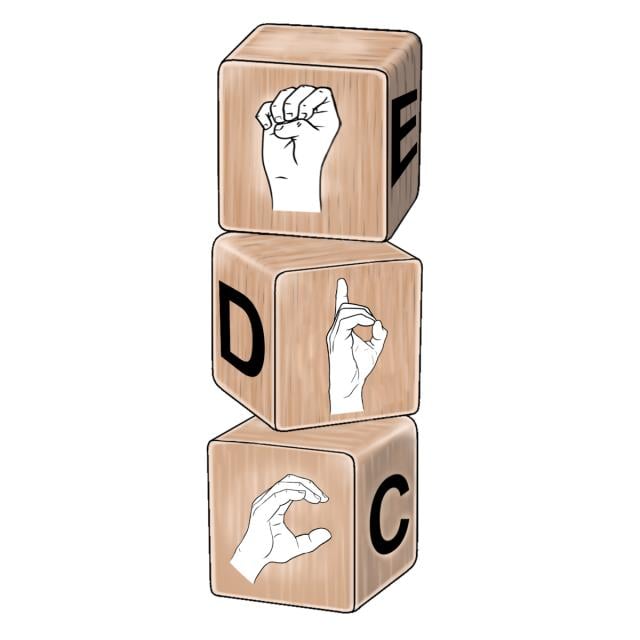
Many Deaf children around the world still leave school functionally illiterate. In some cases there is no allowance made for education of Deaf children at all. This 4 week course provides you with invaluable knowledge and skills about teaching Deaf children. You will learn about the importance of Deaf culture and community, the need for a language rich environment for the Deaf child from as young as possible, and that having access to sign language can help Deaf children academically, emotionally, and socially.

Class Deals by MOOC List - Click here and see Coursera's Active Discounts, Deals, and Promo Codes.

We also cover various accommodations and modifications that you can apply in your classroom and learning environment to create an accessible learning experience for Deaf children. You will also find that a shift in attitude will enable you to connect with Deaf children with more understanding. We hope that through this course you become an empowered teacher - for yourself, for your fellow teachers, and most importantly, for the Deaf children in your classroom.
You will be able to purchase a Verified Certificate if you wish to show evidence of your achievements, but this is optional, and you may apply for Financial Aid if you are unable to pay the certificate fee.

Syllabus

WEEK 1
The experience of being Deaf and how it impacts learning
Welcome to the first week of the course! In this week, you will be finding out about the experience of being Deaf from school children who participated in the TEDI research project as well as from three Deaf guest presenters. Being Deaf impacts learning and it is important to start the course with this awareness. The assessment in this week is a graded quiz at the end of the week. You will also have an opportunity to share some of your thoughts and reflections in the discussion forum. We hope you enjoy the first week of the course!

WEEK 2
The role of teachers in developing resilience in Deaf children
The second week in this course focuses on knowledge about the Deaf child's communication, emotional, and social development. This type of knowledge is crucial for teachers working with Deaf children, as it can inform teaching practices and greatly contribute to becoming an empowered teacher. In this week, you will hear from various experts, such as a counselor, an occupational therapist, and an audiologist, who will share their knowledge and experiences regarding Deaf children's development. At the end of this week there is a graded quiz and an opportunity for reflection through discussion. This week also includes an optional Honors lesson with a written assignment that will be reviewed by your peers.

WEEK 3
Creating an accessible learning experience
Welcome to the third week of the course! In this week, we will look at creating classroom and learning experiences that are accessible to Deaf children. We know that every child has a right to quality education and in the previous two weeks you have learnt about the barriers to learning that Deaf children face and how excluded they often are from education. The content we bring to you in this week will show you how you can ensure that Deaf children are able to access learning by making your classroom, teaching methods, and assessments accessible. This week includes a graded quiz at the end of the week. You will also have an opportunity to share your reflections and experiences with your peers in the discussion forum at the end of the week.

WEEK 4
Becoming an empowered teacher
Welcome to the last week of the course! Your journey to becoming an empowered teacher is ending. We hope that you have learnt valuable new practices in the previous three weeks. In this last week, the guest presenters discuss some internal and external aspects that you as teachers of Deaf children can focus on that can help you become a stronger and more effective teacher. These aspects include taking care of yourself, building support around you, working with teaching assistants, and collaborating with parents. By the end of the week, you will have completed your journey to becoming an empowered teacher and you will have an opportunity to reflect on the knowledge that you have gained through a written assignment that will be reviewed by your peers. You will also be able to share some reflections and final thoughts with your peers in the discussion forum at the end of the week.
Go to Class
MOOC List is learner-supported. When you buy through links on our site, we may earn an affiliate commission.

Related Courses

Teaching LGBTQ+ Health (Coursera) Coursera
Stanford University

Teaching LGBTQ+ Health (Coursera)

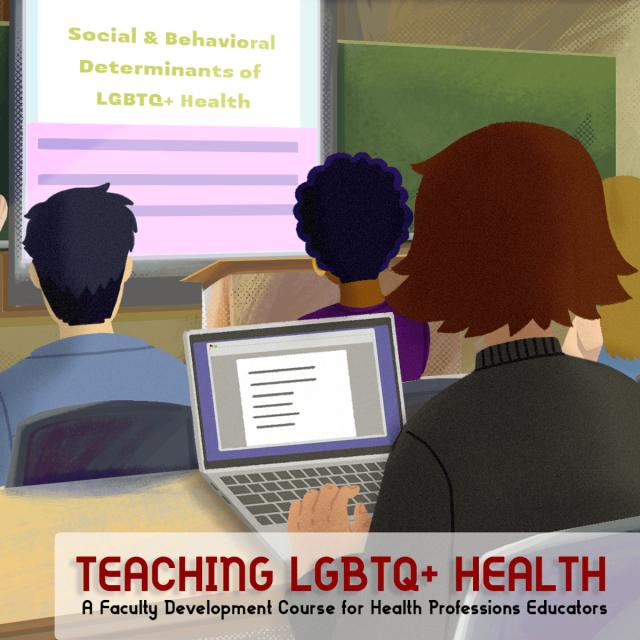
This curriculum is designed for faculty members and health professions educators. The course goals are to improve your knowledge, teaching skills, and attitudes pertaining to the provision of health care to LGBTQ+ patients.e.g. This is primarily aimed at first- and second-year undergraduates interested in engineering or science, along with high school students and professionals with an interest in programming.

Aug 17th 2026
2 Weeks
Introduction to EdTech (Coursera) Coursera
EDHEC Business School

Introduction to EdTech (Coursera)

Co-developed by Supercharger Ventures and EDHEC Business School. EdTech, short for Education Technology, is one of the most exciting sectors in the economy today poised to re-shape how education systems work and how people learn around the world. Introduction to EdTech MOOC is designed to explore EdTech fundamentals and build the foundational knowledge for educators, institutions, entrepreneurs and governments to appreciate the impact and potential of new tools, technologies, business models and learning methods in education.

Aug 17th 2026
4 Weeks
Studying at Japanese Universities (Coursera) Coursera
The University of Tokyo

Studying at Japanese Universities (Coursera)

Are you interested in studying at Japanese universities? Do you want to learn about Japan’s university application and enrollment processes, as well as the types of programs on offer? This course will help you to both discover great programs offered by different Japanese universities and prepare a study plan through project-based learning. We introduce a number of options to match a variety of goals, from full degree to non-degree programs, programs taught in English, as well as short-term programs in Japan. During the course, international students at UTokyo will provide you with useful information and advice to start you on the path to studying in Japan.

Aug 10th 2026
4 Weeks
THINK GLOBAL: TEACHERS TRAINING COURSE (IDP-ICE) (Coursera) Coursera
University of Barcelona

THINK GLOBAL: TEACHERS TRAINING COURSE (IDP-ICE) (Coursera)

A group of seven European partners from Catalonia, Belgium, and Wales worked together on the Erasmus+ funded ‘Think Global’ project on global competence. The project seeks to address the following research question through development and piloting of practical classroom activities: What is global competence, and how can it be learned effectively?

Aug 17th 2026
5-12 Weeks
Critical Issues in Urban Education (Coursera) Coursera
University of Chicago

Critical Issues in Urban Education (Coursera)

Urban school reform in the United States is characterized by contentious, politicized debate. This course explores a set of critical issues in the education and educational reform space, with a focus on aspects of the field that have sparked controversy and polarized views. We will dig into these debates, situating them within the larger history of public education and school reform, and considering the viewpoints, the evidence, and translation of issues into educational policy.

Aug 17th 2026
5-12 Weeks
Resilient Teaching Through Times of Crisis and Change (Coursera) Coursera
University of Michigan

Resilient Teaching Through Times of Crisis and Change (Coursera)

Resilient teaching is the ability to facilitate learning experiences that are designed to be adaptable to fluctuating conditions and disruptions. This teaching ability can be seen as an outcome of a design approach that attends to the relationship between learning goals and activities, and the environments they are situated in. Resilient teaching approaches take into account how a dynamic learning context may require new forms of interactions between teachers, students, content, and tools. Additionally, they necessitate the capacity to rethink the design of learning experiences based on a nuanced understanding of context.

Aug 17th 2026
4 Weeks
e-Learning Ecologies: Innovative Approaches to Teaching and Learning for the Digital Age (Coursera) Coursera
University of Illinois at Urbana-Champaign

e-Learning Ecologies: Innovative Approaches to Teaching and Learning for the Digital Age (Coursera)

For three decades and longer we have heard educators and technologists making a case for the transformative power of technology in learning. However, despite the rhetoric, in many ways and at most institutional sites, education is still relatively untouched by technology. Even when technologies are introduced, the changes sometimes seem insignificant and the results seem disappointing. If the print textbook is replaced by an e-book, do the social relations of knowledge and learning necessarily change at all or for the better?

Aug 10th 2026
4 Weeks
Assessing Achievement with the ELL in Mind (Coursera) Coursera
Arizona State University

Assessing Achievement with the ELL in Mind (Coursera)

In this course, you will learn how to design assessments around the needs of your ELL students and their language level. You will learn how to incorporate language and content requirements for both formative and summative assessment types. You will learn to assess your ELL students through the use of project and task-based assignments.

Aug 10th 2026
5-12 Weeks
Try RRI! A guide for Responsible Research and Innovation (Coursera) Coursera
University of Amsterdam

Try RRI! A guide for Responsible Research and Innovation (Coursera)

In this online course you will learn how to apply Responsible Research and Innovation (RRI) in your own work. First by understanding why it is important to act responsibly in your research and innovation processes at all. In a second step, you will get introduced to several tools that will help make your own work in research and/or innovation more aware by introducing concepts of RRI.

Aug 17th 2026
3 Weeks
Copyright for Educators & Librarians (Coursera) Coursera
Duke University,Emory University,University of North Carolina at Chapel Hill

Copyright for Educators & Librarians (Coursera)

Fear and uncertainty about copyright law often plagues educators and sometimes prevents creative teaching. This course is a professional development opportunity designed to provide a basic introduction to US copyright law and to empower teachers and librarians at all grade levels. Course participants will discover that the law is designed to help educators and librarians.

Aug 17th 2026
5-12 Weeks
Claves para la innovación en la docencia universitaria (Coursera) Coursera
University of Barcelona

Claves para la innovación en la docencia universitaria (Coursera)

Claves para la innovación en la docencia universitaria forma parte de la dimensión docente del proyecto TO INN sobre la innovación en las instituciones de educación superior y, se centra específicamente, en aquellas que forman a futuros maestros y maestras, aunque, por sus características, es un curso abierto a muchos públicos.

Aug 17th 2026
5-12 Weeks