Powerful Tools for Teaching and Learning: Digital Storytelling (Coursera)

Powerful Tools for Teaching and Learning: Digital Storytelling (Coursera)

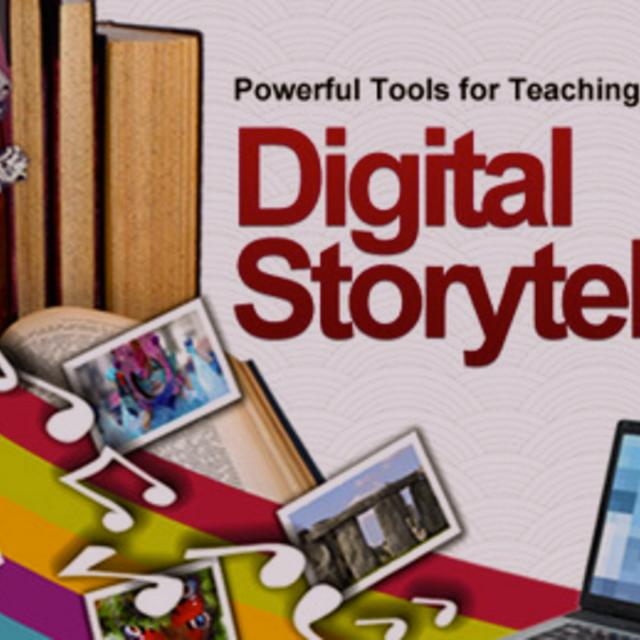
Powerful Tools for Teaching and Learning: Digital Storytelling introduces educators to digital storytelling and explores ways to use digital stories to enhance students’ learning experiences. The course is designed to be comprehensive yet fundamental. By comprehensive we mean that the course provides a solid foundation for all of the components of a digital story and illustrates these components with tutorials, example stories, and links to additional readings. The course also provides a hands-on opportunity for learners to create their own digital stories. The course is fundamental because it covers the basic process of creating a digital story starting with just a simple script and as little as one image.

Class Deals by MOOC List - Click here and see Coursera's Active Discounts, Deals, and Promo Codes.

This course is intended for K-12 teachers in all disciplines, although it is open to anyone with an interest in digital storytelling. Course participants will use WeVideo, a free web-based video editing program, to create a digital story that could be shared both online and with students in the classroom. Teachers in the state of Texas may be eligible to receive Continuing Professional Education units if they complete the major requirements of the course.

Syllabus

WEEK 1
Choosing a Topic and Defining your Purposes
Week 1 introduces you to the basics of digital storytelling. You will explore the fundamental elements of a good digital story and review examples used by educators across a varied curriculum. By the end of this week, you will be able to choose a topic and define the purpose of a digital story you will create for your classroom or informal learning setting. You may access the course materials for this week from the links below, or from the navigation bar on the left side of this page.

WEEK 2
Writing an Effective Script and Creating a Storyboard
In Week 2, we will focus on scriptwriting, storyboarding, and Creative Commons. We will begin by discussing the steps in developing and writing a script for the digital story you will create in this course.We will explore the basic elements of the script,such as introduction, character development, tension and resolution that are necessary in developing a script. Then, we will also examine the importance of selecting appropriate images and creating a storyboard. In Week 2, you will learn not only the functions and the sequences of a storyboard, but also the most useful ways to locate images, such as using photos taken with a digital camera and images downloaded from the internet based on the size, quality, type and usage rights. A step-by-step approach will be used to illustrate how these images can support your own script as a part of creating a digital story. By the end of this week, you will begin to understand the important steps and elements of scriptwriting, and be able to envision your story's script in a visually interesting storyboard.

WEEK 3
In week 3, we will focus on how you can record audio narration that will be used in your digital story. We will examine some of the most common types of microphones and recording devices that you can use to record the script you wrote. We will also demonstrate how to record and edit your digital audio files using Audacity, free audio recording software available for Windows and Macintosh computers. Of course, if you prefer, you may use any audio editing program to record and/or edit your narration. The important thing to remember is that recording your own voice is a key component of the digital storytelling process since it explains the information you are presenting and provides a personal touch to your story. We feel strongly that this part of the process should not be overlooked.This week, we will also explore how you can find and download appropriate music that supports the theme of your story. We will focus on music that is in the public domain or is free of copyright restrictions so that it can be used in your digital story legally and at no cost.

WEEK 4
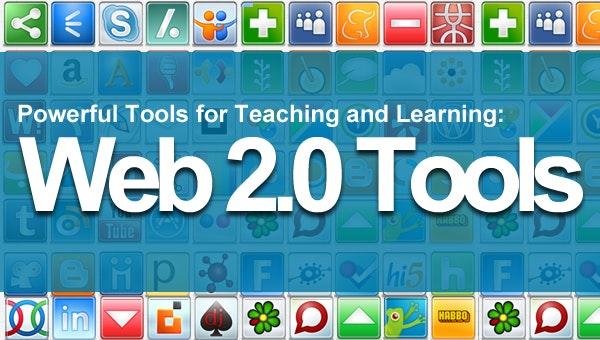
In Week 4, we will explore how to assemble all of the elements (text, images, narration, and if you choose, music and/or video clips) to create the final version of your digital story and publish it online. You may use any video editing software program of your choice, and you may find a list of software options, Web 2.0 tools, and mobile apps, on the Educational Uses of Digital Storytelling website.

WEEK 5
In Week 5, you will reflect on what you have learned in this course, how you dealt with each component of the digital storytelling process and discuss the challenges you faced, as well as how you dealt with these challenges in creating your digital story.In addition, you will have the option of revising the final version of your digital story based on the feedback you received. Please note that you may choose to use the version of your digital story that you submitted in the previous week as the final version. If this is the case, you do not need to revise your digital story, but you should still complete the Final Digital Story Assessment as one of this week’s assignments.

Go to Class
MOOC List is learner-supported. When you buy through links on our site, we may earn an affiliate commission.

Related Courses

Formación docente basada en la práctica para desarrollar habilidades del siglo XXI (Coursera) Coursera
Pontificia Universidad Católica de Chile

Formación docente basada en la práctica para desarrollar habilidades del siglo XXI (Coursera)

El curso presenta, en primer lugar, las habilidades del siglo XXI y su relevancia para la formación docente con el fin de preparar docentes para la sociedad del conocimiento, capaces de pensar de manera crítica y creativa y con habilidades de comunicación y colaboración para promover oportunidades de aprendizaje equitativas y de calidad en los contextos escolares. En segundo lugar, se discute sobre el enfoque basado en la práctica para la formación docente y la necesidad de ofrecer andamiajes que les permitan a los docentes aprender a poner en acto prácticas generativas complejas que requieren conocimientos especializados.

Aug 17th 2026
5-12 Weeks
Usos didácticos del cine: Introducción al análisis (Coursera) Coursera
Universidad Nacional Autónoma de México

Usos didácticos del cine: Introducción al análisis (Coursera)

¡Hola! Bienvenido al MOOC "Usos Didácticos del Cine: Introducción al Análisis", ofrecido por la UNAM. A lo largo de este curso, te presentaremos varias formas de usar películas en tus clases para mejorar el rendimiento de tus estudiantes. Además, podrás acceder a una variedad de herramientas y marcos conceptuales referentes a la teoría del cine válidos para poder usar con más conocimientos cualquier obra cinematográfica en el aula.

Aug 10th 2026
5-12 Weeks
Copyright for Educators & Librarians (Coursera) Coursera
Duke University,Emory University,University of North Carolina at Chapel Hill

Copyright for Educators & Librarians (Coursera)

Fear and uncertainty about copyright law often plagues educators and sometimes prevents creative teaching. This course is a professional development opportunity designed to provide a basic introduction to US copyright law and to empower teachers and librarians at all grade levels. Course participants will discover that the law is designed to help educators and librarians.

Aug 17th 2026
5-12 Weeks
Assessing Achievement with the ELL in Mind (Coursera) Coursera
Arizona State University

Assessing Achievement with the ELL in Mind (Coursera)

In this course, you will learn how to design assessments around the needs of your ELL students and their language level. You will learn how to incorporate language and content requirements for both formative and summative assessment types. You will learn to assess your ELL students through the use of project and task-based assignments.

Aug 10th 2026
5-12 Weeks
Innovative Teaching with ChatGPT (Coursera) Coursera
Vanderbilt University

Innovative Teaching with ChatGPT (Coursera)

Despite what you may have heard, ChatGPT offers exciting possibilities for supporting innovative teaching and personalized education. This course provides practical techniques that any educator, from K-12 to higher education, can use to help support their teaching. No experience with ChatGPT, prompt engineering, or Generative AI is required.

Aug 17th 2026
1 Week
Healthcare Information Design and Visualizations (Coursera) Coursera
Northeastern University

Healthcare Information Design and Visualizations (Coursera)

Introduces processes and design principles for creating meaningful displays of information that support effective business decision-making. Studies how to collect and process data; create visualizations (both static and interactive); and use them to provide insight into a problem, situation, or opportunity. Introduces methods to critique visualizations along with ways to answer the elusive question: “What makes a visualization effective?”

Aug 10th 2026
4 Weeks
Introducción al Aprendizaje Universitario (Coursera) Coursera
Pontificia Universidad Católica de Chile

Introducción al Aprendizaje Universitario (Coursera)

Este es un MOOC introductorio al aprendizaje universitario, a través del cual, el estudiante podrá conocer aspectos fundamentales que intervienen en el aprendizaje y rendimiento académico universitario. Representa a la vez una oportunidad para reflexionar sobre el propio quehacer académico como estudiante, así como una instancia para conocer distintas herramientas que promueven mejores prácticas en el contexto del estudio.

Aug 10th 2026
5-12 Weeks
Exploring Light: Hands-on Activities and Strategies for Teachers (Coursera) Coursera
Exploratorium

Exploring Light: Hands-on Activities and Strategies for Teachers (Coursera)

This is an Exploratorium teacher professional development course taught by Teacher Institute staff, open to any science teacher (particularly middle or high school level) and science enthusiast. This is a hands-on workshop that explores topics and strategies teachers can use to help their students become active investigators of light.

Aug 9th 2026
4 Weeks
Engaging ELLs and Their Families in the School and Community (Coursera) Coursera
Arizona State University

Engaging ELLs and Their Families in the School and Community (Coursera)

In this course, you will learn how to better and more successfully engage your ELL(s) and their families in the school and community. You will learn how to engage your ELL student in the classroom setting as well as in various aspects of the school including extracurricular activities and the inner workings of the school and education system. You will also be introduced to strategies for engaging the families of your ELL students in the school community and the wider community of your city and state.

Aug 10th 2026
5-12 Weeks
Visualization for Data Journalism (Coursera) Coursera
University of Illinois at Urbana-Champaign

Visualization for Data Journalism (Coursera)

While telling stories with data has been part of the news practice since its earliest days, it is in the midst of a renaissance. Graphics desks which used to be deemed as “the art department,” a subfield outside the work of newsrooms, are becoming a core part of newsrooms’ operation. Those people (they often have various titles: data journalists, news artists, graphic reporters, developers, etc.) who design news graphics are expected to be full-fledged journalists and work closely with reporters and editors.

Aug 10th 2026
5-12 Weeks
Foundational Skills for Communicating About Health (Coursera) Coursera
University of Michigan

Foundational Skills for Communicating About Health (Coursera)

Effective communication is a core skill that nearly every health professional will need and use during their careers. Yet, few health professionals receive even basic training in how to design communications to be clear and successful. As “foundational skills,” the content in this course can be applied to both oral and written communication, within and beyond health.

Aug 10th 2026
5-12 Weeks
La enseñanza de las Ciencias Naturales en la escuela primaria (Coursera) Coursera
Universidad Austral

La enseñanza de las Ciencias Naturales en la escuela primaria (Coursera)

Los científicos y las científicas son “aprendices profesionales”: se dedican a formular preguntas, encontrar observaciones discordantes, poner en duda aquello que no cierra y construir nuevas respuestas que permitan entender mejor el mundo en que vivimos. En este curso, desarrollarás las estrategias necesarias para lograr que tus estudiantes aprendan no sólo conocimientos científicos conceptuales sino también aquellas herramientas que les permitan investigar el mundo que los rodea, de modo similar a como hacen los científicos y científicas.

Aug 10th 2026
4 Weeks