Training and Learning Programs for Volunteer Community Health Workers (Coursera)

Training and Learning Programs for Volunteer Community Health Workers (Coursera)

Volunteer community health workers (CHWs) are a major strategy for increasing access to and coverage of basic health interventions. Our village health worker training course reviews the process of training and continuing education of CHWs as an important component of involving communities in their own health service delivery. Participants will be guided through the steps of planning training and continuing education activities for village volunteers. The course draws on real-life examples from community-directed onchocerciasis control, village health worker programs, community case management efforts, peer educators programs and patent medicine vendor training programs, to name a few.

Class Deals by MOOC List - Click here and see Coursera's Active Discounts, Deals, and Promo Codes.

Syllabus

WEEK 1
Getting Started
In this module, we will focus on the principles of learning, as well as approaching the health service and the community. There will almost be a quiz covering the first two lectures.

WEEK 2
Diagnosing Needs and Identifying Objectives
In this module, we will focus on what information we will need to begin training and planning, as well as cover content, objectives, and SMART objectives. There will be a quiz covering lectures 3-4 after completing the lectures in this module. You will also begin to create your rough draft of your plan in the Course Project.

WEEK 3
Selecting Training Methods, Materials, and Resources
In this module, we will focus on a variety of methods, training logistics, and educational materials. There will be a quiz that covers lecture 5-6 to after completing these lectures in this module.

WEEK 4
Monitoring Implementation
In this module, we will focus on monitoring, as well as look at a sample community volunteer session. There will be a quiz covering lectures 7-8 after completing the lectures in this module. You will also be able to revise your rough draft in the Course Project section of this module.

WEEK 5
Program Evaluation and Follow-Up
In this module, we will focus on evaluation, performance, and supervision. There will be a quiz covering lectures 9-10 after completing the lectures in this module.

WEEK 6
Wrap-Up & Course Project
In this module, you will submit your final draft of your plan and wrap-up the course.
Go to Class
MOOC List is learner-supported. When you buy through links on our site, we may earn an affiliate commission.

Related Courses

Psychological First Aid (Coursera) Coursera
Johns Hopkins University

Psychological First Aid (Coursera)

Learn to provide psychological first aid to people in an emergency by employing the RAPID model: Reflective listening, Assessment of needs, Prioritization, Intervention, and Disposition. Utilizing the RAPID model (Reflective listening, Assessment of needs, Prioritization, Intervention, and Disposition), this specialized course provides perspectives on injuries and trauma that are beyond those physical in nature. The RAPID model is readily applicable to public health settings, the workplace, the military, faith-based organizations, mass disaster venues, and even the demands of more commonplace critical events, e.g., dealing with the psychological aftermath of accidents, robberies, suicide, homicide, or community violence.

Oct 5th 2026
5-12 Weeks
Whole genome sequencing of bacterial genomes - tools and applications (Coursera) Coursera
Technical University of Denmark - DTU

Whole genome sequencing of bacterial genomes - tools and applications (Coursera)

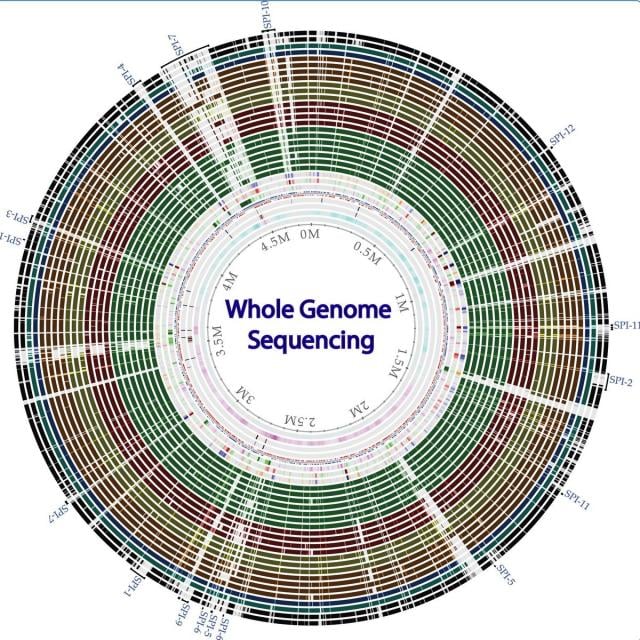
This course will cover the topic of Whole genome sequencing (WGS) of bacterial genomes which is becoming more and more relevant for the medical sector. WGS technology and applications are high on international political agenda, as the classical methods are being replaced by WGS technology and therefore bioinformatic tools are extremely important for allowing the people working in this sector to be able to analyze the data and obtain results that can be interpreted and used for different purposes.

Oct 5th 2026
5-12 Weeks
Introduction to Systems Biology (Coursera) Coursera
Icahn School of Medicine at Mount Sinai

Introduction to Systems Biology (Coursera)

This course will introduce the student to contemporary Systems Biology focused on mammalian cells, their constituents and their functions. Biology is moving from molecular to modular. As our knowledge of our genome and gene expression deepens and we develop lists of molecules (proteins, lipids, ions) involved in cellular processes, we need to understand how these molecules interact with each other to form modules that act as discrete functional systems.

Oct 5th 2026
5-12 Weeks
Teaching Children with Visual Impairment: Creating Empowering Classrooms (Coursera) Coursera
University of Cape Town

Teaching Children with Visual Impairment: Creating Empowering Classrooms (Coursera)

In the education of children with visual impairment, there is at present a global movement away from segregated special schooling, and towards inclusive neighbourhood schools. Inclusion provides an opportunity for everyone, teachers as well as learners, to become more acquainted about life with visual impairment and to overcome some of the barriers of difference which have existed in the past. But if it is to be successful, teachers and others require key skills and insights in order to create classroom environments which fully accommodate the learning needs of children with visual impairment.

Oct 5th 2026
4 Weeks
The Oral Cavity: Portal to Health and Disease (Coursera) Coursera
University of Pennsylvania

The Oral Cavity: Portal to Health and Disease (Coursera)

This course will focus on the interprofessional realtionship of dentistry and medicine. For each session, the medical specialist will present a broad overview of specific disease entity which will be followed by a dental educator discussing the relevant oral manifestations and implications. The final module of each session will be devoted to the interaction between the dental and other health care professionals.

Oct 5th 2026
5-12 Weeks
Assessing Achievement with the ELL in Mind (Coursera) Coursera
Arizona State University

Assessing Achievement with the ELL in Mind (Coursera)

In this course, you will learn how to design assessments around the needs of your ELL students and their language level. You will learn how to incorporate language and content requirements for both formative and summative assessment types. You will learn to assess your ELL students through the use of project and task-based assignments.

Oct 5th 2026
5-12 Weeks
Studying at Japanese Universities (Coursera) Coursera
The University of Tokyo

Studying at Japanese Universities (Coursera)

Are you interested in studying at Japanese universities? Do you want to learn about Japan’s university application and enrollment processes, as well as the types of programs on offer? This course will help you to both discover great programs offered by different Japanese universities and prepare a study plan through project-based learning. We introduce a number of options to match a variety of goals, from full degree to non-degree programs, programs taught in English, as well as short-term programs in Japan. During the course, international students at UTokyo will provide you with useful information and advice to start you on the path to studying in Japan.

Oct 5th 2026
4 Weeks
e-Learning Ecologies: Innovative Approaches to Teaching and Learning for the Digital Age (Coursera) Coursera
University of Illinois at Urbana-Champaign

e-Learning Ecologies: Innovative Approaches to Teaching and Learning for the Digital Age (Coursera)

For three decades and longer we have heard educators and technologists making a case for the transformative power of technology in learning. However, despite the rhetoric, in many ways and at most institutional sites, education is still relatively untouched by technology. Even when technologies are introduced, the changes sometimes seem insignificant and the results seem disappointing. If the print textbook is replaced by an e-book, do the social relations of knowledge and learning necessarily change at all or for the better?

Oct 5th 2026
4 Weeks
Critical Thinking Skills for University Success (Coursera) Coursera
The University of Sydney

Critical Thinking Skills for University Success (Coursera)

In this course, you will learn how to develop your Critical Thinking Skills to help you achieve success in your university studies. After completing this course, you will be able to: 1. Use critical thinking and argumentation in university contexts to improve academic results ; 2. Understand the importance and function of critical thinking in academic culture ; 3. Use a variety of thinking tools to improve critical thinking ; 4. Identify types of argument, and bias within arguments, in order to better evaluate the strength of arguments; 5. Use evidence to support claims in arguments ; 6. Apply critical thinking and argumentation to real world problems and issues

Oct 5th 2026
5-12 Weeks
Systems Thinking In Public Health (Coursera) Coursera
Johns Hopkins University

Systems Thinking In Public Health (Coursera)

This course provides an introduction to systems thinking and systems models in public health. Problems in public health and health policy tend to be complex with many actors, institutions and risk factors involved. If an outcome depends on many interacting and adaptive parts and actors the outcome cannot be analyzed or predicted with traditional statistical methods. Systems thinking is a core skill in public health and helps health policymakers build programs and policies that are aware of and prepared for unintended consequences.

Oct 5th 2026
4 Weeks