EdX

Simulating a Hippocampus Microcircuit (edX)

Simulating a Hippocampus Microcircuit (edX)

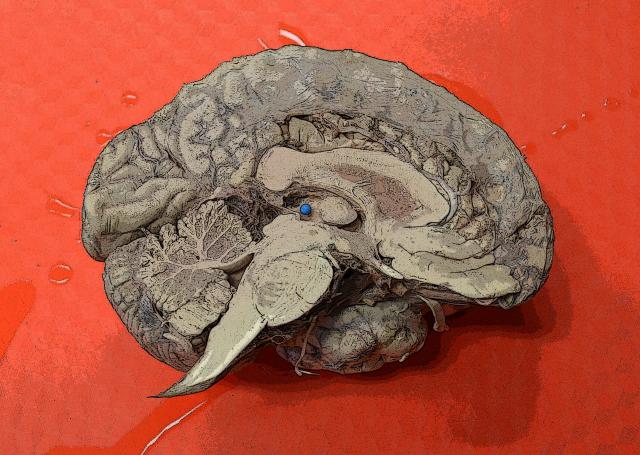
In this course, you will learn to simulate, analyze and visualize hippocampal microcircuits. You will reproduce experimental protocols “in silico” to validate simulated microcircuit behaviors, and leverage the brain simulation platform to gain insights towards parsimonious theories on brain function. Simulation Neuroscience is an emerging approach to integrate the knowledge dispersed throughout the field of neuroscience.

Class Deals by MOOC List - Click here and see EdX's Active Discounts, Deals, and Promo Codes.

The aim is to build a unified empirical picture of the brain, to study the biological mechanisms of brain function, behaviour and disease. This is achieved by integrating diverse data sources across the various scales of experimental neuroscience, from molecular to clinical, into computer simulations.
In this course, you will gain the knowledge and skills needed to analyze and simulate microcircuit models of the rodent hippocampus.
This course is part of a series of three courses, where you will learn to use state-of-the-art modeling tools of the Human Brain Project Brain Simulation Platform to simulate neurons, build neural networks, and perform your own simulation experiments. We invite you to join us and share in our passion to reconstruct, simulate and understand the brain!

What you'll learn

  • Basic properties of the hippocampus
  • Anatomy of hippocampus
  • Properties of the microcircuit
  • Analysing the connectome
  • Launch, visualize, and analyze network simulations
  • Compute and analyze the local field potential

Go to Class
MOOC List is learner-supported. When you buy through links on our site, we may earn an affiliate commission.

Related Courses

Principles of fMRI 2 (Coursera) Coursera
Johns Hopkins University,University of Colorado Boulder

Principles of fMRI 2 (Coursera)

Functional Magnetic Resonance Imaging (fMRI) is the most widely used technique for investigating the living, functioning human brain as people perform tasks and experience mental states. It is a convergence point for multidisciplinary work from many disciplines. Psychologists, statisticians, physicists, computer scientists, neuroscientists, medical researchers, behavioral scientists, engineers, public health researchers, biologists, and others are coming together to advance our understanding of the human mind and brain. This course covers the analysis of Functional Magnetic Resonance Imaging (fMRI) data.

Aug 24th 2026
4 Weeks
Behavioral Neuroscience: Contrasting Tests for Anxiety and Depression (edX) EdX
University of Alaska Fairbanks,AlaskaX

Behavioral Neuroscience: Contrasting Tests for Anxiety and Depression (edX)

In this online course, learn how to critically evaluate the use of different behavioral tests for anxiety and depression in laboratory mice, and gain a better understanding of how these tests can affect the interpretation of results in the context of mental illness and human psychiatric conditions and mouse models.

Self Paced
Self-Paced
An Introduction to Consumer Neuroscience & Neuromarketing (Coursera) Coursera
Copenhagen Business School

An Introduction to Consumer Neuroscience & Neuromarketing (Coursera)

How do we make decisions as consumers? What do we pay attention to, and how do our initial responses predict our final choices? To what extent are these processes unconscious and cannot be reflected in overt reports? This course will provide you with an introduction to some of the most basic methods in the emerging fields of consumer neuroscience and neuromarketing. You will learn about the methods employed and what they mean. You will learn about the basic brain mechanisms in consumer choice, and how to stay updated on these topics. The course will give an overview of the current and future uses of neuroscience in business.

Aug 24th 2026
5-12 Weeks
Learning and memory in the brain: a guide for teachers (edX) EdX
University of Cambridge

Learning and memory in the brain: a guide for teachers (edX)

This course will help you discover how neuroscience and psychology can help your students learn more effectively. This course provides a guided tour through the brain, looking at the changes that occur on a cellular level when we learn new information or store a memory. Using research from neuroscience and psychology, we will look at the process of storing long-term memories, and how you can help your students do this effectively.

Self Paced
Self-Paced
Advanced Neurobiology II (Coursera) Coursera
Peking University

Advanced Neurobiology II (Coursera)

Hello everyone! Welcome to advanced neurobiology! Neuroscience is a wonderful branch of science on how our brain perceives the external world, how our brain thinks, how our brain responds to the outside of the world, and how during disease or aging the neuronal connections deteriorate. We’re trying to understand the molecular, cellular nature and the circuitry arrangement of how nervous system works.

Sep 7th 2026
5-12 Weeks
Leaders of Learning (edX) EdX
HarvardX,Harvard University

Leaders of Learning (edX)

Explore and understand your own theories of learning and leadership. Gain the tools to imagine and build the future of learning. All of us carry explicit or implicit theories of learning. They manifest themselves in the ways we learn, the ways we teach, and the ways we think about leadership and learning. In Leaders of Learning, you will identify and develop your personal theory of learning, and explore how it fits into the shifting landscape of learning. This isn’t just about schools, it’s about the broader and bigger world of learning.

Self Paced
Self-Paced
Soul Beliefs: Causes and Consequences - Unit 2: Belief Systems (Coursera) Coursera
Rutgers University

Soul Beliefs: Causes and Consequences - Unit 2: Belief Systems (Coursera)

Throughout history, the vast majority of people around the globe have believed they have, however defined, a “soul.” While the question of whether the soul exists cannot be answered by science, what we can study are the causes and consequences of various beliefs about the soul and its prospects of surviving the death of the body. Why are soul and afterlife beliefs so common in human history? Are there adaptive advantages to assuming souls exist?

Aug 31st 2026
5-12 Weeks
Fundamentals of Neuroscience, Part 2: Neurons and Networks (edX) EdX
HarvardX,Harvard University

Fundamentals of Neuroscience, Part 2: Neurons and Networks (edX)

Discover what makes your brain tick in this second part of a four-part introductory series in Neuroscience. Neurons in isolation are fascinating and complicated, but the real magic of neuroscience happens in the interaction between neurons. In this course, we examine how neurons pass signals to one another and how complex dynamics can result from just a few neurons arranged in relatively simple circuits.

Self Paced
Self-Paced
Synapses, Neurons and Brains (Coursera) Coursera
Hebrew University of Jerusalem

Synapses, Neurons and Brains (Coursera)

These are very unique times for brain research. The aperitif for the course will thus highlight the present “brain-excitements” worldwide. You will then become intimately acquainted with the operational principles of neuronal “life-ware” (synapses, neurons and the networks that they form) and consequently, on how neurons behave as computational microchips and how they plastically and constantly change - a process that underlies learning and memory.

Aug 24th 2026
5-12 Weeks
Managing Addiction: A Framework for Successful Treatment (edX) EdX
University of Adelaide,AdelaideX

Managing Addiction: A Framework for Successful Treatment (edX)

Understand how to manage addiction in practice and respond effectively to clients with drug and alcohol problems. Addiction is such a common problem today that clients experiencing alcohol, nicotine or other drug problems present in many different healthcare settings. The challenge of identifying effective ways to help people experiencing addiction is a serious one, and much depends on the quality of the clinical decisions we make. This course is intended to help you meet this challenge by increasing your understanding of the biology of addiction and the available treatment options in the different stages of the recovery journey.

Self Paced
Self-Paced
The Bilingual Brain (Coursera) Coursera
University of Houston System

The Bilingual Brain (Coursera)

This course explores the brain bases of bilingualism by discussing literature relevant to differences in age of initial learning, proficiency, and control in the nonverbal, single language and dual-language literature. Participants will learn about the latest research related to how humans learn one or two languages and other cognitive skills.

Sep 7th 2026
5-12 Weeks
Managing Happiness (edX) EdX
HarvardX,Harvard University

Managing Happiness (edX)

Managing Happiness encourages you to explore the science of happiness, allowing you to find your truest self. Through cutting-edge survey tools, the best research, and trends in social science, neuroscience, and philosophy to help learners unlock the strategies to create a more purposeful life, full of long-lasting enjoyment and satisfaction.

Self Paced
Self-Paced