Introduction to Neurohacking In R (Coursera)

Introduction to Neurohacking In R (Coursera)

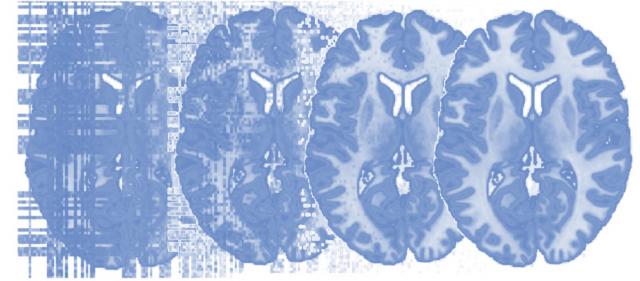
Neurohacking describes how to use the R programming language and its associated package to perform manipulation, processing, and analysis of neuroimaging data. We focus on publicly-available structural magnetic resonance imaging (MRI). We discuss concepts such as inhomogeneity correction, image registration, and image visualization.

Class Deals by MOOC List - Click here and see Coursera's Active Discounts, Deals, and Promo Codes.

By the end of this course, you will be able to:

  • Read/write images of the brain in the NIfTI (Neuroimaging Informatics Technology Initiative) format
  • Visualize and explore these images
  • Perform inhomogeneity correction, brain extraction, and image registration (within a subject and to a template).

Course 4 of 4 in the Neuroscience and Neuroimaging Specialization.

Syllabus

WEEK 1
Introduction

WEEK 2
Neuroimaging: Formats and Visualization
In this section, we will discuss different formats that brain images come in, as well as some of the commonly done magnetic resonance imaging (MRI) scans.

WEEK 3
Image Processing
In this section, we will discuss the steps done to process brain MRI data. We will discuss inhomogeneity correction, brain extraction or skull stripping, and various image registration techniques.

WEEK 4
Extended Image Processing
In this section, we will discuss the different types of registration and how one would go through processing a multi-sequence MRI scan, as well as wrapper functions that make the process much easier. We also cover interactive exploration of brain image data and tissue-level (white/gray matter and cerebrospinal fluid (CSF)) segmentation from a T1-weighted image.

Go to Class
MOOC List is learner-supported. When you buy through links on our site, we may earn an affiliate commission.

Related Courses

Fundamental Neuroscience for Neuroimaging (Coursera) Coursera
Johns Hopkins University

Fundamental Neuroscience for Neuroimaging (Coursera)

Neuroimaging methods are used with increasing frequency in clinical practice and basic research. Designed for students and professionals, this course will introduce the basic principles of neuroimaging methods as applied to human subjects research and introduce the neuroscience concepts and terminology necessary for a basic understanding of neuroimaging applications.

Aug 10th 2026
4 Weeks
Foundations of strategic business analytics (Coursera) Coursera
ESSEC Business School

Foundations of strategic business analytics (Coursera)

Who is this course for? This course is designed for students, business analysts, and data scientists who want to apply statistical knowledge and techniques to business contexts. For example, it may be suited to experienced statisticians, analysts, engineers who want to move more into a business role. You will find this course exciting and rewarding if you already have a background in statistics, can use R or another programming language and are familiar with databases and data analysis techniques such as regression, classification, and clustering.

Aug 3rd 2026
4 Weeks
Introducción a la Psicología (Coursera) Coursera
Universidad Austral

Introducción a la Psicología (Coursera)

¿Qué es el inconsciente? ¿Qué es la autoestima? ¿Qué es el apego y cómo incide en los vínculos adultos ? ¿Cómo funciona nuestro cerebro y cómo se modifica a lo largo de la vida? En este curso se abordarán estos interrogantes y diversos temas vinculados con la Psicología desde una mirada académica y mediante el estudio de los principales autores que han realizado significativos aportes a esta ciencia.

Aug 17th 2026
5-12 Weeks
Introduction to Probability and Data with R (Coursera) Coursera
Duke University

Introduction to Probability and Data with R (Coursera)

This course introduces you to sampling and exploring data, as well as basic probability theory and Bayes' rule. You will examine various types of sampling methods, and discuss how such methods can impact the scope of inference. A variety of exploratory data analysis techniques will be covered, including numeric summary statistics and basic data visualization.

Aug 3rd 2026
5-12 Weeks
The Fundamental of Data-Driven Investment (Coursera) Coursera
Sungkyunkwan University - SKKU

The Fundamental of Data-Driven Investment (Coursera)

In this course, the instructor will discuss the fundamental analysis of investment using R programming. The course will cover investment analysis topics, but at the same time, make you practice it using R programming. This course's focus is to train you to do the elemental analysis for investment management that you might need to do in your job every day. Additionally, the study note to do using Python programming will be provided.

Aug 10th 2026
4 Weeks
Children Acquiring Literacy Naturally (Coursera) Coursera
University of California, Santa Cruz

Children Acquiring Literacy Naturally (Coursera)

In this short course you will explore the possibility that children might acquire written language in a way that is similar to how they acquire spoken language—without instruction. You will encounter various aspects of behavioral science and technology that are relevant to this proposition. You will have the opportunity to learn the the perceptual, cognitive, and neurological capacities of children during their first years of life. You will advance your understanding of children and how they learn language. You will also be more attuned to current advances in the technology of human machine interactions, and what these phenomena imply for learning to read at an early age.

Aug 3rd 2026
3 Weeks
Variable Selection, Model Validation, Nonlinear Regression (Coursera) Coursera
Illinois Tech

Variable Selection, Model Validation, Nonlinear Regression (Coursera)

If you have a technical background in mathematics/statistics/computer science/engineering and or are pursuing a career change to jobs or industries that are data-driven, this course is for you. Those industries might be finance, retail, tech, healthcare, government, or many others. The opportunity is endless.

Aug 10th 2026
4 Weeks
The Brain and Space (Coursera) Coursera
Duke University

The Brain and Space (Coursera)

This course is about how the brain creates our sense of spatial location from a variety of sensory and motor sources, and how this spatial sense in turn shapes our cognitive abilities. Knowing where things are is effortless. But “under the hood,” your brain must figure out even the simplest of details about the world around you and your position in it.

Aug 17th 2026
5-12 Weeks
Population Health: Predictive Analytics (Coursera) Coursera
Leiden University

Population Health: Predictive Analytics (Coursera)

Predictive analytics has a longstanding tradition in medicine. Developing better prediction models is a critical step in the pursuit of improved health care: we need these tools to guide our decision-making on preventive measures, and individualized treatments. In order to effectively use and develop these models, we must understand them better. In this course, you will learn how to make accurate prediction tools, and how to assess their validity. First, we will discuss the role of predictive analytics for prevention, diagnosis, and effectiveness. Then, we look at key concepts such as study design, sample size and overfitting.

Aug 3rd 2026
4 Weeks
Introduction to Psychology (Coursera) Coursera
Yale University

Introduction to Psychology (Coursera)

What are people most afraid of? What do our dreams mean? Are we natural-born racists? What makes us happy? What are the causes and cures of mental illness? This course tries to answer these questions and many others, providing a comprehensive overview of the scientific study of thought and behavior. It explores topics such as perception, communication, learning, memory, decision-making, persuasion, emotions, and social behavior. We will look at how these aspects of the mind develop in children, how they differ across people, how they are wired-up in the brain, and how they break down due to illness and injury.

Aug 3rd 2026
5-12 Weeks
Practical Predictive Analytics: Models and Methods (Coursera) Coursera
University of Washington

Practical Predictive Analytics: Models and Methods (Coursera)

Statistical experiment design and analytics are at the heart of data science. In this course you will design statistical experiments and analyze the results using modern methods. You will also explore the common pitfalls in interpreting statistical arguments, especially those associated with big data. Collectively, this course will help you internalize a core set of practical and effective machine learning methods and concepts, and apply them to solve some real world problems.

Aug 3rd 2026
4 Weeks
Advanced Neurobiology II (Coursera) Coursera
Peking University

Advanced Neurobiology II (Coursera)

Hello everyone! Welcome to advanced neurobiology! Neuroscience is a wonderful branch of science on how our brain perceives the external world, how our brain thinks, how our brain responds to the outside of the world, and how during disease or aging the neuronal connections deteriorate. We’re trying to understand the molecular, cellular nature and the circuitry arrangement of how nervous system works.

Aug 10th 2026
5-12 Weeks