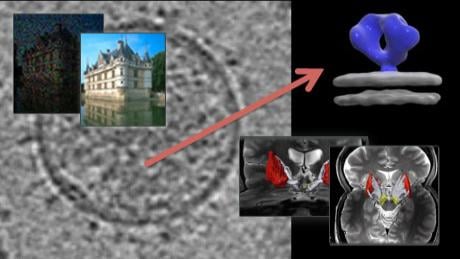
Image and video processing: From Mars to Hollywood with a stop at the hospital (Coursera)

Offered by Duke University,
Image and video processing: From Mars to Hollywood with a stop at the hospital (Coursera)

In this course, you will learn the science behind how digital images and video are made, altered, stored, and used. We will look at the vast world of digital imaging, from how computers and digital cameras form images to how digital special effects are used in Hollywood movies to how the Mars Rover was able to send photographs across millions of miles of space.

Class Deals by MOOC List - Click here and see Coursera's Active Discounts, Deals, and Promo Codes.

The course starts by looking at how the human visual system works and then teaches you about the engineering, mathematics, and computer science that makes digital images work. You will learn the basic algorithms used for adjusting images, explore JPEG and MPEG standards for encoding and compressing video images, and go on to learn about image segmentation, noise removal and filtering. Finally, we will end with image processing techniques used in medicine.
This course consists of 7 basic modules and 2 bonus (non-graded) modules. There are optional MATLAB exercises; learners will have access to MATLAB Online for the course duration. Each module is independent, so you can follow your interests.

Syllabus

WEEK 1
Introduction to image and video processing
Learn what is image and video processing. Learn the very basic concepts of human perception needed for understanding image processing. Learn simple tools in signal processing needed to understand following units.

WEEK 2
Image and video compression
JPEG and MPEG are the most successful algorithms in the area, widely used by everybody in a daily basis, and the goal of this unit is to understand how they work. Also to understand why these techniques are important and why they are enabling technologies. Also will describe what is done in the Mars expedition.

WEEK 3
Spatial processing
Some of the most basic tools in image processing, like median filtering and histogram equalization, are still among the most powerful. We will describe these and provide a modern interpretation of these basic tools. Students will then become familiar with simple and still popular approaches. We will also include non-local means, a more modern technique that still uses classical tools.

WEEK 4
Image restoration
The goal of this unit is to complement Unit 3 by adding prior information about the sources of degradation. Students will learn that if we know about the degradation process, we can do better. The objective of this unit is to complete the training with basic and powerful classical tools.

WEEK 5
Image segmentation
Not all parts of the image are the same, and students will learn the basic techniques to partition an image, from simple threshold to more advanced graph cuts and active contours. This is the first unit where student will learn about image analysis and image interpretation, and will learn why this is important, e.g., in medical imaging and object recognition.

WEEK 6
Geometric PDEs
This is all optional material. It will help the students that are more mathematically oriented and want to better understand the math behind next unit's lectures. But you will be able to handle without it.The quiz is therefore practice only.This is the first “advanced” unit and smoothly follows from the previous one. Students will learn very modern tools, widely used today, and will contrast with units 3,4 to illustrate how significantly more advanced mathematical tools are also very useful in image and video analysis. We will connect some of these advanced tools with classical ones, e.g., average with heat flow and median with anisotropic diffusion. This will help to provide unified views to the students.

WEEK 7
Image and video inpainting
Students will get involved with a very exciting topic, since image and video inpainting is one of the most used tools in the movie industry. They will learn the problem, and also how they can approach it from multiple directions. This will also help to illustrate how the same problem can be approached from multiple mathematical angles. We will connect this with Shanon’s work providing yet another angle. If you watched the lectures on PDEs you will have more mathematical background, but you will enjoy this unit and learn without it as well.

WEEK 8
Sparse modeling and compressed sensing
Here the goal is to present one of the most modern tools in image and video processing, and students will learn something that is today at the top of active research. This will also help to illustrate the use of linear algebra and optimization in image and video processing. This is the last formal unit of the course.

WEEK 9
Medical imaging
This is a bonus unit. Enjoy it. Image processing has been very successful in medical imaging, and we will use examples from HIV and brain research to illustrate the importance of image processing in solving societal problems. We will describe the basic tools in these exciting applications, from the acquisition to the analysis.

Go to Class
MOOC List is learner-supported. When you buy through links on our site, we may earn an affiliate commission.

Related Courses

International Cyber Conflicts (Coursera) Coursera
The State University of New York

International Cyber Conflicts (Coursera)

By nature, cyber conflicts are an international issue that span across nation-state borders. By the end of the course, you will be able to apply the knowledge gained for analysis and management of international cyber incidents and conflicts including for activities such as development of policy related to cybercrime and cyberwarfare. Management of cyber incidents and conflicts requires an interdisciplinary perspective including an understanding of: 1) characteristics of the cyber threats and conflicts themselves, 2) international efforts to reduce and improve cyber security, and 3) psychological and sociopolitical factors.

Jul 6th 2026
5-12 Weeks
Calculus: Single Variable Part 4 - Applications (Coursera) Coursera
University of Pennsylvania

Calculus: Single Variable Part 4 - Applications (Coursera)

Calculus is one of the grandest achievements of human thought, explaining everything from planetary orbits to the optimal size of a city to the periodicity of a heartbeat. This brisk course covers the core ideas of single-variable Calculus with emphases on conceptual understanding and applications. The course is ideal for students beginning in the engineering, physical, and social sciences.

Jul 6th 2026
5-12 Weeks
Foundations of Objective-C App Development (Coursera) Coursera
University of California, Irvine

Foundations of Objective-C App Development (Coursera)

An introduction to the Objective-C programming language. This will prepare you for more extensive iOS app development and build a foundation for advanced iOS development topics. Objective-C programming requires a Mac laptop or desktop computer. An iOS device is optional if the learner is willing to working exclusively with the simulator. Some learners have been able to work with an OS X virtual machine on Windows, but explaining how to do that is beyond the scope of this course.

Jul 6th 2026
4 Weeks
Advanced Linear Models for Data Science 2: Statistical Linear Models (Coursera) Coursera
Johns Hopkins University

Advanced Linear Models for Data Science 2: Statistical Linear Models (Coursera)

Welcome to the Advanced Linear Models for Data Science Class 2: Statistical Linear Models. This class is an introduction to least squares from a linear algebraic and mathematical perspective. Before beginning the class make sure that you have the following: a basic understanding of linear algebra and multivariate calculus; a basic understanding of statistics and regression models; at least a little familiarity with proof based mathematics; basic knowledge of the R programming language.

Jul 6th 2026
4 Weeks
Fibonacci Numbers and the Golden Ratio (Coursera) Coursera
The Hong Kong University of Science and Technology - HKUST

Fibonacci Numbers and the Golden Ratio (Coursera)

Learn the mathematics behind the Fibonacci numbers, the golden ratio, and how they are related. These topics are not usually taught in a typical math curriculum, yet contain many fascinating results that are still accessible to an advanced high school student. The course culminates in an explanation of why the Fibonacci numbers appear unexpectedly in nature, such as the number of spirals in the head of a sunflower.

Jul 6th 2026
3 Weeks
Agile Meets Design Thinking (Coursera) Coursera
University of Virginia

Agile Meets Design Thinking (Coursera)

Despite everyone's good intentions, hard work and solid ideas, too many projects end up creating unneeded, unusable, and unsellable products. But it doesn't have to be this way. Agile and design thinking offer a different--and effective--approach to product development, one that results in valuable solutions to meaningful problems. In this course, you’ll learn how to determine what's valuable to a user early in the process--to frontload value--by focusing your team on testable narratives about the user and creating a strong shared perspective.

Jul 6th 2026
4 Weeks
Introduction to Imagemaking (Coursera) Coursera
California Institute of the Arts

Introduction to Imagemaking (Coursera)

This course for serious makers, and for students new to imagemaking. Imagemaking is a fluid and exciting area of graphic design that comes out of practice and process: experimenting fearlessly, showing and sharing ideas, and giving and receiving knowledgeable and constructive input.

Jul 6th 2026
4 Weeks
Networking and Security in iOS Applications (Coursera) Coursera
University of California, Irvine

Networking and Security in iOS Applications (Coursera)

You will learn to extend your knowledge of making iOS apps so that they can securely interact with web services and receive push notifications. You'll learn how to store data securely on a device using Core Data. You’ll also learn to securely deploy apps to the App Store and beta users over-the-air. The format of the course is through a series of code tutorials. We will walk you through the creation of several apps that you can keep as a personal app toolbox. When you make your own apps after this course, you can bring in these capabilities as needed. When necessary we pop out of the code tutorials to talk about concepts at a higher level so that what you are programming makes sense.

Jul 6th 2026
4 Weeks