Fundamental Neuroscience for Neuroimaging (Coursera)

Fundamental Neuroscience for Neuroimaging (Coursera)

Neuroimaging methods are used with increasing frequency in clinical practice and basic research. Designed for students and professionals, this course will introduce the basic principles of neuroimaging methods as applied to human subjects research and introduce the neuroscience concepts and terminology necessary for a basic understanding of neuroimaging applications.

Class Deals by MOOC List - Click here and see Coursera's Active Discounts, Deals, and Promo Codes.

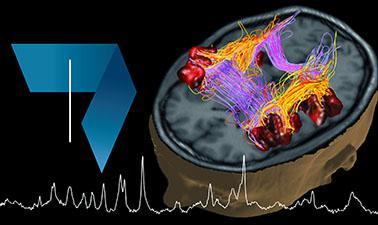
Topics include the history of neuroimaging, an introduction to neuroimaging physics and image formation, as well as an overview of different neuroimaging applications, including functional MRI, diffusion tensor imaging, magnetic resonance spectroscopy, perfusion imaging, and positron emission tomography imaging. Each will be reviewed in the context of their specific methods, source of signal, goals, and limitations. The course will also introduce basic neuroscience concepts necessary to understand the implementation of neuroimaging methods, including structural and functional human neuroanatomy, cognitive domains, and experimental design.
Course 1 of 4 in the Neuroscience and Neuroimaging Specialization

Syllabus

WEEK 1
Structural Neuroanatomy of the Human Brain
This week will introduce basic terminology in neuroscience and structural neuroanatomy of the human brain.

WEEK 2
Functional Neuroanatomy of the Human Brain
This week will introduce functional neuroanatomy of the human brain including cognitive domains and neuropsychological assessment of cognition.

WEEK 3
Principles and Methods of Neuroimaging
This week will introduce the principles of neuroimaging and applications in structural and functional neuroimaging.

WEEK 4
Experimental design and special applications in neuroimaging
This week will introduce experimental design in functional neuroimaging and special methods in neuroimaging, including functional connectivity MRI, diffusion tensor imaging and spectroscopy imaging.
Go to Class
MOOC List is learner-supported. When you buy through links on our site, we may earn an affiliate commission.

Related Courses

Philosophy, Science and Religion: Science and Philosophy (Coursera) Coursera
University of Edinburgh

Philosophy, Science and Religion: Science and Philosophy (Coursera)

Philosophy, Science and Religion mark three of the most fundamental modes of thinking about the world and our place in it. Are these modes incompatible? Put another way: is the intellectually responsible thing to do to ‘pick sides’ and identify with one of these approaches at the exclusion of others? Or, are they complementary or mutually supportive? As is typical of questions of such magnitude, the devil is in the details. For example, it is important to work out what is really distinctive about each of these ways of inquiring about the world. In order to gain some clarity here, we’ll be investigating what some of the current leading thinkers in philosophy, science and religion are actually doing.

Jun 1st 2026
5-12 Weeks
Fundamentals of Neuroscience, Part 2: Neurons and Networks (edX) EdX
HarvardX,Harvard University

Fundamentals of Neuroscience, Part 2: Neurons and Networks (edX)

Discover what makes your brain tick in this second part of a four-part introductory series in Neuroscience. Neurons in isolation are fascinating and complicated, but the real magic of neuroscience happens in the interaction between neurons. In this course, we examine how neurons pass signals to one another and how complex dynamics can result from just a few neurons arranged in relatively simple circuits.

Self Paced
Self-Paced
Anatomy: Human Neuroanatomy (Coursera) Coursera
University of Michigan

Anatomy: Human Neuroanatomy (Coursera)

In this anatomy course, part of the Anatomy Specialization, you will be introduced to the central and peripheral nervous systems. You will learn about basic neuroanatomy, sensory pathways, motor pathways and the autonomic nervous system. The course includes illustrated lecture videos and quizzes to help you expand and test your knowledge of the nervous system.

Jun 15th 2026
5-12 Weeks
Leaders of Learning (edX) EdX
HarvardX,Harvard University

Leaders of Learning (edX)

Explore and understand your own theories of learning and leadership. Gain the tools to imagine and build the future of learning. All of us carry explicit or implicit theories of learning. They manifest themselves in the ways we learn, the ways we teach, and the ways we think about leadership and learning. In Leaders of Learning, you will identify and develop your personal theory of learning, and explore how it fits into the shifting landscape of learning. This isn’t just about schools, it’s about the broader and bigger world of learning.

Self Paced
Self-Paced
Childhood Adversity: The Impact of Childhood Maltreatment on Mental Health (FutureLearn) FutureLearn
University College London

Childhood Adversity: The Impact of Childhood Maltreatment on Mental Health (FutureLearn)

Explore the connection between childhood adversity and mental health, and enhance your knowledge of mental health in young people. Learn how childhood trauma impacts a child’s beliefs, behaviour, and development. We know half of all mental health conditions emerge before age fourteen, but there’s a need for a greater understanding of young people’s mental wellbeing. On this course, you’ll improve your understanding of how early adverse experiences can impact a young person’s mental health.

Jan 17th 2022
3 Weeks
Understanding Multiple Sclerosis (MS) (University of Tasmania) Other Providers
University of Tasmania

Understanding Multiple Sclerosis (MS) (University of Tasmania)

'Understanding Multiple Sclerosis (MS)' is a free online course that aims to improve understanding and awareness of MS. Developed by the Menzies Institute for Research in partnership with Multiple Sclerosis Limited, the content is delivered by 27 experts in the field including neurologists, researchers, clinicians, allied health practitioners, carers and people living with Multiple Sclerosis.

Sep 12th 2022
5-12 Weeks
Understanding Dementia (University of Tasmania) Other Providers
University of Tasmania

Understanding Dementia (University of Tasmania)

The Understanding Dementia MOOC was developed by the Wicking Dementia Research and Education Centre based in the College of Health and Medicine at the University of Tasmania. This world-leading online course is free, easily accessible and available to everyone with an interest in dementia. This course is free and runs twice a year in February and July.

Feb 7th 2023
5-12 Weeks
Philosophy and the Sciences: Introduction to the Philosophy of Cognitive Sciences (Coursera) Coursera
University of Edinburgh

Philosophy and the Sciences: Introduction to the Philosophy of Cognitive Sciences (Coursera)

What is our role in the universe as human agents capable of knowledge? What makes us intelligent cognitive agents seemingly endowed with consciousness? This is the second part of the course 'Philosophy and the Sciences', dedicated to Philosophy of the Cognitive Sciences. Scientific research across the cognitive sciences has raised pressing questions for philosophers. The goal of this course is to introduce you to some of the main areas and topics at the key juncture between philosophy and the cognitive sciences. Each week we will introduce you to some of these important questions at the forefront of scientific research. We will explain the science behind each topic in a simple, non-technical way, while also addressing the philosophical and conceptual questions arising from it.

Jun 1st 2026
4 Weeks
Visualizing the Living Body: Diagnostic Imaging (Coursera) Coursera
Yale University

Visualizing the Living Body: Diagnostic Imaging (Coursera)

This course teaches learners the underlying principles behind conventional radiography, computerized axial tomography (CT), magnetic resonance imaging (MRI), and ultrasound. The radiology of chest, abdomen, pelvis, extremities, spine and brain are taught in this course using a combination of lectures and extensive practical activities and assessments.

Jun 15th 2026
5-12 Weeks
Schizophrenia (Coursera) Coursera
Wesleyan University

Schizophrenia (Coursera)

The main goal of this class are to gain an introductory exposure to the nature of the psychiatric disorder known as schizophrenia as revealed by the scientific method. We will discuss a broad range of findings from the scientific investigation of biological and psychological factors related to schizophrenia and its treatment.

May 25th 2026
5-12 Weeks
A life with ADHD (Coursera) Coursera
University of Geneva

A life with ADHD (Coursera)

What is ADHD and what are the challenges that come with it? Whether you are a person affected by ADHD, a family member or a professional, this MOOC will provide you with an understanding of what ADHD is. It will allow you to respond to the specific challenges of ADHD by developing a complex strategy that integrates psychological dimensions, neurobiological treatments, as well as environmental interventions. Since in two thirds of cases this disorder is relatively persistent, even though it may fluctuate over the course of an individual's life, this course will provide keys to understanding how to live with ADHD over time.

Jun 15th 2026
5-12 Weeks