The Neuroscience of Personal Excellence (Coursera)

The Neuroscience of Personal Excellence (Coursera)

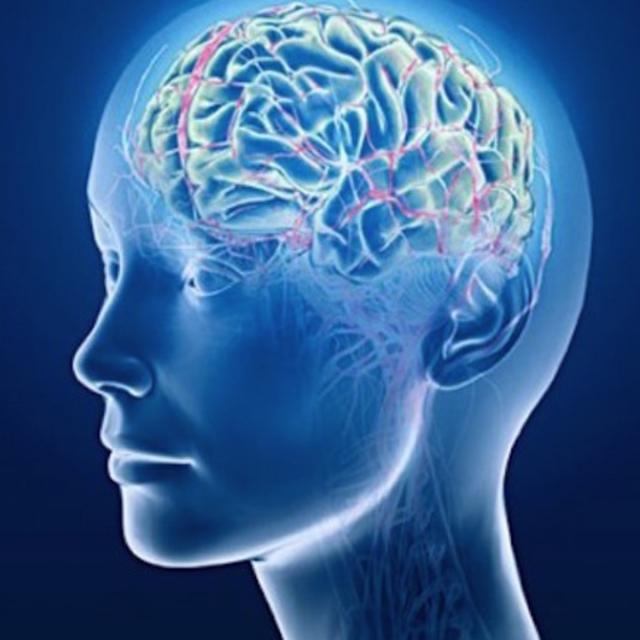
Many of us struggle to understand our actions and behavior in any given situation. Especially when pressure and stress are highest. What if we could make better decisions, create healthy habits more easily, regulate our emotions, become more mentally tough and perform well under pressure? There are certain defining moments in your life, in this course you'll learn to tap into your personal excellence when it matters. The reason we struggle often comes down to the fact that we are unaware how our engine works. The engine, in this metaphor, is our brain. It is the driving force behind our actions and behavior. Understanding how it works best is crucial to perform at your best.

Class Deals by MOOC List - Click here and see Coursera's Active Discounts, Deals, and Promo Codes.

This course is part of the "Neuroscience of Leadership" specialization, which examines leadership techniques through the lens of social cognitive neuroscience and psychology. Utilizing the latest research, we develop a leadership practice based on the foundation of neuroscience.
The focus of this course is developing your personal excellence to lead oneself better. We start with a journey through your brain and nervous system to give you a basic understanding of how the system works. You'll learn how the brain learns and creates habits. You'll come away with knowledge about decision making and problem solving. Understanding how to regulate your arousal and find your sweet spot is crucial for high performance. Lastly, you'll learn how to be more mentally tough and resilient when chaos reigns.

What You Will Learn

  • Explain how the brain solves problems and how we can improve strategic reasoning.
  • Explain how the brain makes decisions and how we can improve this process.
  • Recognize the psychological construct of perseverance and how to develop it.

Syllabus

WEEK 1
Foundations of Neuroscience
As a starting point for a discussion about the neuroscience of personal excellence, we will need a common vocabulary and knowledge about how the brain works. In this first module, you will learn about the key parts of the brain and nervous system. Begin to understand how neurotransmitters, hormones and brain waves affect behavior. Lastly, the social brain hypothesis and how maleable the adult brain actually is will be discussed. Consider this module a journey to introduce you to basic neuroscience.

WEEK 2
Learning and Habituation
Our lives are largely driven by our habits. Research states that 43% of our behavior is habitual. In this module, we will explore the neuroscience of learning and habituation so that you can learn to harness it to your advantage.

WEEK 3
Decision Making and Problem Solving
To improve our decision-making and problem solving skills, we must learn how our brain approaches these tasks. In this module, we'll discuss ways to improve. We'll also review how to keep our minds healthy with proven neuroscience.

WEEK 4
Finding Your Sweet Spot
Many people see fear, stress and anxiety as somethign that should be avoided. In this module, you will come to learn that they each have a valuable part to play for performance related tasks. Being able to regulate arousal is the key to finding your sweet spot when it comes to elite performance.

WEEK 5
Forging Mettle
To be at our best, we need to be able to withstand the storms of life. In this module you will come away with and understanding of psychological resilience, perseverance and mental toughness. Each overlapping the others. We'll also explore tactics for developing your mental strength.

Go to Class
MOOC List is learner-supported. When you buy through links on our site, we may earn an affiliate commission.

Related Courses

Principles of fMRI 2 (Coursera) Coursera
Johns Hopkins University,University of Colorado Boulder

Principles of fMRI 2 (Coursera)

Functional Magnetic Resonance Imaging (fMRI) is the most widely used technique for investigating the living, functioning human brain as people perform tasks and experience mental states. It is a convergence point for multidisciplinary work from many disciplines. Psychologists, statisticians, physicists, computer scientists, neuroscientists, medical researchers, behavioral scientists, engineers, public health researchers, biologists, and others are coming together to advance our understanding of the human mind and brain. This course covers the analysis of Functional Magnetic Resonance Imaging (fMRI) data.

Sep 21st 2026
4 Weeks
Start Your Lifelong Learning (Coursera) Coursera
Accenture

Start Your Lifelong Learning (Coursera)

This course is designed to provide you with techniques to assist you in adopting a growth mindset, dealing effectively with others, and thinking through decisions. It will also help you resolve everyday challenges in the workplace and in your daily life. The course is divided into four modules: Lifelong Learning, Emotional Intelligence, Solving Problems, and Critical Thinking.

Sep 21st 2026
4 Weeks
L'avenir de la décision : connaître et agir en complexité (Coursera) Coursera
ESSEC Business School

L'avenir de la décision : connaître et agir en complexité (Coursera)

Ce MOOC a l’intention d’affronter et traiter des problèmes que rencontrent chaque personne, chaque groupe, chaque entreprise, chaque société, de façon de plus en plus aiguë et pressante ; dans notre temps d’évolution accélérée, de transformations ininterrompues, de mondialisation incontrôlée, d’incertitudes.

Sep 21st 2026
5-12 Weeks
Philosophy and the Sciences: Introduction to the Philosophy of Physical Sciences (Coursera) Coursera
University of Edinburgh

Philosophy and the Sciences: Introduction to the Philosophy of Physical Sciences (Coursera)

What is the origin of our universe? What are dark matter and dark energy? This is the first part of the course 'Philosophy and the Sciences', dedicated to Philosophy of the Physical Sciences. Scientific research across the physical sciences has raised pressing questions for philosophers. The goal of this course is to introduce you to some of the main areas and topics at the key juncture between philosophy and the physical sciences.

Sep 21st 2026
4 Weeks
Analítica de Procesos: Optimización desde los Datos (Coursera) Coursera
Universidad de los Andes

Analítica de Procesos: Optimización desde los Datos (Coursera)

El entorno empresarial y de innovación requiere y requerirá cada vez más profesionales capaces de conectar los datos con el análisis de procesos. Esta habilidad posibilita formas inteligentes de entender y mejorar continuamente la cambiante operación de las empresas: las mantiene vivas y competitivas. La analítica de procesos proporciona información acerca de la eficiencia de los procesos de negocio, lo cual cambia el enfoque a los líderes de proceso para tomar decisiones sobre cómo hacer evolucionar el comportamiento y métricas del proceso basados en datos y no solo intuición.

Sep 21st 2026
4 Weeks
Statistical Thinking for Industrial Problem Solving, presented by JMP (Coursera) Coursera
SAS

Statistical Thinking for Industrial Problem Solving, presented by JMP (Coursera)

Statistical Thinking for Industrial Problem Solving is an applied statistics course for scientists and engineers offered by JMP, a division of SAS. By completing this course, students will understand the importance of statistical thinking, and will be able to use data and basic statistical methods to solve many real-world problems.

Sep 21st 2026
5-12 Weeks
Problem Solving, Python Programming, and Video Games (Coursera) Coursera
University of Alberta

Problem Solving, Python Programming, and Video Games (Coursera)

This course is an introduction to computer science and programming in Python. Important computer science concepts such as problem solving (computational thinking), problem decomposition, algorithms, abstraction, and software quality are emphasized throughout. The Python programming language and video games are used to demonstrate computer science concepts in a concrete and fun manner. However, a learner can take the knowledge and skills from this course and apply them to non-game problems, other programming languages, and other computer science courses.

Sep 21st 2026
5-12 Weeks
Understanding the Brain: The Neurobiology of Everyday Life (Coursera) Coursera
University of Chicago

Understanding the Brain: The Neurobiology of Everyday Life (Coursera)

Learn how the nervous system produces behavior, how we use our brain every day, and how neuroscience can explain the common problems afflicting people today. We will study functional human neuroanatomy and neuronal communication, and then use this information to understand how we perceive the outside world, move our bodies voluntarily, stay alive, and play well with others.

Sep 21st 2026
5-12 Weeks
Philosophy and the Sciences: Introduction to the Philosophy of Cognitive Sciences (Coursera) Coursera
University of Edinburgh

Philosophy and the Sciences: Introduction to the Philosophy of Cognitive Sciences (Coursera)

What is our role in the universe as human agents capable of knowledge? What makes us intelligent cognitive agents seemingly endowed with consciousness? This is the second part of the course 'Philosophy and the Sciences', dedicated to Philosophy of the Cognitive Sciences. Scientific research across the cognitive sciences has raised pressing questions for philosophers. The goal of this course is to introduce you to some of the main areas and topics at the key juncture between philosophy and the cognitive sciences. Each week we will introduce you to some of these important questions at the forefront of scientific research. We will explain the science behind each topic in a simple, non-technical way, while also addressing the philosophical and conceptual questions arising from it.

Sep 21st 2026
4 Weeks
Global Health Diplomacy (Coursera) Coursera
The State University of New York

Global Health Diplomacy (Coursera)

The field of global health is often thought of purely in medical or public health terms, but there are important geopolitical and policy dimensions of global health that underlie programmatic responses to global health challenges. By completing this course, learners will be able to explain the specific institutions and initiatives that are fundamental to current global health diplomacy activities and functions, and how these influence global health outcomes. Learners will further be able to summarize real-world examples where global health diplomacy either helped or limited global health outcomes, and explain the reasons for those outcomes.

Sep 21st 2026
5-12 Weeks
The 360º Corporation: Tools for Achieving Corporate Purpose (Coursera) Coursera
University of Toronto

The 360º Corporation: Tools for Achieving Corporate Purpose (Coursera)

If you’ve heard the terms stakeholder capitalism, or sustainability, or ESG, corporate social responsibility, CSR, conscious capitalism, sustainable development goals, shared value, corporate citizenship, or purpose-driven company but don’t know exactly what they mean—or don’t know how to make these ideas come to life—then this course is for you. Every business model and every operating decision has stakeholder trade-offs embedded in it. Profits to the bottom line are not always compatible with the interests of the stakeholders that surround the corporation.

Sep 21st 2026
4 Weeks
Inclusive Leadership: The Power of Workplace Diversity (Coursera) Coursera
University of Colorado System

Inclusive Leadership: The Power of Workplace Diversity (Coursera)

This course will equip and empower you to be a highly inclusive leader. You will learn principles, perspectives and practices that help to reap the power of workplace diversity. Workplace diversity has expanded beyond traditional demographics such as gender, race, and ethnicity. Those categories always will matter. In today’s workplace, diversity also encompasses nationality, religious background, sexual orientation, age, ability, experience, and diversity of thought, among other characteristics. Leaders will need to consider all of these aspects of diversity – among all stakeholders. That includes current and prospective employees, customers, clients , students, peers, and anyone else with whom a leader interacts.

Sep 21st 2026
4 Weeks