Science of Training Young Athletes Part 2 (Coursera)

Offered by University of Florida,
Science of Training Young Athletes Part 2 (Coursera)

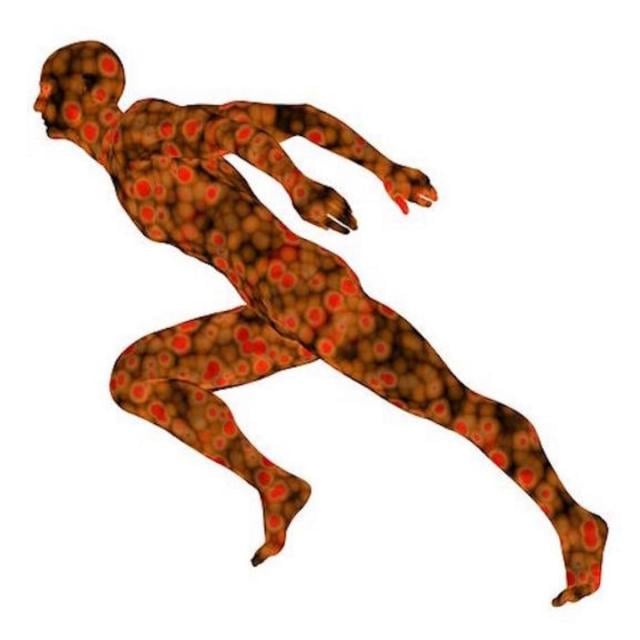
In this course you will learn how to design the type of training that takes advantage of the plastic nature of the athlete’s body so you mold the right phenotype for a sport. We explore ways the muscular system can be designed to generate higher force and power and the type of training needed to mold the athlete's physical capacity so it meets the energy and biochemical demands of the sport.

Class Deals by MOOC List - Click here and see Coursera's Active Discounts, Deals, and Promo Codes.

We also examine the cost of plasticity when it is carried beyond the ability of the body to adjust itself to meet the imposed training stresses. The cost of overextending plasticity comes in the form injuries and chronic fatigue. In essence, a coach can push the athlete’s body too far and it can fail. Upon completion of this course you will be able to assemble a scientifically sound annual training plan.

Syllabus

WEEK 1
Training Science
In the first topic you are introduced to the fundamentals of training science. This knowledge underlies your ability to design the type of training that will most effectively improve an athlete’s performance. Essential concepts such as homeostasis, core training principles, magnitude and timing of the training stimulus, and periodization theory are all discussed.

WEEK 2
Sport specific strength and power
Training an athlete’s strength and power so it improves their sport performance is a challenging aspect of coaching. Here is the important knowledge you must have: First, you must understand the important terminology such as strength, torque, work and power. Second, you must be able to apply the principle of specificity and transfer of training effects to the athlete’s strength and power development. Third, you must know what peripheral structural adaptations and central adaptations you are trying to accomplish.

WEEK 3
Acute fatigue during training and competition
Fatigue is a phenomenon we all experience. It is characterized by tiredness and the desire to rest. Whether the athlete likes it or not, fatigue serves a protective function. It is both cognitive and physical in nature. In this topic you are introduced to the science of acute fatigue due to training and competition. With rest, acute fatigue dissipates and the body becomes stronger. You will learn about important fatigue theories, and the factors believed to contribute to fatigue such as low fuel supplies, acidity and body temperature.

WEEK 4
Chronic Fatigue Due to Overtraining
When an athlete is underperforming, and you don’t know why, suspect chronic fatigue due to overtraining as the prime contributing factor. Unfortunately, because we don’t fully understand chronic fatigue our knowledge about overtraining remains scant. Hans Selye’s General Adaptation framework suggests it is likely due to too much training and insufficient recovery that leads to a prolonged maladaptation of physiological systems and structures. In this module you are provided insight into chronic fatigue and its relationship to overtraining.

WEEK 5
Preparing the athlete for competition
The final topic examines how to organize an athlete’s training so it ensures peak performance. We begin by discussing how to manage the various training effects resulting from a training session. Then we explore methods you can use to quantify training loads and how to taper those loads before a major competition. Finally, you will learn about thinking behind assembling an annual training plan.


Go to Class
MOOC List is learner-supported. When you buy through links on our site, we may earn an affiliate commission.

Related Courses

Success (Coursera) Coursera
University of Pennsylvania

Success (Coursera)

Do you want to be more successful? This course was designed to help you define what success means to you, and to develop a plan for achieving it. Wharton Professor G. Richard Shell, an award-winning author and the creator of the popular Wharton School course on the meaning of success, created this course to help you answer the questions that arise when you consider how best to use your life. Drawing on his decades of research and mentoring, Shell offers personalized assessments to help you probe your past, imagine your future, and measure your strengths.

Aug 24th 2026
4 Weeks
Exploring Emerging Technologies for Lifelong Learning and Success (Coursera) Coursera
University at Buffalo,The State University of New York

Exploring Emerging Technologies for Lifelong Learning and Success (Coursera)

This learning opportunity is an open-access resource for lifelong learning. The aim is to identify the value and implications of using established and emerging technology tools for personal and professional growth and acquire strategies to develop lifelong learning habits to keep pace with technology change.

Aug 24th 2026
5-12 Weeks
Creating a Team Culture of Continuous Learning (Coursera) Coursera
University of Pennsylvania

Creating a Team Culture of Continuous Learning (Coursera)

There is mounting concern that organizational groups and teams often fail to learn from their past experiences. It’s pertinent to address this issue as groups and teams are often the main ways that work gets done in organizations. In this course, we examine the main reasons that groups and teams are often ineffective, which include: the lack of organizational structures and support for teams and groups; the lack of understanding and emphasis on learning; misaligned reward structures.

Aug 10th 2026
4 Weeks
Training and Learning Online (Coursera) Coursera
University of Leeds

Training and Learning Online (Coursera)

Have you considered completing online training programmes and courses? Or perhaps you have to work online for your studies and you are not sure how to do it? Learning online is very different from face-to-face learning, as it often involves independent study and a different set of skills. On this course, you will develop effective online learning strategies that work for you, whether you are learning for work, leisure or for your studies, so that you can make the most of it.

Aug 24th 2026
3 Weeks
Creative Problem Solving (Coursera) Coursera
University of Minnesota

Creative Problem Solving (Coursera)

This course deals directly with your ability for creativity which is a critical skill in any field. It focuses on divergent thinking, the ability to develop multiple ideas and concepts to solve problems. Through a series of creativity building exercises, short lectures, and readings, learners develop both an understanding of creativity and increase their own ability.

Aug 17th 2026
4 Weeks
Machine Design Part I (Coursera) Coursera
Georgia Institute of Technology

Machine Design Part I (Coursera)

“Machine Design Part I” is the first course in an in-depth three course series of “Machine Design.” The “Machine Design” Coursera series covers fundamental mechanical design topics, such as static and fatigue failure theories, the analysis of shafts, fasteners, and gears, and the design of mechanical systems such as gearboxes. Throughout this series of courses we will examine a number of exciting design case studies, including the material selection of a total hip implant, the design and testing of the wing on the 777 aircraft, and the impact of dynamic loads on the design of an bolted pressure vessel. In this first course, you will learn robust analysis techniques to predict and validate design performance and life.

Aug 17th 2026
5-12 Weeks
Cannabis, Mental Health, and Brain Disorders (Coursera) Coursera
University of Colorado Boulder

Cannabis, Mental Health, and Brain Disorders (Coursera)

This Cannabis, Mental Health, and Brain Disorders course is designed to have you think critically about the health effects of cannabis (i.e., marijuana) in the context of several mental health and neurocognitive disorders. You'll be able to identify key features of several anxiety disorders (e.g., panic disorder, generalized anxiety disorder, social anxiety disorder, PTSD), major depression, schizophrenia, multiple sclerosis, epilepsy, traumatic brain injury, and Alzheimer's and Parkinson's Disease.

Aug 10th 2026
4 Weeks
Mindshift: Transforma tu mente para superar obstáculos en el aprendizaje y descubrir tu potencial oculto (Coursera) Coursera
McMaster University

Mindshift: Transforma tu mente para superar obstáculos en el aprendizaje y descubrir tu potencial oculto (Coursera)

Mindshift es un curso diseñado para ayudarte a impulsar tu carrera profesional y tu vida personal en el mundo de cambios acelerados que vivimos hoy en día. Cualquiera que sea tu edad o etapa de formación, Mindshift te enseñará técnicas para aprovechar al máximo tu experiencia de aprendizaje en línea, estrategias para conseguir y trabajar con mentores, secretos para evitar estancamientos (y catástrofes) en tu carrera profesional, y reflexiones sobre el valor de la ignorancia selectiva y la competencia general.

Aug 17th 2026
4 Weeks
Think Again III: How to Reason Inductively (Coursera) Coursera
Duke University

Think Again III: How to Reason Inductively (Coursera)

Want to solve a murder mystery? What caused your computer to fail? Who can you trust in your everyday life? In this course, you will learn how to analyze and assess five common forms of inductive arguments: generalizations from samples, applications of generalizations, inference to the best explanation, arguments from analogy, and causal reasoning. The course closes by showing how you can use probability to help make decisions of all sorts.

Aug 17th 2026
4 Weeks
International Travel Preparation, Safety, & Wellness (Coursera) Coursera
Johns Hopkins University

International Travel Preparation, Safety, & Wellness (Coursera)

Whether you've traveled before or not, living and working overseas can be challenging. Learn how best to prepare and make the most of your time internationally. This course will prepare you to work and live overseas. It explores the epidemiology of common morbidity and mortality among travelers and examines key prevention, safety, and travel medicine principles and services to contextualize risks and maintain wellness.

Aug 17th 2026
4 Weeks