AME

Global Updates on HIV (AME)

Offered by Virology Education,
Global Updates on HIV (AME)

This Online Education Activity is accredited by the European Accreditation Council for Continuing Medical Education (EACCME) for 1 European CME credit (ECMEC®). Welcome to the Global Updates of HIV edition of the Online Meeting Highlights. Here you will learn about the latest updates on novel HIV drugs and their formulation for HIV prevention and treatment.

The Online Meeting Highlights series opens with global topics on HIV treatment, prevention, and research - providing vital information to everyone involved in HIV care.
Our international experts have summarised the latest data on drug-drug interaction, the progress towards a cure, and new developments in the field of injectable drugs for HIV prevention.

All modules can be followed independently and at your own pace. Complete the entire course to be equipped with the most up-to-date information on these global topics.
After following this eLearning activity, you will be able to:

  • Understand the pharmacology of long-acting antiviral drugs, and their potential drug-drug interactions;
  • Outline basic concepts of clinical research on HIV cure; and
  • Specify existing and investigational long-acting antiviral drugs for HIV prevention and understand the rationale behind their use.

To obtain your certificate, you have complete all three modules, passed the relevant assessments and answered the evaluation survey.
Module 1 | Drug-Drug Interactions with Injectable Antiretroviral Regimens
Module 2 | Update on HIV Cure
Module 3 | The Promise of Injections
Duration: approximately 20 minutes per module
You can enhance your learning experience by:

  • adding notes to the video modules;
  • consulting the accompanying presentation slides;
  • sharing your questions and observations with other learners in the discussion board; and
  • referring to further literature and other materials provided to you by our experts.

The program is aimed at clinicians from various specialties who occasionally treat HIV patients, such as primary care physicians, family doctors, OBGYN, transgender healthcare clinicians, adolescent medicine professionals, and preventive medicine professionals, as well as public health workers and researchers engaged in HIV related disciplines at varying degrees.

Go to Class
MOOC List is learner-supported. When you buy through links on our site, we may earn an affiliate commission.

Related Courses

Update on INSTIs (AME) AME
Virology Education

Update on INSTIs (AME)

This Online Education Activity is accredited by the European Accreditation Council for Continuing Medical Education (EACCME) for 1 European CME credit (ECMEC®). Welcome to the Update on INSTIs edition of the Online Meeting Highlights. Here you will learn about HIV integrase strand transfer inhibitors (INSTI), compiling for you data from relevant clinical trials that have assessed the efficacy, toxicity, and resistance.

Self Paced
Self-Paced
Genomics: Decoding the Universal Language of Life (Coursera) Coursera
University of Illinois at Urbana-Champaign

Genomics: Decoding the Universal Language of Life (Coursera)

What is a genome? A genome contains all of the information that a cell needs to develop, function, and reproduce itself, and all the information needed for those cells to come together to form a person, plant, or animal. Genomes contain an organism’s complete set of genes, and also the even tinier genetic structures that help regulate when and how those genes are used. The ability to regrow a torn ligament, the clues that might predict the onset of mental illness, the nutritional potential of crops, and even the history of life itself, are all encoded in genomes. By taking this course, you will discover how scientists are deciphering the language of genomes to learn how to develop sustainable food and fuel supplies, improve disease treatment and prevention, and protect our environment.

Nov 23rd 2026
5-12 Weeks
Clinical Terminology for International and U.S. Students (Coursera) Coursera
University of Pittsburgh

Clinical Terminology for International and U.S. Students (Coursera)

Understanding the clinical terms and abbreviations commonly used in U.S. hospitals is challenging. Adaptation to clinical language can be difficult for U.S. students entering the clinical area and even more so for international students whose primary language is not English. This course is designed to help both groups of students understand the terms and abbreviations commonly encountered during the first three months of clinical work on a U.S. hospital unit.

Nov 23rd 2026
5-12 Weeks
HIV Treatment and Prevention in Asia (AME) AME
Virology Education

HIV Treatment and Prevention in Asia (AME)

This Online Education Activity is accredited by the European Accreditation Council for Continuing Medical Education (EACCME) for 1 European CME credit (ECMEC®).
 Welcome to the HIV Treatment and Prevention in Asia edition of the Online Meeting Highlights. Here you will learn about the use of PrEP and INSTIs in Asia as well as the prevalence of HIV drug resistance across the region, and its implications on the decision-making process when designing an optimal treatment regimen.

Self Paced
Self-Paced
Leading Healthcare Quality and Safety (Coursera) Coursera
George Washington University

Leading Healthcare Quality and Safety (Coursera)

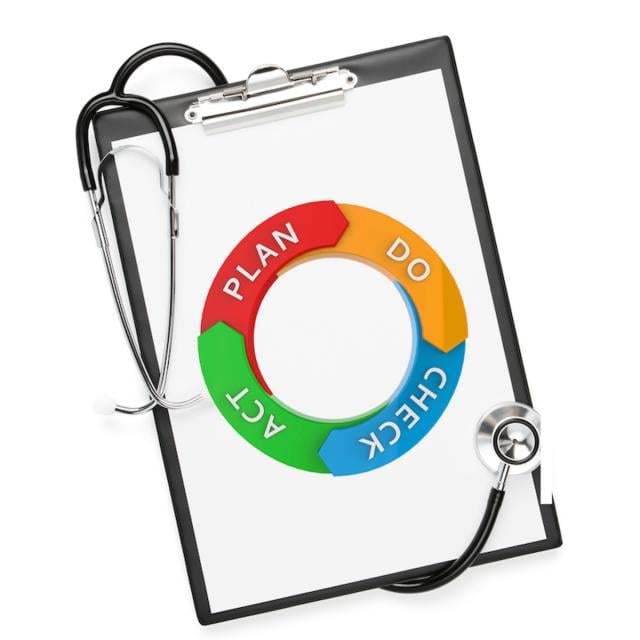
Ensuring patient safety and healthcare quality is critical and should be a key focus of everyone in healthcare practice. This course provides healthcare practitioners and others with an introduction to the knowledge and skills needed to lead patient safety and quality improvement initiatives at the micro and macro levels. Participants will explore the foundations of health care quality and the science underlying patient safety and quality improvement, design and select effective health care measures, analyze patient safety problems and processes using tools such as human factors analysis, apply systematic approaches including the Plan-Do-Study-Act (PDSA) model to address quality improvement challenges, and learn strategies to lead a culture of change

Nov 23rd 2026
5-12 Weeks
The New Nordic Diet - from Gastronomy to Health (Coursera) Coursera
University of Copenhagen

The New Nordic Diet - from Gastronomy to Health (Coursera)

The New Nordic Diet is a new food culture developed in 2009-13 with key emphasis on gastronomy, health, and environment. Major research in its effect on acceptability, behaviour and learning skills, and disease prevention have been conducted by the OPUS centre at the University of Copenhagen and the people behind the award-winning restaurant Noma in Copenhagen. This course will give the participants the opportunity to experience a healthy and palatable new food and eating concept diet “The New Nordic Diet” and an understanding of how food and diets can affect mental and physical health and ensure the foundation for a healthier life style for future generations with a regional based diet and food culture.

Nov 23rd 2026
5-12 Weeks
Doping : Sports, Organizations and Sciences (Coursera) Coursera
University of Lausanne

Doping : Sports, Organizations and Sciences (Coursera)

The objective of this course is to encourage a critical understanding of doping. To achieve this goal, this course will rely on a multidisciplinary approach that allow you to see how different disciplines get into a single object, in different perspectives and in often complementary ways. This approach will also allow us to appreciate the complexity of a subject like doping. Doping in sports is a complex practice whose definition and identification is the result of socially and historically constructed norms. This course offers to shed light on the processes that led to the use and prohibition of doping substances.

Nov 23rd 2026
4 Weeks
Diagnosing Health Behaviors for Global Health Programs (Coursera) Coursera
Johns Hopkins University

Diagnosing Health Behaviors for Global Health Programs (Coursera)

Health behavior lies at the core of any successful public health intervention. While we will examine the behavior of individual in depth in this course, we also recognize by way of the Ecological Model that individual behavior is encouraged or constrained by the behavior of families, social groups, communities, organizations and policy makers. We recognize that behavior change is not a simplistic process but requires an understanding of dimensions like frequency, complexity and cultural congruity. Such behavioral analysis is strengthened through the use of a toolkit of theoretical models and practical frameworks.

Nov 23rd 2026
4 Weeks
Population Health: Predictive Analytics (Coursera) Coursera
Leiden University

Population Health: Predictive Analytics (Coursera)

Predictive analytics has a longstanding tradition in medicine. Developing better prediction models is a critical step in the pursuit of improved health care: we need these tools to guide our decision-making on preventive measures, and individualized treatments. In order to effectively use and develop these models, we must understand them better. In this course, you will learn how to make accurate prediction tools, and how to assess their validity. First, we will discuss the role of predictive analytics for prevention, diagnosis, and effectiveness. Then, we look at key concepts such as study design, sample size and overfitting.

Nov 23rd 2026
4 Weeks
HI-FIVE: Health Informatics For Innovation, Value & Enrichment (Clinical Perspective) (Coursera) Coursera
Columbia University

HI-FIVE: Health Informatics For Innovation, Value & Enrichment (Clinical Perspective) (Coursera)

HI-FIVE (Health Informatics For Innovation, Value & Enrichment) Training is a 12-hour online course designed by Columbia University in 2016, with sponsorship from the Office of the National Coordinator for Health Information Technology (ONC). The training is role-based and uses case scenarios. Also, it has additional, optional modules on other topics of interest or relevance. Although we suggest to complete the course within a month's timeframe, the course is self-paced and so you can start and finish the course at anytime during a month's time period. No additional hardware or software are required for this course.

Nov 23rd 2026
4 Weeks
Understanding Clinical Research: Behind the Statistics (Coursera) Coursera
University of Cape Town

Understanding Clinical Research: Behind the Statistics (Coursera)

If you’ve ever skipped over`the results section of a medical paper because terms like “confidence interval” or “p-value” go over your head, then you’re in the right place. You may be a clinical practitioner reading research articles to keep up-to-date with developments in your field or a medical student wondering how to approach your own research. Greater confidence in understanding statistical analysis and the results can benefit both working professionals and those undertaking research themselves.

Nov 23rd 2026
5-12 Weeks
Major Depression in the Population: A Public Health Approach (Coursera) Coursera
Johns Hopkins University

Major Depression in the Population: A Public Health Approach (Coursera)

Public Mental Health is the application of the principles of medicine and social science to prevent the occurrence of mental and behavioral disorders and to promote mental health of the population. This course illustrates the principles of public health applied to depressive disorder, including principles of epidemiology, transcultural psychiatry, health services research, and prevention. It is predicted that by 2020 depressive disorder will be the most important cause of disease burden in the entire world! Every human being suffers from feeling depressed at some point or other, but only about one fifth of the population will experience an episode of depressive disorder over the course of their lives.

Nov 23rd 2026
5-12 Weeks