Data Management for Clinical Research (Coursera)

Offered by Vanderbilt University,
Data Management for Clinical Research (Coursera)

This course presents critical concepts and practical methods to support planning, collection, storage, and dissemination of data in clinical research. Understanding and implementing solid data management principles is critical for any scientific domain. Regardless of your current (or anticipated) role in the research enterprise, a strong working knowledge and skill set in data management principles and practice will increase your productivity and improve your science. Our goal is to use these modules to help you learn and practice this skill set.

Class Deals by MOOC List - Click here and see Coursera's Active Discounts, Deals, and Promo Codes.

This course assumes very little current knowledge of technology other than how to operate a web browser. We will focus on practical lessons, short quizzes, and hands-on exercises as we explore together best practices for data management.

Syllabus

WEEK 1
Research Data Collection Strategy
This introductory module reviews the course structure and basic concepts in clinical research. We also discuss best practices for designing your clinical research data collection.

WEEK 2
Electronic Data Capture Fundamentals
This module covers standards for study processes, concepts for regulatory compliance, and electronic data capture fundamentals.

WEEK 3
Planning a Data Strategy for a Prospective Study
This module reviews the process of planning data elements for a real-world research study.

WEEK 4
Practicing What We've Learned: Implementation
This week, we set up an Electronic Data Capture (EDC) instrument in REDCap for the Morphine vs. Marinol Study. We also review data processes that occur during the running of a study, including an overview of key data quality operations.

WEEK 5
Post-Study Activities and Other Considerations
In this week, we cover activities to wrap up your study and share data and results, as well as two lectures on other electronic sources of data that can be used in research. In response to learner requests, we've also added several lectures on clinical data management in resource-limited settings, in collaboration with research colleagues from Indiana University. This is a long week of videos, but next week will be short on videos in exchange!

WEEK 6
Data Collection with Surveys
In the final week, we cover how to collect data using surveys and review an example together. This week's assignment includes designing, distributing, and reporting on your own survey.
Go to Class
MOOC List is learner-supported. When you buy through links on our site, we may earn an affiliate commission.

Related Courses

Data Storytelling with Power BI (Coursera) Coursera
Edureka

Data Storytelling with Power BI (Coursera)

Welcome to the Data Storytelling with Power BI course, where you'll embark on a journey to acquire practical expertise in data transformation and visualization. Leverage the potential of Power BI to craft narratives through structured data, leading to the discovery of more profound insights. Throughout this course, you'll explore the industry-specific applications of Power BI and delve into its various features and functionalities.

Aug 17th 2026
5-12 Weeks
DataOps Methodology (Coursera) Coursera
IBM

DataOps Methodology (Coursera)

DataOps is defined by Gartner as "a collaborative data management practice focused on improving the communication, integration and automation of data flows between data managers and consumers across an organization. Much like DevOps, DataOps is not a rigid dogma, but a principles-based practice influencing how data can be provided and updated to meet the need of the organization’s data consumers.”

Aug 17th 2026
5-12 Weeks
Data to Advance Population Health: Global Perspectives (Coursera) Coursera
Johns Hopkins University

Data to Advance Population Health: Global Perspectives (Coursera)

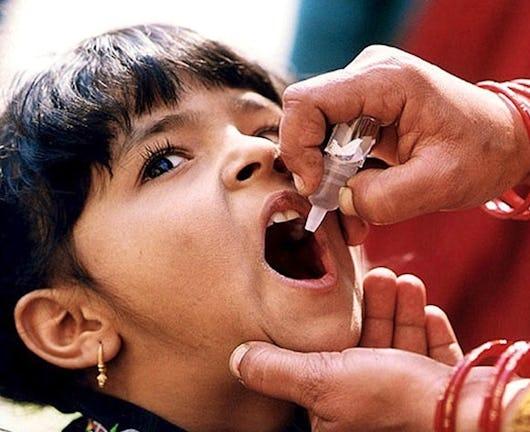
In this course, you will learn about methodologies that support the successful data use to strengthen public health programs and policies. Experts from around the world will define and explain what population-level data is, introduce the data-generation-to-use cycle, and explain other considerations for successful data use for population health. You will also learn about how health services data can be used to inform population-level decision-making, and the application of a gender and equity lens towards these data systems to ensure they are responsive to the needs of populations. Our overarching goal for this course is to support and improve the use of data to inform policy.

Aug 17th 2026
4 Weeks
Dataplex by Google Cloud (Coursera) Coursera
Board Infinity

Dataplex by Google Cloud (Coursera)

Welcome to "Dataplex By Google Cloud " a comprehensive course designed to provide a thorough understanding of Google Cloud Dataplex, a platform for managing, monitoring, and analyzing data across various data systems in Google Cloud. Spanning two modules, the course begins with the fundamentals of Dataplex, including its setup, configuration, and basic functionalities.

Aug 17th 2026
2 Weeks
Programming Mobile Applications for Android Handheld Systems: Part 2 (Coursera) Coursera
University of Maryland, College Park

Programming Mobile Applications for Android Handheld Systems: Part 2 (Coursera)

This course introduces you to the design and implementation of Android applications for mobile devices. You will build upon concepts from the prior course, including handling notifications, using multimedia and graphics and incorporating touch and gestures into your apps.

Aug 3rd 2026
5-12 Weeks
Building No-Code Apps with AppSheet: Implementation (Coursera) Coursera
Google Cloud

Building No-Code Apps with AppSheet: Implementation (Coursera)

This course teaches you how to implement various capabilities that include data organization and management, application security, actions and integrations in your app using AppSheet. The course also includes topics on managing and upgrading your app, improving performance and troubleshooting issues with your app.

Aug 10th 2026
3 Weeks
Research Data Management and Sharing (Coursera) Coursera
University of Edinburgh,University of North Carolina

Research Data Management and Sharing (Coursera)

This course will provide learners with an introduction to research data management and sharing. After completing this course, learners will understand the diversity of data and their management needs across the research data lifecycle, be able to identify the components of good data management plans, and be familiar with best practices for working with data including the organization, documentation, and storage and security of data. Learners will also understand the impetus and importance of archiving and sharing data as well as how to assess the trustworthiness of repositories.

Aug 3rd 2026
5-12 Weeks
Surveillance Systems: The Building Blocks (Coursera) Coursera
Johns Hopkins University

Surveillance Systems: The Building Blocks (Coursera)

Epidemiology is often described as the cornerstone science and public health and public health surveillance is a cornerstone of epidemiology. This course will help you build your technical awareness and skills for working with a variety of surveillance systems. Along the way, we'll focus on system objectives, data reporting, the core surveillance attributes, and performance assessment.

Aug 3rd 2026
4 Weeks
Leadership for Cancer Informatics Research (Coursera) Coursera
Johns Hopkins University

Leadership for Cancer Informatics Research (Coursera)

Informatics research often requires multidisciplinary teams. This requires more flexibility to communicate with team members with distinct backgrounds. Furthermore, team members often have different research and career goals. This can present unique challenges in making sure that everyone is on the same page and cohesively working together. This course aims to provide research leaders with guidance about: How to effectively lead and support team members on informatics projects; How to perform informatics projects well; How to support informatics collaborators, mentees, and employees; How to better support diversity within your team; Tools that can help you perform informatics projects well

Aug 10th 2026
4 Weeks