Medical Applications of Particle Accelerators (NPAP MOOC) (Coursera)

Offered by Lund University,
Medical Applications of Particle Accelerators (NPAP MOOC) (Coursera)

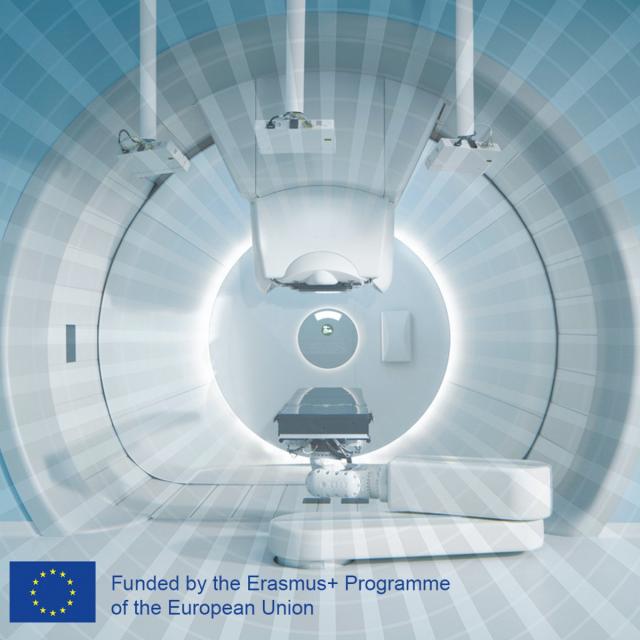
The NPAP - Medical Applications of Accelerators is one out of three courses in the Nordic Particle Accelerator Program (NPAP). Here you will be taken on a tour focusing on the medical applications of particle accelerators. You will see that there are two very important, but different, applications of accelerators in hospitals. The first application concerns radiotherapy of tumours and the other concerns the production of medical nuclides for diagnosis and treatment. Both will be included in this course and described through four modules.

Class Deals by MOOC List - Click here and see Coursera's Active Discounts, Deals, and Promo Codes.

The first module offers the basic principles of radiotherapy from a medical and physics point of view. You there learn about the main components of the machines used for radiotherapy and get to know why radiotherapy is important for cancer treatments.
The second module guides you through the different types of linear accelerators used in the machines for radiotherapy. It also describes the design of the treatment head. The design is important because it is the settings of the treatment head that determines the dose and the radiated region. It is also in the treatment head where the dose given to the patient is measured.
In the third module you are introduced to proton therapy. In this type of therapy protons are first accelerated and then guided down to the tumour by magnets. The machines are considerably larger and more expensive than machines used for radio therapy. The module also offers a description and comparison between different types of accelerators, and explains how the protons interact with tissue.
Also ions that are heavier than protons can be used in cancer therapy. This is described in the fourth module, where we also introduce you to the production of medical nuclides. You learn how the nuclides are produces in proton and ion accelerators and how the nuclides come into play at different places in hospitals. Medical nuclides are for instance used in Positron Electron Tomography, PET.
Enjoy!

Syllabus

WEEK 1
Introduction to the course and radiotherapy
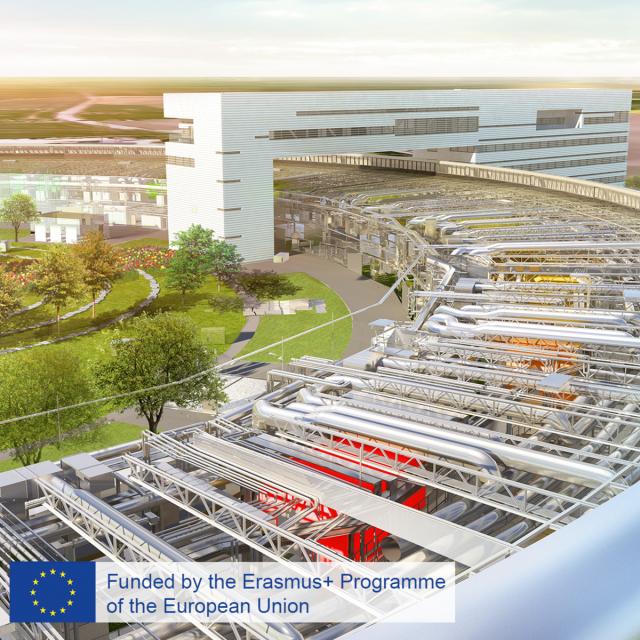
Welcome to this course on medical applications of accelerators. The most important applications of accelerators in medicine are radiotherapy and diagnostic imaging using radionuclides, which both play a very important role in the treatment of cancer. Thus, the course focuses on these two applications of accelerators in medicine. In fact, accelerators for radiotherapy is the largest application of accelerators altogether with more than 11000 accelerators worldwide. These accelerators range from very compact electron linear accelerators with a length of only about 1 m to large carbon ion synchrotrons with a circumference of more than 50 m and a huge rotating carbon ion gantry with a weight of 600 tons. The course starts with an introduction to radiotherapy with focus on the biological properties of ionizing radiation. Subsequently, the electron linac for radiotherapy is presented. The main components of the electron linac are the multi-energy linac structure and the treatment head, which converts the electron beam to the desired dose distribution in the patient. Next, proton accelerators for radiotherapy are discussed with focus on the applied accelerator types and the treatment delivery technologies. Treatment with heavy ions and the challenges of proton and heavy ion therapy are also presented. Finally, the medical application of radionuclides are introduced and the production of radionuclides with cyclotrons is discussed.

WEEK 2
Electron linacs for radiotherapy

WEEK 3
Proton therapy I

WEEK 4
Proton therapy II and production of medical radionuclides

Go to Class
MOOC List is learner-supported. When you buy through links on our site, we may earn an affiliate commission.

Related Courses

Breastfeeding: Public Health Perspectives (Coursera) Coursera
University of Michigan

Breastfeeding: Public Health Perspectives (Coursera)

Engaging in this course will provide you with the opportunity to think about breastfeeding and its public health implications. The Socio-Ecological Model will be the framework of the course as we think about how each level of the Model (individual, interpersonal, community, organizational, and public policy) impacts breastfeeding practices in the United States, and globally.

Aug 3rd 2026
4 Weeks
Evaluation of Digital Health Interventions (Coursera) Coursera
Imperial College London

Evaluation of Digital Health Interventions (Coursera)

This course focuses on data, evaluation methods and the economic evaluation of digital health interventions. This module focuses on key data considerations for digital health including data management, data visualisation and methods for evaluating digital health interventions. The key focus is on experimental and quasi-experimental design approaches that can be applied to evaluating digital health interventions and key considerations for the economic evaluation of digital health interventions.

Aug 3rd 2026
4 Weeks
Introduction to Nursing: Bioscience, Psychology, and Sociology (FutureLearn) FutureLearn
University of York

Introduction to Nursing: Bioscience, Psychology, and Sociology (FutureLearn)

Explore the diverse skills and knowledge required to be a nurse and find out where a career in nursing could take you. Explore the exciting possibilities of a career in nursing. Most people will have interacted with a qualified nurse during their lifetime, but the profession remains largely misunderstood. On this course, you’ll develop an accurate understanding of nursing and where a career in nursing can lead.

Self Paced
3 Weeks
COVID-19: Understanding the Research Behind the Pandemic (FutureLearn) FutureLearn
University of Leeds,National Institute for Health Research - NIHR

COVID-19: Understanding the Research Behind the Pandemic (FutureLearn)

Discover how scientists responded to the pandemic and how they conduct innovative research to develop treatments and vaccines. Explore the critical role of research in responding to the COVID-19 pandemic. The outbreak of the COVID-19 pandemic took the world by surprise, causing a global health crisis. Reducing the spread of the disease and treating patients relied on how rapidly we could harness our research capabilities. This has led to developments that will change how we conduct future research.

Oct 4th 2021
2 Weeks
CareSearch My Learning Modules (OpenLearning) OpenLearning
Flinders University,CareSearch

CareSearch My Learning Modules (OpenLearning)

Have you ever been in a situation with a patient where you did not know what to say next? Do you feel that you have missed an opportunity to make a positive difference to a patient and their family? CareSearch can help you find the right answers. My Learning introduces you to resources in CareSearch and shows you how you can use them in your clinical practice.

Self-Paced
Self-Paced
Curanderismo: Global & Cultural Influences of Traditional Healing (Coursera) Coursera
University of New Mexico

Curanderismo: Global & Cultural Influences of Traditional Healing (Coursera)

As the last of four courses on Curanderismo, the art of Hispanic/Latino traditional medicine, this course focuses specifically on traditional healing using different techniques of many countries around the world. As an educational and cultural platform, this course will share a number of traditional global perspectives.

Aug 17th 2026
5-12 Weeks
Non-Alcoholic Fatty Liver Disease – The Essentials (Coursera) Coursera
University of Copenhagen

Non-Alcoholic Fatty Liver Disease – The Essentials (Coursera)

Non-Alcoholic Fatty Liver Disease (NAFLD) is a global problem, affecting up to 25% of all individuals. The disease not only increases the risk of liver disease, but also of cardiovascular disease and liver cancer. During this course, you will learn the essentials of NAFLD. We will begin with an introduction to the physiology of the human liver followed by epidemiology, pathophysiology, clinical medicine, and genetics. Diagnosing NAFLD based on blood tests, diagnostic imaging and histology will be discussed. Complications and treatment options will also be covered in this course including the link between NAFLD and the development of diabetes. Finally, experts will discuss data driven identification of new biomarkers by omics technologies.

Aug 17th 2026
5-12 Weeks
Mindfulness in Integrative Healthcare (Coursera) Coursera
University of Minnesota

Mindfulness in Integrative Healthcare (Coursera)

By the end of this course, you will be able to assess when mindfulness may be helpful for your patients or clients, educate them about its potential benefits, and refer them to mindfulness programs and resources. To begin, you will explore what mindfulness is (and is not) through presentations and direct experience. You will also learn about the research supporting the benefits (and risks) of mindfulness for various conditions, as well as how to identify contraindications. Finally, you will learn about the benefits of this practice for you as a busy healthcare provider.

Aug 3rd 2026
4 Weeks
Fundamentals of particle accelerator technology (NPAP MOOC) (Coursera) Coursera
Lund University

Fundamentals of particle accelerator technology (NPAP MOOC) (Coursera)

Did you know that particle accelerators play an important role in many functions of todays society and that there are over 30 000 accelerators in operation worldwide? A few examples are accelerators for radiotherapy which are the largest application of accelerators, altogether with more than 11000 accelerators worldwide. These accelerators range from very compact electron linear accelerators with a length of only about 1 m to large carbon ion synchrotrons with a circumference of more than 50 m and a huge rotating carbon ion gantry with a weight of 600 tons!

Aug 10th 2026
5-12 Weeks
Understanding Medical Research: Your Facebook Friend is Wrong (Coursera) Coursera
Yale University

Understanding Medical Research: Your Facebook Friend is Wrong (Coursera)

How can you tell if the bold headlines seen on social media are truly touting the next big thing or if the article isn't worth the paper it's printed on? Understanding Medical Studies, will provide you with the tools and skills you need to critically interpret medical studies, and determine for yourself the difference between good and bad science. The course covers study-design, research methods, and statistical interpretation. It also delves into the dark side of medical research by covering fraud, biases, and common misinterpretations of data. Each lesson will highlight case-studies from real-world journal articles.

Aug 10th 2026
5-12 Weeks
Translating Research to Communities (Coursera) Coursera
University of Michigan

Translating Research to Communities (Coursera)

Health research must positively impact the lives of the general population, so the public must receive and interpret research findings in a meaningful way. That is why translating research discoveries into practice is an important phase of the translational research spectrum. In this course, you’ll gain an introduction to the concepts of population health research and the ethical use of data science to drive advances in human health.

Aug 3rd 2026
3 Weeks