Beer Quality Systems (Coursera)

Beer Quality Systems (Coursera)

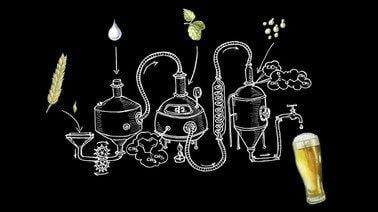
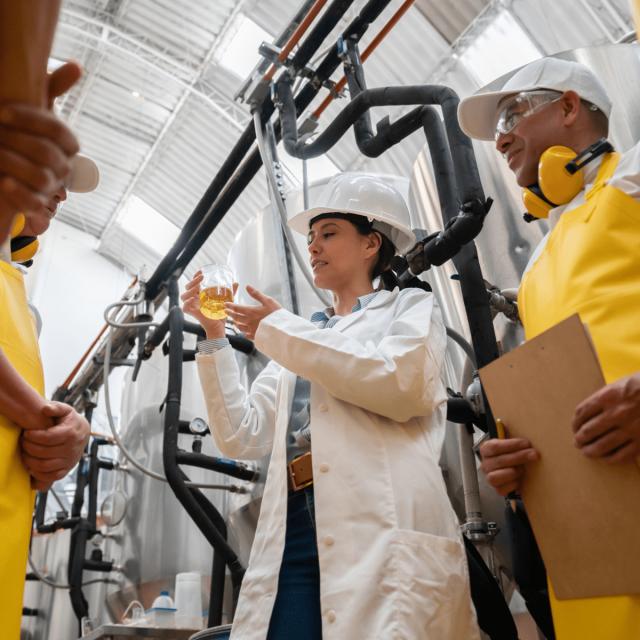
Ultimately, the difference between success and failure as a brewer is whether you consistently deliver a quality beer. Designed for brewers of all skill levels, this course is part of a comprehensive series where brewing legend Charlie Bamforth, Ph.D. guides you through the key markers of beer quality: flavor, foam, color/clarity, freshness and quality systems. In this last course of the Beer Quality Series, you will examine the systems necessary to produce quality beer.

Class Deals by MOOC List - Click here and see Coursera's Active Discounts, Deals, and Promo Codes.

Thought-provoking lectures will allow you to explore at your own pace how to define quality in beer and brewing. This course will teach you about the documentation of raw materials and processes, how and what should be measured and how to establish a quality program, whether you are brewing on an international scale or in a bucket. By the end of this course, you will be able to consistently brew a high-quality product that delights the drinker every time.
Course 5 of 5 in the Beer Quality Specialization.

What You Will Learn
Discover the quality systems necessary to produce quality beer and how to establish a quality program.

Syllabus

WEEK 1
Getting Started & Beer Quality Systems
In this module, we'll begin by discussing beer quality systems and the process for documenting them. We'll define quality and its impact on a beer quality systems. We'll also discuss the International Organization for Standardization (ISO) documentation protocols to address a quality operation. Let's get started.

WEEK 2
Some Basic Statistics
In this module, we'll begin by discussing basic statistics and making sense of the challenges and needs of a quality system. We'll discuss the importance of standardized methodology and how these methods are developed. We will also review the ASBC and EBC Methods and how to apply them to a beer quality system. Let's get started.

WEEK 3
Assuring Quality Estimate & Critical Stuff
In this third module, we'll discuss the importance of critical points for all aspects of QA, including safety considerations, and what we need to do to control it. We'll explain the difference between quality control and quality assurance and review the four categories of the cost of quality. We'll also discuss HACCP and HARPC and understand how data can be plotted and interpreted. Let's begin.

WEEK 4
Module Topic
In this last module, we will review how to set up a quality program and discuss the core messages of this course. We will finish by bringing it all together by reviewing what we've learned together to identify what a quality program should comprise of in terms of measurements. Let's finish up.
Go to Class
MOOC List is learner-supported. When you buy through links on our site, we may earn an affiliate commission.

Related Courses

Introduction to Chemistry: Reactions and Ratios (Coursera) Coursera
Duke University

Introduction to Chemistry: Reactions and Ratios (Coursera)

This is an introductory course for students with limited background in chemistry; basic concepts involved in chemical reactions, stoichiometry, the periodic table, periodic trends, nomenclature, and chemical problem solving will be emphasized with the goal of preparing students for further study in chemistry as needed for many science, health, and policy professions.

May 18th 2026
5-12 Weeks
General Chemistry: Concept Development and Application (Coursera) Coursera
Rice University

General Chemistry: Concept Development and Application (Coursera)

This course will cover the topics of a full year, two semester General Chemistry course. We will use a free on-line textbook, Concept Development Studies in Chemistry, available via Rice’s Connexions project. The fundamental concepts in the course will be introduced via the Concept Development Approach developed at Rice University. In this approach, we will develop the concepts you need to know from experimental observations and scientific reasoning rather than simply telling you the concepts and then asking you to simply memorize or apply them.

Jun 1st 2026
5-12 Weeks
The Science of Beer (edX) EdX
Wageningen University,WageningenX

The Science of Beer (edX)

Are you interested in more than just the taste of beer? Discover what's in your beer, how it's made and marketed and the effect it has on your body and health. Have you ever taken a sip of beer and wondered why it tastes a certain way or what effect the alcohol has on your body? In this course, you will learn all about beer, including how it's made, the raw materials used, it's supply chain, how it's marketed and the effect of beer consumption on your body.

Self Paced
Self-Paced
Beer: the science of brewing (edX) EdX
KU Leuven University,KULeuvenX

Beer: the science of brewing (edX)

Ever wondered why your beer tastes the way it does? Learn how the ingredients, different biochemical reactions and process parameters in beer brewing influence the taste and aroma of beer. In this course of 12 modules, our team of academic scientists and brewmasters will introduce you to the science underlying beer brewing. At the end of this MOOC, you will understand the science underlying beer production, and why your beer tastes the way it does!

Self Paced
Self-Paced
Introduction to Molecular Spectroscopy (Coursera) Coursera
University of Manchester

Introduction to Molecular Spectroscopy (Coursera)

The course introduces the three key spectroscopic methods used by chemists and biochemists to analyse the molecular and electronic structure of atoms and molecules. These are UV/Visible , Infra-red (IR) and Nuclear Magnetic Resonance (NMR) spectroscopies. The content is presented using short focussed and interactive screencast presentations accompanied by formative quizzes to probe understanding of the key concepts presented. Numerous exercises are provided to facilitate mastery of each topic. A unique virtual spectroscopic laboratory is made available to enable students to measure and analyse spectra online. Assessment is via summative quizzes completed during the course period.

May 18th 2026
4 Weeks
Introduction to Petroleum Engineering (Coursera) Coursera
Tomsk Polytechnic University,E-Learning Development Fund

Introduction to Petroleum Engineering (Coursera)

In this course, you will learn such concepts as oil and gas production, reservoir energy and forces, petroleum deposit drainage, development systems, well operation techniques and much more. Each participant in the course will develop an understanding of field life cycle and interdisciplinary approach to petroleum field development and operation.

Aug 1st 2022
5-12 Weeks
Chemical Engineering Thermodynamics 1 (Coursera) Coursera
Korea Advanced Institute of Science and Technology - KAIST

Chemical Engineering Thermodynamics 1 (Coursera)

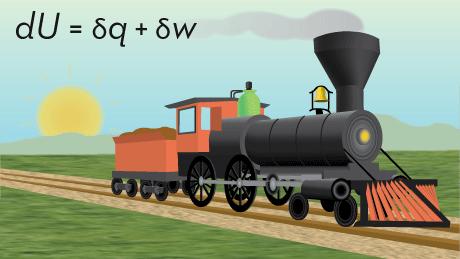
An appreciation of thermodynamics is required to become a chemical and biomolecular engineer. Thermodynamics can assess the viability of a process and is one of the curriculum's most essential topics. The principles are utilized in following engineering courses (kinetics, mass transfer, design, materials) and are applicable to numerous engineering disciplines. The increased emphasis on energy usage and transformation as a result of rising demand, diminishing supply, and global warming necessitates that the engineers who will tackle these issues have a firm grasp of thermodynamics.

Jun 8th 2026
5-12 Weeks
Predictive Models for Toxic Chemical Releases (Coursera) Coursera
University of California, Davis

Predictive Models for Toxic Chemical Releases (Coursera)

Discover the core principles of process safety and risk analysis in chemical engineering through our dynamic course. Gain expertise in modeling liquid and gas leaks, accurately assessing potential material releases, and calculating downwind exposures to toxic chemicals using state-of-the-art dispersion models. This course equips chemical engineers with essential skills to evaluate and mitigate hazardous concentrations effectively, ensuring industrial process safety.

Jun 8th 2026
4 Weeks
Más que química (Coursera) Coursera
Universidad Nacional de Colombia

Más que química (Coursera)

El objeto de la química, como disciplina científica, se enfoca en el estudio de la materia y de los cambios que ésta experimenta. En tanto disciplina científica, a la que se le atribuye la reputación de ser una ciencia complicada y aburrida. Esta reputación, bastante inmerecida, obedece al poco conocimiento que se tiene sobre ella y sobre sus enormes posibilidades de aplicación en el mundo científico, en diferentes campos de la industria y la producción, así como en la vida cotidiana.

May 18th 2026
5-12 Weeks
Nanotechnology and Nanosensors, Part 2 (Coursera) Coursera
Technion - Israel Institute of Technology

Nanotechnology and Nanosensors, Part 2 (Coursera)

Learn about novel sensing tools that make use of nanotechnology to screen, detect and monitor various events in personal or professional life. Together, we will lay the groundwork for infinite innovative applications, starting from diagnosis and treatments of diseases, continuing with quality control of goods and environmental aspects, and ending with monitoring security issues.

May 18th 2026
5-12 Weeks
Chemical Biology (Coursera) Coursera
University of Geneva

Chemical Biology (Coursera)

Chemical biology is a burgeoning field that has rapidly risen to prominence. This surge of interest has been fuelled by chemical biology’s applicability to understanding critical processes in live cells or model organisms in real time. This success has arisen because chemical biology straddles a nexus between chemistry, biology, and physics. Thus, chemical biology can harness rapid chemistry to observe or perturb biological processes, that are in turn reported using physical assays, all in an otherwise unperturbed living entity. Although its boundaries are endless, the multidisciplinary nature of chemical biology can make the field seem daunting; we beg to differ! Here, we deconstruct chemical biology into its core components, and repackage the material.

Jun 8th 2026
5-12 Weeks
Una aproximación a la química del carbono (Coursera) Coursera
Universidad Nacional Autónoma de México

Una aproximación a la química del carbono (Coursera)

En este curso, ofrecido por la UNAM, conocerás cómo se forman los compuestos orgánicos y sus propiedades físicas generales, desde la composición del petróleo hasta la obtención de hidrocarburos y los diferentes grupos funcionales. Comprenderás la estructura química de los diferentes hidrocarburos y grupos funcionales, así como las reacciones características que los distinguen. Reconocerás la importancia y el impacto ambiental del petróleo y los materiales poliméricos.

May 18th 2026
5-12 Weeks