EdX

Beer: the science of brewing (edX)

Beer: the science of brewing (edX)

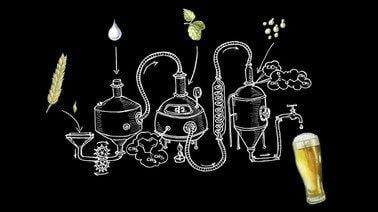
Ever wondered why your beer tastes the way it does? Learn how the ingredients, different biochemical reactions and process parameters in beer brewing influence the taste and aroma of beer. In this course of 12 modules, our team of academic scientists and brewmasters will introduce you to the science underlying beer brewing. At the end of this MOOC, you will understand the science underlying beer production, and why your beer tastes the way it does!

Class Deals by MOOC List - Click here and see EdX's Active Discounts, Deals, and Promo Codes.

This MOOC also gives you a sneak peek inside some of Belgium’s most iconic breweries. It features talks from Belgian brewers and maltsters, as well as from some of the most renowned academics on key features of the malting and brewing process.

What you'll learn:
After completing this course, you will be able to:

  • Explain the importance of the 4 basic ingredients of beer in shaping beer taste and aroma
  • Understand the different processing steps in malting and beer brewing
  • Understand the key biochemical reactions occurring during each of these steps
  • Recognize and describe the main beer styles, and understand how the brewing process contributes to the different beers
  • Identify key factors affecting beer identity, quality, and stability
  • Carry out basic sensory analyses of beers and identify key flavors and off-flavors and their molecular origin

Syllabus

Module 0: Course introduction
Introduction to the main topics and goals covered in this MOOC.

Module 1: History and Overview of the brewing process.
A brief history of beer brewing and an overview of the basic steps in the brewing process.

Module 2: Beer ingredients: Malt
Exploration of the typical characteristics of cereals used to make different types of beer, as well as the different steps in the malting process.
Expert speakers module 2 :
Prof. Christophe Courtin, Full professor at KU Leuven, Leuven Food Science and Nutrition Center, BE
Dr. Sofie Malfliet, Operations Manager at Albert Maltings, BE

Module 3: Beer ingredients: Water
Focus on the importance of water composition, how water is treated and its influence on beer quality and taste. You will also investigate your local water quality.
Expert speaker module 3 :
Prof. Hedwig Neven, Master brewer, Duvel-Moortgat, BE

Module 4: Beer ingredients: Hops and spices
Exploration of the typical characteristics of hops and spices used in beer brewing, and their effect on beer taste and aroma.
Expert speakers module 4 :
Prof. Thomas Shellhammer, Nor’Wester Professor of Fermentation Science, Oregon State University, USA
Dr. Gert De Rouck, Brew Master, KU Leuven, BE

Module 5: Beer ingredients: Yeast
Introduction to the different brewing yeasts, as well as their metabolites that influence beer.
Expert speakers module 5 :
Prof. Kevin Verstrepen, Full professor at KU Leuven, Director of the VIB-KU Leuven Center for Microbiology, BE
Prof. Bart Lievens, Professor at KU Leuven, BE

Module 6: The brewing process
Explanation of the main stages involved in beer brewing.
Expert speaker module 6 :
Dr. Gert De Rouck, Brew Master, KU Leuven, BE

Module 7: Fermentation
Exploration of key biochemical reactions during fermentation.
Expert speaker module 7 :
Anne-Françoise Pypaert, Brew Master, Orval Brewery, BE

Module 8: Filtration and packaging
Overview of filtration and different packaging types.
Expert speaker module 8 :
Dr. David De Schutter, Innovation & Technology Development Director Europe, AB InBev Brewery, BE

Module 9: Beer quality and stability
Overview of beer quality checks, and what parameters affect beer stability.
Expert speaker module 9 :
Prof. Charlie Bamforth, Distinguished Professor Emeritus, Department of Food Science and Technology, UC Davis, USA

Module 10: Beer assessment and tasting
Get hands-on experience in beer tasting and identifying key (off)flavors.
Expert speaker module 10 :
Dr. Veerle Daems, Senior Sensory Scientist, Haystack Consulting, BE
Module 11: Final exam


Go to Class
MOOC List is learner-supported. When you buy through links on our site, we may earn an affiliate commission.

Related Courses

Cell Biology: Mitochondria (edX) EdX
HarvardX,Harvard University

Cell Biology: Mitochondria (edX)

A human-centered approach to the fundamentals of cell biology with a focus on the power plants of the cell - mitochondria. The cell is a powerful case study to help us explore the functional logic of living systems. All organisms, from single-celled algae to complex multicellular organisms like us, are made up of cells. In this course, you will learn the how and why of biology by exploring the function of the molecular components of cells, and how these cellular components are organized in a complex hierarchy.

Self Paced
Self-Paced
Beer Quality: Flavor (Coursera) Coursera
University of California, Davis

Beer Quality: Flavor (Coursera)

In this second course of the Beer Quality Series, you will learn about factors influencing the perception of flavor and the molecules that influence flavor. We also review methods of evaluating and measuring flavor, as well as methods of modifying flavor.

Jul 27th 2026
4 Weeks
Beer Quality: Foam (Coursera) Coursera
University of California, Davis

Beer Quality: Foam (Coursera)

As it is one of the most distinctive qualities of beer, achieving the perfect foam is a precise art. In this course, you’ll learn how foam affects the quality of beer. Designed for brewers of all skill levels, this online course is part of a comprehensive series where "The Pope of Foam”, Charlie Bamforth, guides you through the key markers of beer quality: flavor, foam, color/clarity, freshness and quality systems.

Jul 27th 2026
4 Weeks
Managing Addiction: A Framework for Successful Treatment (edX) EdX
University of Adelaide,AdelaideX

Managing Addiction: A Framework for Successful Treatment (edX)

Understand how to manage addiction in practice and respond effectively to clients with drug and alcohol problems. Addiction is such a common problem today that clients experiencing alcohol, nicotine or other drug problems present in many different healthcare settings. The challenge of identifying effective ways to help people experiencing addiction is a serious one, and much depends on the quality of the clinical decisions we make. This course is intended to help you meet this challenge by increasing your understanding of the biology of addiction and the available treatment options in the different stages of the recovery journey.

Self Paced
Self-Paced
Cell Biology: Signaling (edX) EdX
MIT,MITx

Cell Biology: Signaling (edX)

How do we know what we know about cells? Enhance your scientific thinking and data analysis skills with this in-depth adventure through cell biology. Professors Iain Cheeseman and Frank Solomon guide you through a learning experience where you will discover experiments that answered big questions and find out what is still on the horizon. You will embark on a lively journey through cellular signaling mechanisms, regulation, and specific examples and learn how to apply key concepts and themes of this dynamic experimental science to understand the fundamental workings of cells.

No sessions available
5-12 Weeks
Industrial Biotechnology (edX) EdX
Delft University of Technology,DelftX

Industrial Biotechnology (edX)

Learn the basics of sustainable processing for biobased products to further understand their impact on global sustainability. As fossil-based fuels and raw materials contribute to climate change, the use of renewable materials and energy as an alternative is increasingly important and common. This transition is not a luxury, but rather a necessity.

Self Paced
Self-Paced
The Basics of Transport Phenomena (edX) EdX
Delft University of Technology,DelftX

The Basics of Transport Phenomena (edX)

Learn the basic framework to work on a broad spectrum of engineering problems concerning transfer of heat, mass and momentum. Learn through examples of everyday processes at home, in the lab and in industry. Have you ever wondered why ventilation helps to cool down your hot chocolate? Do you know why a surfing suit keeps you warm? Why iron feels cold, while wood feels warm at room temperature? Or how air is transferred into aqueous liquids in a water treatment plant? How can we sterilize milk with the least amount of energy? How does medicine spread in our tissue? Or how do we design a new cooling tower of a power plant? All these are phenomena that involve heat transfer, mass transfer or fluid flow.

Self Paced
Self-Paced
Fundamentals of Neuroscience, Part 2: Neurons and Networks (edX) EdX
HarvardX,Harvard University

Fundamentals of Neuroscience, Part 2: Neurons and Networks (edX)

Discover what makes your brain tick in this second part of a four-part introductory series in Neuroscience. Neurons in isolation are fascinating and complicated, but the real magic of neuroscience happens in the interaction between neurons. In this course, we examine how neurons pass signals to one another and how complex dynamics can result from just a few neurons arranged in relatively simple circuits.

Self Paced
Self-Paced
Fundamentals of Neuroscience, Part 1: The Electrical Properties of the Neuron (edX) EdX
HarvardX,Harvard University

Fundamentals of Neuroscience, Part 1: The Electrical Properties of the Neuron (edX)

Learn how electricity makes the neurons in your brain tick. Fundamentals of Neuroscience is a three-courseseries that explores the structure and function of the nervous system—from the inner workings of a single nerve cell to the staggering complexity of the brain and the social interactions they enable.

Self Paced
Self-Paced