EdX

Managing Addiction: A Framework for Successful Treatment (edX)

Managing Addiction: A Framework for Successful Treatment (edX)

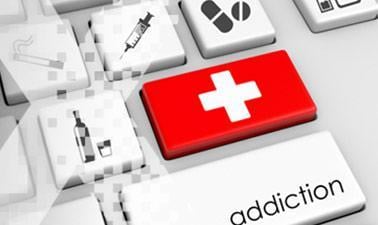
Understand how to manage addiction in practice and respond effectively to clients with drug and alcohol problems. Addiction is such a common problem today that clients experiencing alcohol, nicotine or other drug problems present in many different healthcare settings. The challenge of identifying effective ways to help people experiencing addiction is a serious one, and much depends on the quality of the clinical decisions we make. This course is intended to help you meet this challenge by increasing your understanding of the biology of addiction and the available treatment options in the different stages of the recovery journey.

Class Deals by MOOC List - Click here and see EdX's Active Discounts, Deals, and Promo Codes.

Key questions we will look at in this course include:

  • Why is it so difficult to change addictive behaviour?
  • What kinds of treatment can help a person experiencing addiction?
  • What is my role as a professional, either within or outside of addiction care?
  • How can I identify the best of the many options available?
  • What evidence do I need to be able to make a sound decision about treatment?
  • What approaches to addiction are proven to work around the world?
  • What is the potential impact of my decisions on the life of a person experiencing addiction?

This course explores the “Recovery Pathway,” an easy-to-use framework for helping people with addiction move successfully from addiction to recovery. It helps plan a pathway through screening and assessment, to withdrawal and long-term relapse prevention. The course will examine a range of psychosocial interventions and medication-assisted treatments. You will review the biological basis of behaviour and treatment related to the stage of recovery, as well as evidence-based and service delivery considerations. This course is an ideal starting-point for healthcare professionals who want to get to grips with effective approaches to treating addiction.

What you'll learn:

  • Framework for pathways to recovery
  • How to identify people at risk of addiction
  • Applied understanding of intervention and treatment options

Go to Class
MOOC List is learner-supported. When you buy through links on our site, we may earn an affiliate commission.

Related Courses

Fundamentals of Neuroscience, Part 2: Neurons and Networks (edX) EdX
HarvardX,Harvard University

Fundamentals of Neuroscience, Part 2: Neurons and Networks (edX)

Discover what makes your brain tick in this second part of a four-part introductory series in Neuroscience. Neurons in isolation are fascinating and complicated, but the real magic of neuroscience happens in the interaction between neurons. In this course, we examine how neurons pass signals to one another and how complex dynamics can result from just a few neurons arranged in relatively simple circuits.

Self Paced
Self-Paced
Through my Eyes – Intellectual Disability Healthcare around the World (edX) EdX
University of Queensland,UQx

Through my Eyes – Intellectual Disability Healthcare around the World (edX)

Learn, from personal stories, the daily life and challenges faced by those with intellectual disabilities. This health course focuses on the stories of people with intellectual disabilities around the world, as well as their families and supporters. You will learn about the challenges and aid received in healthcare for people with intellectual disabilities, including their experience of specific syndromes and communication difficulties, and how they stay healthy.

Self Paced
Self-Paced
Telehealth Optimization: Practice Considerations, Workflow Planning, and Healthcare Accessibility (edX) EdX
StanfordOnline

Telehealth Optimization: Practice Considerations, Workflow Planning, and Healthcare Accessibility (edX)

Learn how to plan a telehealth care journey to improve the patient experience, with guidance from Stanford Medicine faculty. Discover how telehealth can be used to make healthcare more accessible. A truly impactful telehealth program places the patient at the center of the experience and makes healthcare more accessible for all. This course from the Stanford Center for Health Education (SCHE) unpacks practical considerations for implementing and optimizing telehealth in your context.

Self Paced
Self-Paced
Cellular Mechanisms of Brain Function (edX) EdX
École Polytechnique Fédérale de Lausanne,EPFLx

Cellular Mechanisms of Brain Function (edX)

This course aims for a mechanistic description of mammalian brain function at the level of individual nerve cells and their synaptic interactions. Brain and behavior are inextricably linked in neuroscience. The function of the brain is to govern behavior, and the aim of this course is to causally link biophysical mechanisms with simple behaviors studied in mice.

Self Paced
Self-Paced
Understanding the Australian Health Care System (edX) EdX
University of Queensland,UQx

Understanding the Australian Health Care System (edX)

Understand and navigate the complexities of Australia’s world-leading health care system by following patient journeys. This course will enable you to understand the workings of the Australian health care system. By following in the footsteps of patient journeys, you will gain an experiential understanding of how this multi-layered system operates in the context of the geographic, social and cultural landscapes of Australia and how to successfully navigate within this system.

Self Paced
Self-Paced
Well and Able - Improving the Physical Health of People with Intellectual Disability (edX) EdX
University of Queensland,UQx

Well and Able - Improving the Physical Health of People with Intellectual Disability (edX)

Learn how to help those with intellectual disability achieve better health. This health course will examine the specific physical health issues that affect people with an intellectual disability including, oral health, syndrome specific health issues, health communication, especially for non-verbal patients, sexual health, and interactions between tertiary and primary healthcare systems. There is a special section on complex care including issues associated with aging and spasticity, and the health impacts of epilepsy.

Self Paced
Self-Paced
Strategies To Improve and Incorporate Diversity, Equity and Inclusion in Healthcare (edX) EdX
StanfordOnline

Strategies To Improve and Incorporate Diversity, Equity and Inclusion in Healthcare (edX)

Find out how you can lead coalitions for change from wherever you are in your organization in order to build and sustain recruitment practices that enhance diversity, equity, and inclusion in your healthcare team and foster inclusivity in the workplace. In this course, you will discover ways to intentionally build and sustain recruitment practices that enhance diversity, equity, and inclusion in your healthcare team.

Self Paced
Self-Paced
Diversity, Equity and Inclusion: Disparities in Healthcare (edX) EdX
StanfordOnline

Diversity, Equity and Inclusion: Disparities in Healthcare (edX)

Discover how various healthcare inequities present across diverse social identities, and how historical factors have institutionalized often-invisible medical racism. This course explores the social determinants of health, and how societal conditions affect health equity by examining the history of racism in US healthcare and identifying ways to mitigate the effects of institutionalized medical racism.

Self Paced
Self-Paced
Foundations of Medical Spanish (edX) EdX
Universidad Anáhuac,AnahuacX

Foundations of Medical Spanish (edX)

Enhance your communication skills as a doctor or healthcare professional with this introductory Spanish course to engage better with Latin and Hispanic patients. This course has the specific purpose to aid healthcare professionals interested in learning medical Spanish. We teach doctors the language to communicate when their patient’s visit takes place. This course not only helps you to greet patients but also interview them to find out the chief complaint.

Self Paced
Self-Paced