Chemical Hazards: Toxicology & Reactivity (Coursera)

Chemical Hazards: Toxicology & Reactivity (Coursera)

This course aims to provide process safety experience for engineers, particularly relevant to chemical engineering but applicable to any field involving process operations. This course introduces you to the important, practical, value-added skills and information that will aid your career, or preparation for a career, in chemical process engineering.

Class Deals by MOOC List - Click here and see Coursera's Active Discounts, Deals, and Promo Codes.

These skills include improving your ability to identify and quantify toxic chemical hazards and be able to identify and mitigate scenarios where reactive chemical hazards are present. You will be able to describe the importance of pressure protection and the general process for pressure relief system design all while using lessons learned from past chemical process incidents to inform the implementation of safer solutions and work practices.

Syllabus

Getting Started & The Importance of Understanding Chemical Hazards
After this module, you will be able to define industrial health and hygiene including important regulatory agencies. You'll be able to describe chemical hazards and the importance of understanding these hazards. You will be able to describe how chemical reactions, when not managed properly, can result in catastrophic scenarios. Finally, you will be able to use the Globally Harmonized System (GHS) for Safety Data Sheets and Labels as well as the National Fire Protection Association (NFPA) diamond.

Toxicology
After this module, you will be able to define, discuss, and use exposure limits such as threshold limit value (TLV) and permissible exposure limit (PEL). You will be able to describe effects of toxicants and quantify impact of exposure using dose versus response curves. You will be able to describe control techniques to prevent exposures, as well as use lessons from past chemical process safety incidents to inform the implementation of solutions and work practices.

Reactive Chemical Hazards
After this module, you will be able to identify processes and situations where reactive chemical hazards are likely to be present. You will be able to create and use a chemical compatibility matrix. And finally, you will be able to describe how to use calorimeter data to characterize chemical reactions.

Pressure Relief
At the end of this module, you will be able to explain the importance of pressure protection and define key terms related to pressure relief devices. You will be able to identify major classes of relief devices and be able to describe options for handling relief effluent. Finally, you'll be able to describe the general process for relief system design.
Go to Class
MOOC List is learner-supported. When you buy through links on our site, we may earn an affiliate commission.

Related Courses

Chemicals and Health (Coursera) Coursera
Johns Hopkins University

Chemicals and Health (Coursera)

This course covers chemicals in our environment and in our bodies and how they impact our health. It addresses policies and practices related to chemicals, particularly related to how they get into our bodies (exposures), what they do when they get there (toxicology), how we measure them (biomonitoring) and their impact on our health. Most examples are drawn from the US.

Jul 20th 2026
5-12 Weeks
Chemical Engineering Thermodynamics 1 (Coursera) Coursera
Korea Advanced Institute of Science and Technology - KAIST

Chemical Engineering Thermodynamics 1 (Coursera)

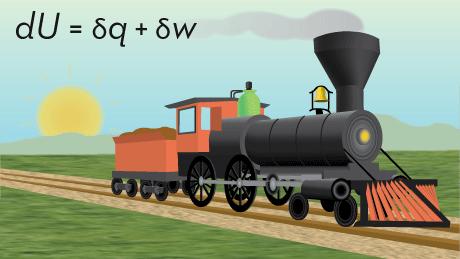
An appreciation of thermodynamics is required to become a chemical and biomolecular engineer. Thermodynamics can assess the viability of a process and is one of the curriculum's most essential topics. The principles are utilized in following engineering courses (kinetics, mass transfer, design, materials) and are applicable to numerous engineering disciplines. The increased emphasis on energy usage and transformation as a result of rising demand, diminishing supply, and global warming necessitates that the engineers who will tackle these issues have a firm grasp of thermodynamics.

Aug 3rd 2026
5-12 Weeks
General Chemistry: Concept Development and Application (Coursera) Coursera
Rice University

General Chemistry: Concept Development and Application (Coursera)

This course will cover the topics of a full year, two semester General Chemistry course. We will use a free on-line textbook, Concept Development Studies in Chemistry, available via Rice’s Connexions project. The fundamental concepts in the course will be introduced via the Concept Development Approach developed at Rice University. In this approach, we will develop the concepts you need to know from experimental observations and scientific reasoning rather than simply telling you the concepts and then asking you to simply memorize or apply them.

Jul 13th 2026
5-12 Weeks
Chemistry (Coursera) Coursera
University of Kentucky

Chemistry (Coursera)

This course is designed to cover subjects in advanced high school chemistry courses, correlating to the standard topics as established by the American Chemical Society. This course is a precursor to the Advanced Chemistry Coursera course. Areas that are covered include atomic structure, periodic trends, compounds, reactions and stoichiometry, bonding, and thermochemistry.

Jul 13th 2026
5-12 Weeks
La Química de las Reacciones (Coursera) Coursera
Universidad Autónoma Metropolitana

La Química de las Reacciones (Coursera)

En este curso aprenderás los conocimientos básicos de reacciones químicas, lo cual te permitirá tener una mejor comprensión del estudio de la química, así como de la naturaleza. En general la mayoría de la gente le tiene miedo a la palabra química; sin embargo, debido a que la química es una ciencia central es necesario comprenderla y hacerla nuestra amiga.

Jul 13th 2026
4 Weeks
Materials Data Sciences and Informatics (Coursera) Coursera
Georgia Institute of Technology

Materials Data Sciences and Informatics (Coursera)

This course aims to provide a succinct overview of the emerging discipline of Materials Informatics at the intersection of materials science, computational science, and information science. Attention is drawn to specific opportunities afforded by this new field in accelerating materials development and deployment efforts.

Jul 13th 2026
5-12 Weeks
Reasoning Across the Disciplines (Coursera) Coursera
University of North Carolina

Reasoning Across the Disciplines (Coursera)

Critical reasoning skills are a key success factor for students entering their first year of college. They must be able to think logically and form arguments. This course, designed with incoming college freshmen in mind but open to anyone, provides an essential grounding in critical reasoning skills. Faculty from multiple disciplines at the University of North Carolina at Chapel Hill offer guidance on applying critical thinking skills in the context of specific disciplines. By developing these skills, students will learn more, enjoy their courses more, and experience greater academic success.

Jul 13th 2026
5-12 Weeks
Beer Quality: Color & Clarity (Coursera) Coursera
University of California, Davis

Beer Quality: Color & Clarity (Coursera)

Welcome to Beer Quality: Color and Clarity led by distinguished professor Charles Bamforth, Ph.D. In this course, you will learn about beer color and how it impacts a consumer's perception of beer. Also discussed are the scientific factors affecting beer color and clarity. The methods of measuring and altering beer color are presented, as are ways to troubleshoot problems with beer color.

Jul 13th 2026
4 Weeks
Material Chemistry and Sustainable Building (Coursera) Coursera
Parsons School of Design, The New School

Material Chemistry and Sustainable Building (Coursera)

This course covers a wide range of concepts related to toxicology and the chemistry of healthier materials. You learn about toxic substances in the built environment, the impact of specific chemicals on human health, unsatisfactory substitutions, and barriers to change. Finally, you examine ways to remove chemicals of concern in common building products. This course is designed to give you a basic understanding of chemistry in the built environment.

Jul 20th 2026
3 Weeks
Air Pollution – a Global Threat to our Health (Coursera) Coursera
University of Copenhagen

Air Pollution – a Global Threat to our Health (Coursera)

We all have to breathe to live. But the air we breathe is polluted both outdoors and indoors. Each year, this pollution costs 7 million lives across the globe – and a lot of suffering. 1 in 8 deaths is due to air pollution. This course will provide you with an introduction to the most recent research in the field of health effects of air pollution as well as a broader understanding of sources and spread of air pollution and what we should do about it.

Jul 13th 2026
3 Weeks
Nanotechnology and Nanosensors, Part 2 (Coursera) Coursera
Technion - Israel Institute of Technology

Nanotechnology and Nanosensors, Part 2 (Coursera)

Learn about novel sensing tools that make use of nanotechnology to screen, detect and monitor various events in personal or professional life. Together, we will lay the groundwork for infinite innovative applications, starting from diagnosis and treatments of diseases, continuing with quality control of goods and environmental aspects, and ending with monitoring security issues.

Jul 13th 2026
5-12 Weeks
Introduction to High-Throughput Materials Development (Coursera) Coursera
Georgia Institute of Technology

Introduction to High-Throughput Materials Development (Coursera)

This course is an introduction to high-throughput experimental methods that accelerate the discovery and development of new materials. This course is an introduction to high-throughput experimental methods that accelerate the discovery and development of new materials. It is well recognized that the discovery of new materials is the key to solving many technological problems faced by industry and society. These problems include energy production and utilization, carbon capture, tissue engineering, and sustainable materials production, among many others. This course will introduce the learner to a remarkable new approach to materials discovery and characterization: high-throughput materials development (HTMD).

Aug 3rd 2026
5-12 Weeks