FUN

Web Sémantique et Web de Données (FUN)

Offered by INRIA,
Web Sémantique et Web de Données (FUN)

Ce cours vous propose de vous former aux standards du Web de données et du Web sémantique.

Il vous présentera les langages qui permettent :

  • de représenter et de publier des données liées sur le Web (RDF) ;
  • d'interroger et de sélectionner très précisément ces données à distance et au travers du Web (SPARQL) ;
  • de représenter des vocabulaires et de raisonner et déduire de nouvelles données pour enrichir les descriptions publiées (RDFS, OWL, SKOS) ;
  • et enfin, de tracer et de suivre l’histoire des données (VOiD, DCAT, PROV-O, etc.).

Plan du cours

Semaine 1 - Vers un web de données liées
Semaine 2 - Le modèle de données RDF
Semaine 3 - Le langage de requête SPARQL
Semaine 4 - Ontologies et schémas RDFS
Semaine 5 - Formalisation en OWL
Semaine 6 - Des schémas particuliers
Semaine 7 - Vers plus d’intégration de données

Go to Class
MOOC List is learner-supported. When you buy through links on our site, we may earn an affiliate commission.

Related Courses

Introduction to Linked Data and the Semantic Web (FutureLearn) FutureLearn
University of Southampton

Introduction to Linked Data and the Semantic Web (FutureLearn)

Learn the power of Linked Data, explore how it’s revolutionising the web and get to grips with it by writing queries in SPARQL. Linked Data, a term coined by Sir Tim Berners-Lee, is a way of publishing data online so it can be easily interlinked and managed using semantic queries. This helps the exposure and interlinking of datasets so that data can be exchanged, reused and integrated. On this course you will learn the basics of Linked Data and the Semantic Web - exploring how this new Web of Data isn’t about creating a big collection of standalone datasets, but is instead about using a common format to ensure data is interrelated.

No sessions available
3 Weeks
Architecture de l'information (FUN) FUN
ENS de Lyon

Architecture de l'information (FUN)

Le MOOC propose une initiation à l’architecture de l’information, ses notions, ses méthodes et ses outils. L'approche « architecture de l'information » permet de faire vivre une information partagée et de proposer une expérience utilisateur stimulante via les applications web, les applications mobiles, et les dispositifs numériques émergents.

No sessions available
5-12 Weeks
Knowledge Graphs - Foundations and Applications (openHPI) OpenHPI
Hasso-Plattner-Institut

Knowledge Graphs - Foundations and Applications (openHPI)

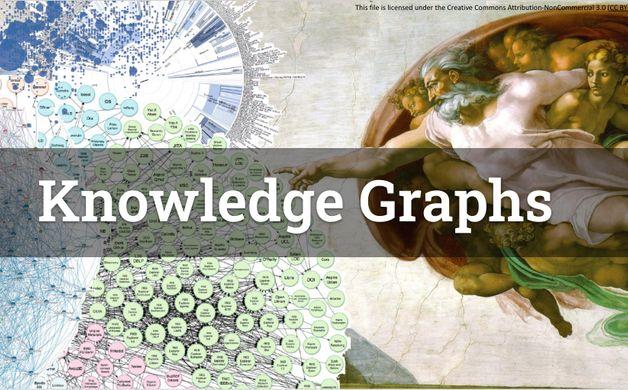
Even though it affects our lives every single day, most of us have no idea what a knowledge graph is. Asking Alexa about the weather tomorrow or searching for the latest news on climate change via Google, knowledge graphs constitute the backbone of today’s state-of-the-art information systems. From improving search results over question answering and recommender systems up to explainable AI systems, the applications of knowledge graphs are manyfold. Overall, the goal of this course is to provide a broad overview of knowledge graphs and their underlying technologies as well as their significance in today's digital world.

Oct 11th 2023
5-12 Weeks
Knowledge Engineering with Semantic Web Technologies (openHPI) OpenHPI
Hasso-Plattner-Institut

Knowledge Engineering with Semantic Web Technologies (openHPI)

The knowledge contained in the World Wide Web is available in interlinked documents written in natural language. To make use of this knowledge, technologies such as natural language processing, information retrieval, data and knowledge mining must be applied. Semantic Web technologies follow an alternative approach by complementing web documents with explicit semantics based on formal knowledge representations, such as e.g. ontologies. In this course, you will learn the fundamentals of Semantic Web technologies and how they are applied for knowledge representation in the World Wide Web. You will learn how to represent knowledge with ontologies and how to access and benefit from semantic data on the Web. Furthermore, you will also learn how to make use of Linked Data and the Web of Data, currently the most popular applications based on Semantic Web technologies.

Self Paced
Self-Paced
À la découverte des télécommunications (FUN) FUN
Institut Mines-Telecom

À la découverte des télécommunications (FUN)

Vous souhaitez savoir comment votre smartphone communique ? Comment l’information est transportée dans les réseaux lorsque vous envoyez un mail ou un texto ? Que sont le cloud computing ou les objets connectés ? Le MOOC « Á la découverte des télécommunications » vous initie aux fonctionnements des réseaux et des télécommunications.

No sessions available
5-12 Weeks
Comprendre l’économie collaborative (FUN) FUN
Institut Mines-Telecom

Comprendre l’économie collaborative (FUN)

L'objectif du MOOC "Comprendre l'économie collaborative" est de permettre d'appréhender les grands principes de la transition numérique de l'économie et d'en décoder les principaux mécanismes sociaux-économiques. Tout au long de ce cours, vous décrypterez l'économie collaborative à travers des clés de lecture.

Sep 23rd 2021
5-12 Weeks
Enseigner et former avec le numérique en mathématiques (FUN) FUN
ENS de Lyon

Enseigner et former avec le numérique en mathématiques (FUN)

L’objectif du MOOC Enseigner et Former Avec le Numérique en Mathématiques (eFAN Maths) est de se former à construire des situations d’apprentissage des mathématiques tirant profit de supports numériques. Par rapport à la première saison de eFAN Maths (novembre-décembre 2014), de nouvelles ressources ont été développées, en relation avec les évolutions des programmes d’enseignement (introduction d’éléments d’algorithmique, développement de dispositifs interdisciplinaires).

No sessions available
4 Weeks
Programmer un objet avec Arduino (FUN) FUN
Institut Mines-Telecom

Programmer un objet avec Arduino (FUN)

Ce MOOC est le deuxième volet du parcours La Fabrication Numérique. Apprenez à programmer un objet en utilisant l’électronique et le développement Arduino issu des FabLabs ! Grâce à ce MOOC, vous pourrez rapidement programmer et construire un objet interactif après avoir acquis les connaissances de base en électronique et en développement informatique. Vous serez capable de programmer un Arduino, un petit ordinateur utilisé dans les FabLabs pour rendre les objets intelligents.

Nov 16th 2021
5-12 Weeks
Exploratory Multivariate Data Analysis (FUN) FUN
Agrocampus Ouest

Exploratory Multivariate Data Analysis (FUN)

Exploratory multivariate data analysis is studied and teached in a French-way since a long time in France. This course focuses on four essential and basic methods, those with the largest potential in terms of applications: principal component analysis (PCA) when variables are quantitative, correspondence analysis (CA) and multiple correspondence analysis (MCA) when variables are categorical and clustering. This course has been designed for scientists whose aim is not to become statisticians but who feel the need to analyze the data themselves. It is therefore addressed to practitioners who are confronted with the analysis of data in marketing, surveys, ecology, biology, geography, etc.

Mar 7th 2022
5-12 Weeks