EdX

Sustainable Food Security: The value of systems thinking (edX)

Sustainable Food Security: The value of systems thinking (edX)

Learn how to solve the ‘Rubik’s cube’ of systems thinking and how it’s applied to improve the environmental sustainability of food production systems! Have you ever considered how many aspects of food production affect the natural environment? Every aspect needs to be considered in attaining the future goal to produce enough food for the growing population while at the same time preserving our planet. It’s as difficult as solving a Rubik’s cube; changing one aspect may affect the environment in a major way.

Class Deals by MOOC List - Click here and see EdX's Active Discounts, Deals, and Promo Codes.

Systems theory, or systems thinking, is a way of understanding and working with the complexity of sustainable food production systems, which requires training in different disciplines and an approach that can address this complexity. This environmental studies course enables participants to apply the principles of a systems approach to food production with a focus on environmental sustainability.

This course is part of the Food Security and Sustainability XSeries Program.

This is why you should sign up
Sign up as a student if you want to acquire knowledge about environmental sustainability and the way systems thinking helps in decision-making in the complexity of food production. After successful completion of both practice and graded assignments related to this course, you will:

  • Understand the complexity and diversity of food production systems
  • Understand the principles of system analysis and apply it to environmental issues in food production
  • Understand evaluation methods for the environmental impact of food production systems in different contexts and levels (e.g. farm, regional and global) Be able to evaluate strong and weak points of different food production systems regarding environmental sustainability
  • Be able to contribute to a discussion about environmental sustainability and food production and ask relevant questions

What you'll learn
In this course you will learn about:

  • The concept of environmental sustainability and identify the main issues associated with food production
  • The basics of systems thinking and understand how the different aspects of a system influence one another and how a system itself is affected by its context
  • The relevance of crop and livestock productivity for environmental sustainability
  • The environmental indicators and how to measure the environmental impact of food production at farm, village or regional level
  • Decision-making and life cycle assessment
  • Helpful tools and their strong and weak points

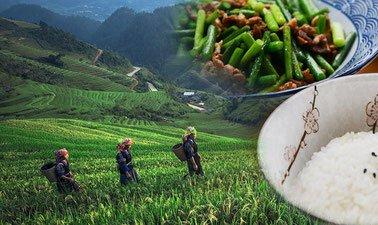
We will analyze production systems at both ends of the spectrum: highly productive systems with relatively high inputs and emissions to the environment, and low productive systems with low input use and depletion of soil fertility. Crop-livestock interaction is a focal point.
Go to Class
MOOC List is learner-supported. When you buy through links on our site, we may earn an affiliate commission.

Related Courses

Environmental Security and Sustaining Peace (edX) EdX
SDGAcademyX,SDG Academy

Environmental Security and Sustaining Peace (edX)

Natural resources and the environment as a vehicle for peace. Conflicts over natural resources and the environment are among the greatest challenges in 21st-century geopolitics. These conflicts present serious threats to human security at both the national and local levels. Natural resources and the environment can nonetheless serve as a vehicle for peace if managed in a sustainable and equitable manner.

Self Paced
5-12 Weeks
Industrial Biotechnology (edX) EdX
Delft University of Technology,DelftX

Industrial Biotechnology (edX)

Learn the basics of sustainable processing for biobased products to further understand their impact on global sustainability. As fossil-based fuels and raw materials contribute to climate change, the use of renewable materials and energy as an alternative is increasingly important and common. This transition is not a luxury, but rather a necessity.

Self Paced
Self-Paced
Planetary Boundaries (edX) EdX
SDGAcademyX,SDG Academy

Planetary Boundaries (edX)

Can our planet continue to support the current scope of human activity? A thriving global society relies on the stability of the Earth and its resilience across oceans, forests, waterways, biodiversity, the atmosphere and more. So how do we shape sustainability at a global scale? The boundaries set by the planet’s natural resources, the resilience of those resources, and the human activities that impact sustainability all come into play.

Self Paced
Self-Paced
Cities and the Challenge of Sustainable Development (edX) EdX
SDGAcademyX,SDG Academy

Cities and the Challenge of Sustainable Development (edX)

What is a sustainable city? Learn the basics here. According to the United Nations, urbanization and population growth could result in an increase of 2.5 billion people into urban populations by 2050, with associated impacts ranging from increased transportation needs to more building. How do we make cities sustainable to support this growth?

Self Paced
Self-Paced
Science & Cooking: From Haute Cuisine to Soft Matter Science (chemistry) (edX) EdX
HarvardX,Harvard University

Science & Cooking: From Haute Cuisine to Soft Matter Science (chemistry) (edX)

Top chefs and Harvard researchers explore how everyday cooking and haute cuisine can illuminate basic principles in chemistry, physics, and engineering. Learn about food molecules and how chemical reactions can affect food texture and flavor. During each module of this course, chefs reveal the secrets behind some of their most famous culinary creations — often right in their own restaurants. Inspired by such cooking mastery, the Harvard team will then explain the science behind the recipe.

Self Paced
Self-Paced
Sustainable Urban Development (edX) EdX
Wageningen University,Delft University of Technology,DelftX,WageningenX

Sustainable Urban Development (edX)

Learn why cities are key in resolving global urbanization and sustainability challenges and how you can engineer tomorrow’s cities today. Did you know that cities take up less than 3% of the earth’s land surface, but more than 50% of the world’s population live in them? And, cities generate more than 70% of the global emissions? Large cities and their hinterlands (jointly called metropolitan regions) greatly contribute to global urbanization and sustainability challenges, yet are also key to resolving these same challenges.

Self Paced
Self-Paced
As above, so below: An introduction to soils, ecosystems and livelihoods in the Tropics (edX) EdX
KU Leuven University,KULeuvenX

As above, so below: An introduction to soils, ecosystems and livelihoods in the Tropics (edX)

The tropics are as beautiful and diverse below-ground as they are above-ground. Learn how to use knowledge about the natural variability in soil properties for the sustainable management of ecosystems and farms. Soils form the foundation of sustainable development. They grow our food, fiber and fuel, are a habitat for organisms, buffer and purify water and safeguard archaeological legacies.

Self Paced
Self-Paced
Sustainability & Major Sport Events: Principles (edX) EdX
Hamad Bin Khalifa University - HBKU,HBKUx

Sustainability & Major Sport Events: Principles (edX)

Learn the five pillars of sustainability and how to apply these when planning and hosting a major sport event. While any major sport event can pose great opportunities for the host city or region, there are also challenges associated with hosting these events. The environmental impact on the country's natural resources, the workforce, and infrastructure are just some of the considerations. It is essential to ensure that your major sport event is sustainable for your city throughout the event, but also after the event has been completed.

Self Paced
Self-Paced
Circular Economy for a Sustainable Built Environment (edX) EdX
Delft University of Technology,DelftX

Circular Economy for a Sustainable Built Environment (edX)

Learn how the principles of the Circular Economy can be applied to the built environment ranging from products and buildings to metropolitan and regional development strategies. In this course you will become familiar with circularity as a systemic, multi-disciplinary approach, concerned with the different scale, from material to product, building, city, and region.

Self Paced
Self-Paced
Feeding a Hungry Planet: Agriculture, Nutrition and Sustainability (edX) EdX
SDGAcademyX,SDG Academy

Feeding a Hungry Planet: Agriculture, Nutrition and Sustainability (edX)

How do we create a healthy and sustainable diet for the growing world population? Agriculture is more than waving fields of wheat; our ability to grow food from existing natural resources – and without decimating those resources – is key to sustainably feeding the world. In this course, learn about food security worldwide, the effects of malnutrition, how we manage ecosystems that provide food resources and more.

Self Paced
Self-Paced
Built environment sustainability assessment (edX) EdX
Universitat Politècnica de València,UPValenciaX

Built environment sustainability assessment (edX)

The course introduces the basic elements and trends for performing a through built environment assessment and develops the tools for urban sustainability policy impact analysis. The course introduces the basic elements and trends for performing a through built environment assessment and develops the tools for urban sustainability policy impact analysis.

Self Paced
Self-Paced
Water Works: Activating Heritage for Sustainable Development (edX) EdX
Delft University of Technology,DelftX

Water Works: Activating Heritage for Sustainable Development (edX)

Address contemporary challenges from a socio-spatial and cultural perspective, and activate water heritage for decision-making in water management. Water has served and sustained societies throughout history. Understanding the complex and diverse water systems of the past is key to devising sustainable development for the future with regard to socioeconomic structures, policies, and cultures. Today, past systems form the framework for preservation and reuse as well as for new proposals.

Self Paced
Self-Paced