Sprachtechnologie in den Digital Humanities (Coursera)

Offered by University of Zurich,
Sprachtechnologie in den Digital Humanities (Coursera)

Lernen Sie die wichtigsten sprachtechnologischen Methoden kennen, um Texte mit digitalen Werkzeugen zu erschliessen!

Class Deals by MOOC List - Click here and see Coursera's Active Discounts, Deals, and Promo Codes.

Sie möchten wissen, was genau die Digitalisierung von Texten beinhaltet? Sie haben sich schon immer gefragt, wie Texte in einem Korpus optimal durchsuchbar gemacht werden? Sie wundern sich, wie Texte mit linguistischen Informationen angereichert werden können?
Dann sind Sie in diesem Kurs genau richtig! Er bietet einen Überblick über die wichtigsten Konzepte und Probleme bei der Digitalisierung und Annotation von geschriebenen Texten. In sechs thematischen Modulen lernen Sie relevante Technologien und Werkzeuge kennen.
Wir freuen uns, mit Ihnen diese digitalen Wege zu beschreiten, die in den Geisteswissenschaften immer wichtiger werden.

Syllabus

WEEK 1
Wege in die digitale Welt
In der ersten Woche werden wir darüber sprechen, wie Texte digitalisiert und zum Beispiel in XML dargestellt werden können und was OCR (optical character recognition) für die Anwendung in der Praxis bedeutet. Wir befassen uns außerdem mit der Erstellung von Korpora und den Schwierigkeiten, denen wir dabei begegnen können. Viel Spaß!

WEEK 2
Strukturierte und nachhaltige Repräsentation von Korpusdaten
In der zweiten Woche beschäftigen wir uns mit der strukturierten und nachhaltigen Repräsentation von Korpusdaten. Wir werden über die Markup Language XML sprechen und einige wichtige Standards zur Textrepräsentation kennenlernen. In der zweiten Hälfte dieses Moduls geht es anschließend um das Thema der automatischen Text- und Wortsegmentierung. Viel Spaß mit den Videos!

WEEK 3
Eigenschaften von Korpora und grundlegende Analysemethoden
In der dritten Woche geht es um die wichtigsten Eigenschaften von Korpora, um grundlegende Analysemethoden in der Korpuslinguistik und Grundbegriffe wie Worthäufigkeiten, Kollokationen, N-Gramme. Im letzten Teil wird Ihnen Noah Bubenhofer noch einen Ausblick auf die visuelle und graphische Darstellung von Texteigenschaften geben. Viel Spaß!

WEEK 4
Automatische Korpusannotation mit computerlinguistischen Werkzeugen
In diesem Modul geht es um die automatische Korpus-Annotation mit linguistischen Informationen wie Part-Of-Speech-Tags (Wortarten) und Lemmas (Grundformen), aber auch um die Schwierigkeiten, die eine solche automatische Annotation mit sich bringen kann. Wir werden besprechen, wie die automatische Erkennung von Eigennamen oder geographischen Namen (Named Entities) abläuft und im dritten Teil noch auf die automatische Syntax-Analyse von Texten eingehen. Viel Spaß!

WEEK 5
Manuelle Annotation und Evaluation von Korpusdaten
In Modul 5 beschäftigen wir uns mit der Frage, wie eine möglichst ökonomische Annotation aussehen kann und wie sich manuelle und automatische Annotation mit Hilfe von maschinellem Lernen ergänzen können. Wir besprechen außerdem, wie wir die Qualität bzw. die Genauigkeit der Annotation gewährleisten und evaluieren können. Im zweiten Teil geht es dann um das sogenannte "Crowdsourcing", wo über Online-Plattformen Daten für diverse Projekte gesammelt bzw. korrigiert werden. Viel Spaß in der vorletzten Woche!

WEEK 6
Herausforderungen der Multilingualen Textanalyse
Im letzten Modul befassen wir uns mit multilingualen bzw. parallelen Korpora. Im ersten Teil geht es um die automatische Sprach-Identifikation in gemischtsprachlichen Korpora, die einen wichtigen Schritt bei der Verarbeitung der Texte darstellt. Im zweiten Teil geht es um die automatische Satz- bzw. Wortalignierung zwischen parallelen Texten in unterschiedlichen Sprachen. Viel Spaß in der letzten Woche!


Go to Class
MOOC List is learner-supported. When you buy through links on our site, we may earn an affiliate commission.

Related Courses

Ensino Híbrido: Personalização e Tecnologia na Educação (Coursera) Coursera
Fundação Lemann,Instituto Península

Ensino Híbrido: Personalização e Tecnologia na Educação (Coursera)

Neste curso, oferecido pela Fundação Lemann em parceria com o Instituto Península, você terá a oportunidade de aprender, a partir de experiências reais, como integrar as tecnologias digitais no seu contexto escolar. As vivências compartilhadas pelos diferentes professores envolvidos neste curso lhe proporcionará reflexões sobre os modelos de Ensino Híbrido e sua relação com a personalização do ensino.

Jul 27th 2026
5-12 Weeks
Game Design and Development 1: 2D Shooter (Coursera) Coursera
Michigan State University

Game Design and Development 1: 2D Shooter (Coursera)

If you love games and want to learn how to make them, then this course will start you down that path. Making games is a creative and technical art form. In this course you will familiarize yourself with the tools and practices of game development and well as the process. You will get started developing video games using industry standard game development tools, including the Unity 2020 game engine. At the end of the course you will have completed two hands-on projects, including an Intro to Unity project and a 2D Shooter game, and will be able to leverage an array of game development techniques to create your own basic games.

Jul 20th 2026
4 Weeks
Humanidades digitales (Coursera) Coursera
Universitat Autònoma de Barcelona

Humanidades digitales (Coursera)

¿Te has planteado para qué sirven las humanidades en el siglo XXI? ¿Cómo el advenimiento de lo Digital ha cambiado nuestra forma de acercarnos a las Humanidades? ¿Y al revés? ¿De qué forma las Humanidades influencian sobre los diferentes aspectos de la Tecnología? Te ofrecemos el primer curso online que da respuesta a estas preguntas. Una visión de las Humanidades Digitales desde la filosofía, la historia, la arqueología, el arte,… y desde las ciencias computacionales y la visión por ordenador.

Aug 3rd 2026
4 Weeks
Teaching Impacts of Technology: Fundamentals (Coursera) Coursera
University of California, San Diego

Teaching Impacts of Technology: Fundamentals (Coursera)

In this course you’ll focus on the fundamentals of teaching the impacts of technology, starting by exploring how you interact with and benefit from technology in a typical 24 hour period, such as the desire for instant food and entertainment. This will be done through a series of paired teaching sections, exploring a specific “Impact of Computing” in your typical day and the “Technologies and Computing Concepts” that enable that impact, all at a K12-appropriate level.

Jul 15th 2026
4 Weeks
Re-imaging God in Korean Context (Coursera) Coursera
Yonsei University

Re-imaging God in Korean Context (Coursera)

This course will be an overview of a development of the theological methods in relation to Korea’s cultural context. Completing the course, the learners can understand cultural influences on the dynamic development of Korean churches and indigenous theology; they can also gain an insight into their own image of God and theological imagination in their own cultural context.

Jul 20th 2026
5-12 Weeks
Microwave engineering and antennas (Coursera) Coursera
Eindhoven University of Technology

Microwave engineering and antennas (Coursera)

This unique Master-level course provides you with in-depth know-how of microwave engineering and antennas. The course combines both passive and active microwave circuits as well as antenna systems. Future applications, like millimeter-wave 5G/beyond-5G wireless communications or automotive radar, require experts that can co-design highly integrated antenna systems that include both antennas and microwave electronics. We will provide you with the required theoretical foundation as well as hands-on experience using state-of-the-art design tools. The web lectures are supported by many on-line quizzes in which you can practice the background theory.

Aug 3rd 2026
5-12 Weeks
Recovering the Humankind's Past and Saving the Universal Heritage (Coursera) Coursera
Sapienza University of Rome

Recovering the Humankind's Past and Saving the Universal Heritage (Coursera)

Archaeology has as its objective the recovery and revival of humankind past, and as its aim the rescue and preservation of cultural heritage. Archaeology is, among human sciences, the discipline with the strongest importance for the rediscovery, but also for the preservation and protection of cultural heritage, as Humankind’s universal patrimony. You will be introduced to the way we ourselves reflect on and are engaged with the study of human past: from the practical and material recovery of ancient traces in the field to the study and interpretation. On the other hand, the discovery of human past implies the correct conservation and presentation for both experts and general public: the study and protection of the past we share every day prevent from any possible destruction, misuse, abuse and thus cancellation of human memory.

Jul 27th 2026
5-12 Weeks
Software Design Methods and Tools (Coursera) Coursera
University of Colorado System

Software Design Methods and Tools (Coursera)

Since many software developers are compulsive coders, they have created software over the years to help them do their job. There are tools which make design and its associated tasks easier. The course introduces some basic tools and techniques to help you with design. Tools aren’t always tangible, however. The last two lessons of this course discuss questions of Ethics in software development. The purpose here is, as with tools, to equip you to better carry our your responsibilities as a designer. Students will be required to have a prior knowledge of writing and delivering software and some programming knowledge in java.

Jul 20th 2026
5-12 Weeks
Science and Technology in the Silla Cultural Heritage (Coursera) Coursera
Pohang University of Science and Technology - POSTECH

Science and Technology in the Silla Cultural Heritage (Coursera)

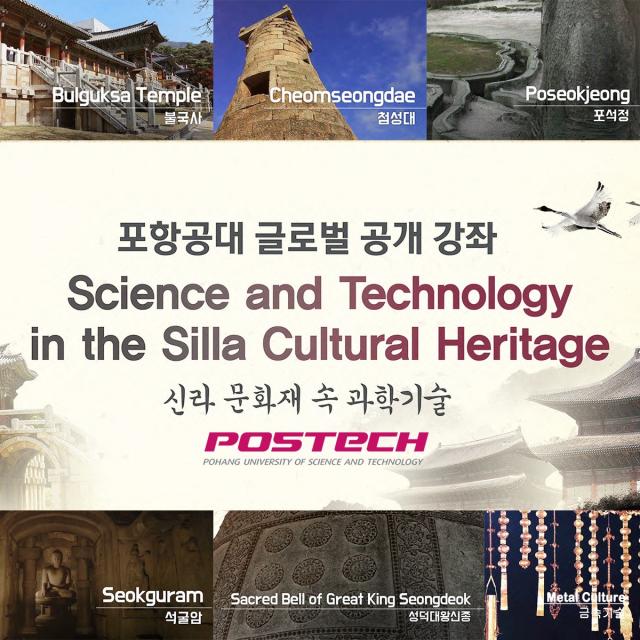
Science and Technology in the Silla Heritage. The course explores the scientific and technological aspects of the cultural heritage of Silla, an ancient dynasty in Korea, and its relationship with other ancient civilizations in the world. The lecture series will cover major cultural heritage of Silla: Bulguksa, Seokguram, Cheomseongdae, Poseokjeong, the Sacred Bell of Great King Seongdeok, and metallurgy.

Jul 27th 2026
5-12 Weeks
Teaching Impacts of Technology: Relationships (Coursera) Coursera
University of California, San Diego

Teaching Impacts of Technology: Relationships (Coursera)

In this course you’ll focus on how “smart” devices have changed how we interact with others in personal ways, impacting how we stay connected in our increasingly mobile society. This will be done through a series of paired teaching sections, exploring a specific “Impact of Computing” in your typical day and the “Technologies and Computing Concepts” that enable that impact, all at a K12-appropriate level.

Jul 15th 2026
4 Weeks
Constructivism and Mathematics, Science, and Technology Education (Coursera) Coursera
University of Illinois at Urbana-Champaign

Constructivism and Mathematics, Science, and Technology Education (Coursera)

This course is designed to help participants examine the implications of constructivism for learning and teaching in science, mathematics, and technology focused areas. Course readings, discussions, and assignments will examine constructivist views of learning, research on students' ideas and idea-based interactions, research on instructional approaches taking student ideas into account, and challenges in implementing constructivist perspectives in instruction.

Jul 20th 2026
5-12 Weeks