Software Design Methods and Tools (Coursera)

Software Design Methods and Tools (Coursera)

Since many software developers are compulsive coders, they have created software over the years to help them do their job. There are tools which make design and its associated tasks easier. The course introduces some basic tools and techniques to help you with design. Tools aren’t always tangible, however. The last two lessons of this course discuss questions of Ethics in software development. The purpose here is, as with tools, to equip you to better carry our your responsibilities as a designer. Students will be required to have a prior knowledge of writing and delivering software and some programming knowledge in java.

Class Deals by MOOC List - Click here and see Coursera's Active Discounts, Deals, and Promo Codes.

Course 3 of 4 in the Secure Software Design Specialization

Syllabus

WEEK 1
General Design Notions
What is in a design and an introduction to hierarchical design representations.

WEEK 2
Dynamic and Algebraic Designs
Hierarchical design which shows data flow, and rigorous, formally provable methods of design representation.

WEEK 3
UML Tools
An introduction to IBM Rhapsody, a UML modeling tool.

WEEK 4
Unit Testing
An introduction to the use of JUnit which performs unit testing for Java software.

WEEK 5
Ethics
Unusual situations in a project in which you may find yourself, and what to do about them.

WEEK 6
Final Exam
A comprehensive course assessment comprising of 5 quizzes. Each assessment contains a randomized set of questions from different modules of the course.

Go to Class
MOOC List is learner-supported. When you buy through links on our site, we may earn an affiliate commission.

Related Courses

An Introduction to Interactive Programming in Python (Part 2) (Coursera) Coursera
Rice University

An Introduction to Interactive Programming in Python (Part 2) (Coursera)

This two-part course is designed to help students with very little or no computing background learn the basics of building simple interactive applications. Our language of choice, Python, is an easy-to learn, high-level computer language that is used in many of the computational courses offered on Coursera. To make learning Python easy, we have developed a new browser-based programming environment that makes developing interactive applications in Python simple.

Oct 5th 2026
4 Weeks
Software Architecture for the Internet of Things (Coursera) Coursera
EIT Digital

Software Architecture for the Internet of Things (Coursera)

This course will teach you how to design futureproof systems that meet the requirements of IoT systems: systems that are secure, interoperable, modifiable and scalable. Moreover, you'll learn to apply best-in-class software architecture methods to help you design complex IoT and other applications. Lastly, you'll come to understand the business impact of the technical decisions that you make as an IoT system architect.

Sep 28th 2026
5-12 Weeks
Development of Real-Time Systems (Coursera) Coursera
EIT Digital

Development of Real-Time Systems (Coursera)

This course is intended for the Master's student and computer engineer who likes practical programming and problem solving! After completing this course, you will have the knowledge to plan and set-up a real-time system both on paper and in practice. The course centers around the problem of achieving timing correctness in embedded systems, which means to guarantee that the system reacts within the real-time requirements.

Sep 21st 2026
5-12 Weeks
Continuous Delivery & DevOps (Coursera) Coursera
University of Virginia

Continuous Delivery & DevOps (Coursera)

Amazon famously delivers new code every 11.6 seconds. Just a few years ago, this was unthinkable: many ‘cutting edge’ firms would release software quarterly. When it comes to digital innovation, velocity is critical and many would say it’s the most reliable determinant of success. Bringing an organization to the state of the art (or even functional capability) in this area requires strong work in a combination of disciplines and a combination of both technical and managerial skills. There is no single cookie-cutter approach for achieving this capability.

Oct 5th 2026
4 Weeks
Executing Full Text Queries with Elasticsearch (Coursera) Coursera
Board Infinity

Executing Full Text Queries with Elasticsearch (Coursera)

This course is designed to teach you how to execute full-text queries with Elasticsearch, a powerful search and analytics engine widely used for data exploration, log analysis, and real-time search applications. In this course, you will learn the basics of Elasticsearch, including how to install and configure the software, index data, and create mappings. You will then explore the various query types supported by Elasticsearch, such as term queries, match queries, and phrase queries. You will also learn how to use Elasticsearch's aggregation framework to analyze and summarize your data.

Oct 5th 2026
3 Weeks
Programming with Scratch (Coursera) Coursera
The Hong Kong University of Science and Technology - HKUST

Programming with Scratch (Coursera)

Learning coding is not only about understanding the programming language being used, but also developing important computational thinking skills, which are useful for problem solving across many disciplinary areas. In this course, students will learn basic programming skills by creating interactive storybooks, animations, and games with Scratch, which is a block-based visual programming language for anyone new to coding.

Sep 28th 2026
5-12 Weeks
AI for Efficient Programming: Harnessing the Power of LLMs (Coursera) Coursera
Fred Hutchinson Cancer Center

AI for Efficient Programming: Harnessing the Power of LLMs (Coursera)

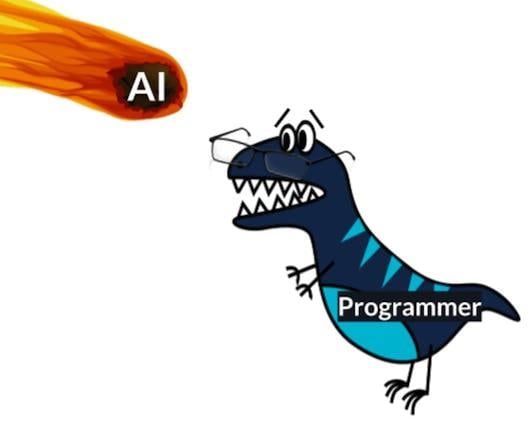
This course on Artificial Intelligence (AI) for software development explores the use of AI large language models such as ChatGPT, Bard, and others and their potential benefits and challenges. Through examples and hands-on activities, you will develop an understanding of the ways in which AI can speed up software development tasks and free up time for more creative and strategic work.

Oct 5th 2026
4 Weeks
Principles of Computing (Part 2) (Coursera) Coursera
Rice University

Principles of Computing (Part 2) (Coursera)

This two-part course introduces the basic mathematical and programming principles that underlie much of Computer Science. Understanding these principles is crucial to the process of creating efficient and well-structured solutions for computational problems. To get hands-on experience working with these concepts, we will use the Python programming language. The main focus of the class will be weekly mini-projects that build upon the mathematical and programming principles that are taught in the class.

Oct 5th 2026
4 Weeks
Avatar Psychology for Designers (Coursera) Coursera
Michigan State University

Avatar Psychology for Designers (Coursera)

This course covers the latest and greatest psychological research on avatars and is relevant to current and future designers of any medium that includes user self-representations (e.g., video games, virtual worlds, robots, automobiles, social media, etc.). By taking this course, you will be able to define digital and non-digital avatars and identify how they are applicable in everyday life.

Sep 28th 2026
4 Weeks
Database Management Essentials (Coursera) Coursera
University of Colorado System

Database Management Essentials (Coursera)

Database Management Essentials provides the foundation you need for a career in database development, data warehousing, or business intelligence, as well as for the entire Data Warehousing for Business Intelligence specialization. In this course, you will create relational databases, write SQL statements to extract information to satisfy business reporting requests, create entity relationship diagrams (ERDs) to design databases, and analyze table designs for excessive redundancy.

Sep 21st 2026
5-12 Weeks