Avatar Psychology for Designers (Coursera)

Avatar Psychology for Designers (Coursera)

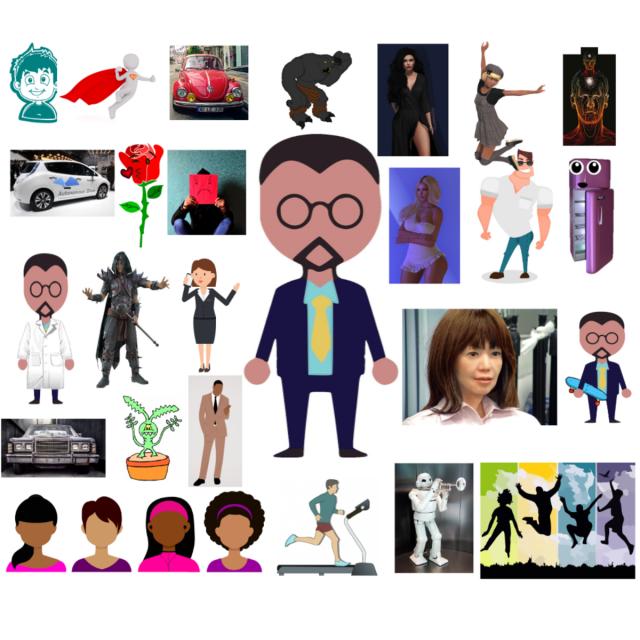
This course covers the latest and greatest psychological research on avatars and is relevant to current and future designers of any medium that includes user self-representations (e.g., video games, virtual worlds, robots, automobiles, social media, etc.). By taking this course, you will be able to define digital and non-digital avatars and identify how they are applicable in everyday life.

Class Deals by MOOC List - Click here and see Coursera's Active Discounts, Deals, and Promo Codes.

You will be able to differentiate between the types of relationships people have with their avatars and motivations for using avatars that are more or less similar to the self. The course will help you discern the importance different avatar attributes (e.g., gender, race/ethnicity, attractiveness, personality, humanity, body type, hair, controllability) and avoid common harmful stereotypes in your designs. Finally, you will gain the ability to design avatars that harness their psychological power to influence users toward specific (hopefully non-evil) outcomes, even beyond avatar use.
Dr. Ratan, the instructor of this one-of-a-kind course, is an internationally recognized scholar who actively publishes research on avatar psychology. He is also known for his jovial and engaging lecture style and believes that you learn and produce more when you are having fun. Hope you enjoy the course.

Syllabus

WEEK 1
Avastart Here!
Introduction to the course, avatars, and attributes of avatars

WEEK 2
Connections to Avatars
How do players connect with their avatars? How do players explore their identity through their avatar?

WEEK 3
Gender, Race, and Other Traits
An avatar's physical features, including their race or gender, can feed into stereotypes or unfortunate implications. How can we design avatars to avoid common pitfalls?

WEEK 4
Got any Change? Effects of Avatars
How do avatars influence their users even after the context of avatar use? How can you, as a designer, harness this power (for good, not evil)?

Go to Class
MOOC List is learner-supported. When you buy through links on our site, we may earn an affiliate commission.

Related Courses

Software Design Methods and Tools (Coursera) Coursera
University of Colorado System

Software Design Methods and Tools (Coursera)

Since many software developers are compulsive coders, they have created software over the years to help them do their job. There are tools which make design and its associated tasks easier. The course introduces some basic tools and techniques to help you with design. Tools aren’t always tangible, however. The last two lessons of this course discuss questions of Ethics in software development. The purpose here is, as with tools, to equip you to better carry our your responsibilities as a designer. Students will be required to have a prior knowledge of writing and delivering software and some programming knowledge in java.

Aug 3rd 2026
5-12 Weeks
Principles of Computing (Part 2) (Coursera) Coursera
Rice University

Principles of Computing (Part 2) (Coursera)

This two-part course introduces the basic mathematical and programming principles that underlie much of Computer Science. Understanding these principles is crucial to the process of creating efficient and well-structured solutions for computational problems. To get hands-on experience working with these concepts, we will use the Python programming language. The main focus of the class will be weekly mini-projects that build upon the mathematical and programming principles that are taught in the class.

Aug 10th 2026
4 Weeks
Software Architecture for the Internet of Things (Coursera) Coursera
EIT Digital

Software Architecture for the Internet of Things (Coursera)

This course will teach you how to design futureproof systems that meet the requirements of IoT systems: systems that are secure, interoperable, modifiable and scalable. Moreover, you'll learn to apply best-in-class software architecture methods to help you design complex IoT and other applications. Lastly, you'll come to understand the business impact of the technical decisions that you make as an IoT system architect.

Aug 3rd 2026
5-12 Weeks
Creative Programming for Digital Media & Mobile Apps (Coursera) Coursera
University of London,Goldsmiths, University of London

Creative Programming for Digital Media & Mobile Apps (Coursera)

This course is for anyone who would like to apply their technical skills to creative work ranging from video games to art installations to interactive music, and also for artists who would like to use programming in their artistic practice. This course will teach you how to develop and apply programming skills to creative work. This is an important skill within the development of creative mobile applications, digital music and video games. It will teach the technical skills needed to write software that make use of images, audio and graphics, and will concentrate on the application of these skills to creative projects. Additional resources will be provided for students with no programming background.

Aug 17th 2026
5-12 Weeks
Introdução ao Teste de Software (Coursera) Coursera
Universidade de São Paulo, Brasil

Introdução ao Teste de Software (Coursera)

A necessidade das empresas em produzir software com qualidade tem aumentado a demanda por profissionais com conhecimentos e habilidades em Teste de Software. Entretanto, existe uma escassez de mão-de-obra especializada nesta área. Considerando essa lacuna, o curso de Introdução ao Teste de Software foi planejado para servir como um guia para pessoas que necessitam de uma fonte de consulta e/ou aprendizado na área.

Aug 10th 2026
5-12 Weeks
Continuous Delivery & DevOps (Coursera) Coursera
University of Virginia

Continuous Delivery & DevOps (Coursera)

Amazon famously delivers new code every 11.6 seconds. Just a few years ago, this was unthinkable: many ‘cutting edge’ firms would release software quarterly. When it comes to digital innovation, velocity is critical and many would say it’s the most reliable determinant of success. Bringing an organization to the state of the art (or even functional capability) in this area requires strong work in a combination of disciplines and a combination of both technical and managerial skills. There is no single cookie-cutter approach for achieving this capability.

Aug 10th 2026
4 Weeks
Agile Planning for Software Products (Coursera) Coursera
University of Alberta

Agile Planning for Software Products (Coursera)

This course covers the techniques required to break down and map requirements into plans that will ultimately drive software production. Upon successful completion of this course, you will be able to: create effective plans for software development; map user requirements to developer tasks; assess and plan for project risks; apply velocity-driven planning techniques; generate work estimates for software products.

Aug 3rd 2026
4 Weeks
Algorithmic Thinking (Part 1) (Coursera) Coursera
Rice University

Algorithmic Thinking (Part 1) (Coursera)

Experienced Computer Scientists analyze and solve computational problems at a level of abstraction that is beyond that of any particular programming language. This two-part class is designed to train students in the mathematical concepts and process of "Algorithmic Thinking", allowing them to build simpler, more efficient solutions to computational problems.

Aug 10th 2026
4 Weeks