Agile with Atlassian Jira (Coursera)

Offered by Atlassian,
Agile with Atlassian Jira (Coursera)

Agile teams use “just enough” planning and an incremental approach to accomplishing the work of the team. Every project and every team uses a custom agile methodology. This course discusses common foundational principles and practices used by agile methodologies, providing the student a flexible set of tools to use in any role (e.g. product owner, scrum master, project manager, team member) on any agile team.

Class Deals by MOOC List - Click here and see Coursera's Active Discounts, Deals, and Promo Codes.

This course mainly discusses agile and lean principles, the kanban and scrum agile methodologies, and uses Atlassian Jira Software Cloud as the main software tool to apply hands-on learning of the topics. The course includes instruction on "classic" Jira projects as well as the new "next-gen" Jira projects.
Students can use the free plan of Atlassian Jira Software Cloud to complete the hands-on labs associated with this course. By the time you have completed this course, you will have a strong foundational understanding of agile principles and practices, and strong hands-on experience with Atlassian Jira Software Cloud. You will be the site administrator for your Jira account, so you will be able to perform basic administration tasks on your site. You should be able to continuously configure your Jira project(s) to match your team's custom agile methodology.
You can watch the videos and take the quizzes from your phone if you want, but the hands-on labs using Atlassian Jira Software Cloud require you to have a Windows, Mac or Linux computer.
This course tries to be as concise as possible. It will probably take you about 6-12 hours to go through, but your mileage may vary. It is highly encouraged that you apply what you learn to managing personal agile projects after the course is complete.

Syllabus

WEEK 1
Agile Overview I
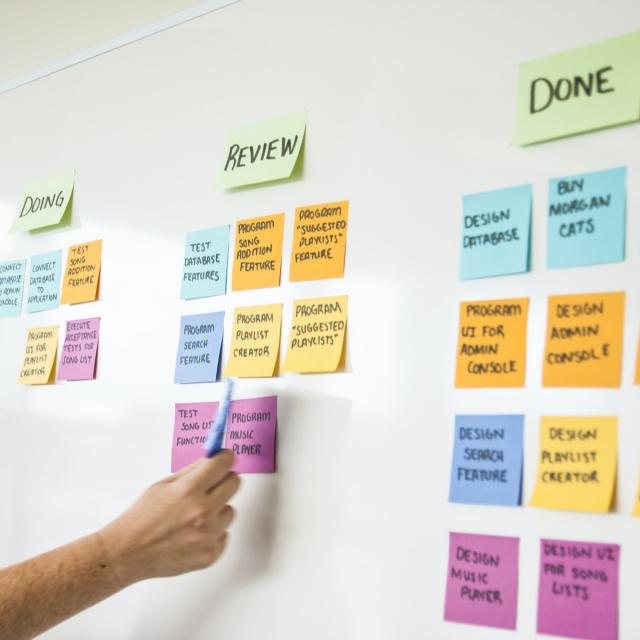
This module provides an overview of the agile mindset. It introduces Atlassian Jira as a tool used to implement agile principles for team project work. Students will be provided a free Jira Software Cloud license in order to go through the hands-on exercises in this course. We cover the importance of visualizing work, and provide an overview of the kanban agile method. Students will create a custom kanban board.

WEEK 2
Agile Overview II
This module start with an overview of scrum, including scrum concepts such as increments, sprints, sprint goals, backlogs, estimation, velocity, common scrum reports, roles and events. You will then execute a sprint using Jira. The rest of the module focuses more on the "why" of agile, and provided a foundational understanding of lean and agile principles. The Toyota Production System is discussed, as this could be considered as the foundation of lean thinking. The Agile Manifesto is also discussed in quite some detail.

WEEK 3
Configure Jira I
This module focuses on configuring Jira to match your agile process. This is a more hands-on module than the previous module. Every team has a unique, continuously evolving agile process. Their tools need to be able to adapt to these changes. We will start by discussing searching, then discuss Jira Query Language (JQL). A solid understanding of JQL helps with the rest of the course and in your continuing use of Jira after the course. We will discuss creating filter, custom issue types and configuring issues to show the information that your team cares about.

WEEK 4
Configure Jira II
In this module, we continue configuring Jira in order to be able to match the tool to our team's custom agile process. We will discuss and create epics, which are large issues that may contain other issues. We will discuss and create versions, which are a set of issues that usually make up a product update. We discuss users and permissions. Since you are the administrator of the free Jira Software Cloud that you use for this course, you should know how to invite users to your site and configure permissions so that the right access is granted to users. We end the course with a final project. You will be asked to configure Jira to keep up with your team's continuous changes to their agile process.


Go to Class
MOOC List is learner-supported. When you buy through links on our site, we may earn an affiliate commission.

Related Courses

Cloud Computing Concepts: Part 2 (Coursera) Coursera
University of Illinois at Urbana-Champaign

Cloud Computing Concepts: Part 2 (Coursera)

Cloud computing systems today, whether open-source or used inside companies, are built using a common set of core techniques, algorithms, and design philosophies—all centered around distributed systems. Learn about such fundamental distributed computing "concepts" for cloud computing. Some of these concepts include: Clouds, MapReduce, key-value stores, Classical precursors, Widely-used algorithms, Classical algorithms, Scalability, Trending areas, And more!

Jun 29th 2026
5-12 Weeks
Sensors and Sensor Circuit Design (Coursera) Coursera
University of Colorado Boulder

Sensors and Sensor Circuit Design (Coursera)

After taking this course, you will be able to: understand how to specify the proper thermal, flow, or rotary sensor for taking real-time process data; implement thermal sensors into an embedded system in both hardware and software; add the sensor and sensor interface into a microprocessor based development kit; create hardware and firmware to process sensor signals and feed data to a microprocessor for further evaluation; study sensor signal noise and apply proper hardware techniques to reduce it to acceptable levels.

Jun 29th 2026
5-12 Weeks
Agile Project Management (Coursera) Coursera
Google

Agile Project Management (Coursera)

This is the fifth course in the Google Project Management Certificate program. This course will explore the history, approach, and philosophy of Agile project management, including the Scrum framework. You will learn how to differentiate and blend Agile and other project management approaches. As you progress through the course, you will learn more about Scrum, exploring its pillars and values and comparing essential Scrum team roles. You will discover how to build, manage, and refine a product backlog, implement Agile’s value-driven delivery strategies, and define a value roadmap.

Jul 4th 2026
4 Weeks
Cloud Systems Software (Coursera) Coursera
Georgia Institute of Technology

Cloud Systems Software (Coursera)

This course provides an introduction to programming frameworks and their implementation issues in the Cloud. It explains multiple topics, including: scalable distributed data stores, resource management (for supporting multi-tenancy and elasticity) and virtualization techniques. Optionally, the student will also be guided in the implementation of a basic version of the distributed runtime system for the Map-Reduce programming framework

Jun 29th 2026
5-12 Weeks
Service-Oriented Architecture (Coursera) Coursera
University of Alberta

Service-Oriented Architecture (Coursera)

Based on an understanding of architectural styles, you will review architectures for web applications, then explore the basics of Service-Oriented Architecture (SOA) in two approaches: Web Services (WS*) and Representational State Transfer (REST) architecture. In the Capstone Project you will connect a Java-based Android application with Elasticsearch, a web service with a REST application programmer interface (API).

Jun 29th 2026
4 Weeks
Database Management Essentials (Coursera) Coursera
University of Colorado System

Database Management Essentials (Coursera)

Database Management Essentials provides the foundation you need for a career in database development, data warehousing, or business intelligence, as well as for the entire Data Warehousing for Business Intelligence specialization. In this course, you will create relational databases, write SQL statements to extract information to satisfy business reporting requests, create entity relationship diagrams (ERDs) to design databases, and analyze table designs for excessive redundancy.

Jun 29th 2026
5-12 Weeks
Internet of Things: Setting Up Your DragonBoard™ Development Platform (Coursera) Coursera
University of California, San Diego

Internet of Things: Setting Up Your DragonBoard™ Development Platform (Coursera)

Do you want to develop skills to prototype mobile-enabled products using state-of-the-art technologies? In this course you will build a hardware and software development environment to guide your journey through the Internet of Things specialization courses. We will use the DragonBoard™ 410c single board computer (SBC).

Jun 29th 2026
5-12 Weeks
Advanced Deployment Scenarios with TensorFlow (Coursera) Coursera
DeepLearning.AI

Advanced Deployment Scenarios with TensorFlow (Coursera)

Bringing a machine learning model into the real world involves a lot more than just modeling. This Specialization will teach you how to navigate various deployment scenarios and use data more effectively to train your model. In this final course, you’ll explore four different scenarios you’ll encounter when deploying models.

Jun 29th 2026
4 Weeks
Python Data Analysis (Coursera) Coursera
Rice University

Python Data Analysis (Coursera)

This course will continue the introduction to Python programming that started with Python Programming Essentials and Python Data Representations. We'll learn about reading, storing, and processing tabular data, which are common tasks. We will also teach you about CSV files and Python's support for reading and writing them. CSV files are a generic, plain text file format that allows you to exchange tabular data between different programs. These concepts and skills will help you to further extend your Python programming knowledge and allow you to process more complex data.

Jun 29th 2026
4 Weeks
Hypothesis-Driven Development (Coursera) Coursera
University of Virginia

Hypothesis-Driven Development (Coursera)

To deliver agile outcomes, you have to do more than implement agile processes- you have to create focus around what matters to your user and constantly test your ideas. This is easier said than done, but most of today’s high-functioning innovators have a strong culture of experimentation. In this course, you’ll learn how to identify the right questions at the right time, and pair them with the right methods to do just enough testing to make sure you minimize waste and maximize the outcomes you create with your user.

Jun 29th 2026
4 Weeks