New Assessment Strategies - The magic of feedback (POK)

Offered by Politecnico di Milano,
New Assessment Strategies - The magic of feedback (POK)

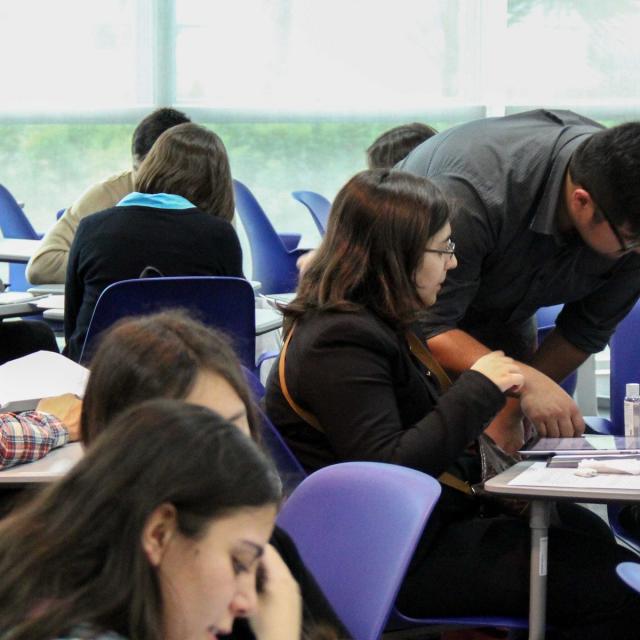
The course explains how to accompany students during their learning path with assessment activities. The aim of these activities is to give frequent feedback, so that it can be easier for students to keep on track and arrive at the final assessment properly prepared.

Many times in students’ lives assessment is synonym of stressful experience, and connecting “learning” with “stress” means making it an awful experience after all, which compromises long term memory of what you have learned. Neuroscientific research proved it already; positive motivation, on the contrary, promote a qualitative improvement of the brain circuitry involved in memory and executive functions.

Superior learning happens in classroom experiences relevant to students’ lives, interests and experiences. So: what if we moved the assessment within the learning path? We could transform it in a check-in to see if learning is there, otherwise we could give feedback and support students to get back on track. A question or an exercise, every once in a while, does not interrupt the learning flux but supports it in keeping the right direction, toward the achievement of the learning outcomes. After that learning will be already there, it’s only a matter of its measurement.
This MOOC is entitled “New Assessment Strategies”, because it focuses on new ways to perform assessment, focusing on learning and not only on its measurement. It is part of the “MOOCs for Teachers” series and according to the series’ style, it talks mainly to teachers who want to improve their effective support to students. It could be interesting also for teachers and professors who already apply formative assessment strategies with their students and surround their class time and online activities with the magic of feedback, but are still willing to see new perspectives and are seeking for people to share their experience with. Any other participant, as usual, is more than welcome to share their non-professional, role-free, in-depth opinion on the subject: their contribution can only enrich our participants further on!
In this MOOC you’ll have the chance to listen about these factors directly from the voice of teachers who are familiar with different kind of formative feedback in very different contexts. You’ll meet the following guests: Marius Boboc (Professor Cleveland State University, USA) Ignacio Jaramillo Urrutia (Teaching Management Manager at the ILUMNO University Network, Colombia), Ana Moura Santos (Assistant Professor of the Dep. of Mathematics of Instituto Superior Técnico in Lisbon, Portugal) and Maurizio Zani (Physics Researcher at Politecnico di Milano, Italy).


Go to Class
MOOC List is learner-supported. When you buy through links on our site, we may earn an affiliate commission.

Related Courses

Ubiquitous Learning and Instructional Technologies (Coursera) Coursera
University of Illinois at Urbana-Champaign

Ubiquitous Learning and Instructional Technologies (Coursera)

This course will analyze currently available technologies for learning. Areas addressed include: learning management systems, intelligent tutors, computer adaptive testing, gamification, simulations, learning in and through social media and peer interaction, universal design for learning, differentiated instruction systems, big data and learning analytics, attention monitoring, and affect-aware systems.

Nov 23rd 2026
4 Weeks
New Learning: Principles and Patterns of Pedagogy (Coursera) Coursera
University of Illinois at Urbana-Champaign

New Learning: Principles and Patterns of Pedagogy (Coursera)

Education is in a state of flux – transitioning from traditional architectures and practices to new ecologies of teaching and learning influenced by the tremendous social and technological changes of our times. What changes are afoot today in workplaces, civic life and everyday community life? What are their implications for education? What are the possible impacts of contemporary social transformations on teaching and learning - including in the areas of technology, media, globalization, diversity, changing forms of work in the “knowledge society”, and, in these contexts, changing learner needs and sensibilities? This course explores three pedagogical paradigms: “didactic”, “authentic” and “transformative” learning.

Nov 23rd 2026
4 Weeks
Learning to Teach Online (Coursera) Coursera
UNSW Sydney - University of New South Wales

Learning to Teach Online (Coursera)

Are you an educator? Have you ever wanted to understand more about how to design your class to make better use of educational technology – whether fully online or in blended contexts? Would you like to learn from those who have extensive practical experience with online technologies? The Learning to Teach Online (LTTO) MOOC will help you develop a working understanding of successful online teaching strategies that you can apply in your own practice. The course is based upon the multi award winning open educational resource developed by Dr Simon McIntyre and Karin Watson.

Nov 23rd 2026
5-12 Weeks
Potenciando mi aprendizaje en el primer año de Universidad (Coursera) Coursera
Universidad de Chile

Potenciando mi aprendizaje en el primer año de Universidad (Coursera)

El propósito del curso es acompañar a los estudiantes de primer año a potenciar sus aprendizajes, con la finalidad de fomentar una buena experiencia en la universidad. Lo anterior se realiza a través de un auto- diagnóstico y de la familiarización con distintas estrategias de estudio, de gestión del tiempo y del abordaje de evaluaciones.

Nov 23rd 2026
5-12 Weeks
Introduzione al Debate (POK) Polimi OPEN KNOWLEDGE
Politecnico di Milano

Introduzione al Debate (POK)

Cos’è il Debate e come praticarlo al meglio in classe? Quali sono le sue regole? Come valutarlo? In questo corso potrai trovare non solo valide risposte a questi interrogativi, ma anche pratiche raccomandazioni e suggerimenti da parte di docenti esperti.

Available
5-12 Weeks
English for Teaching Purposes (Coursera) Coursera
Universitat Autònoma de Barcelona

English for Teaching Purposes (Coursera)

Thinking about teaching your university subject in English but it’s not the Language you normally use? Then, English for teaching purposes is the course for you. A course on English and teaching methodology that aims to help university lecturers do their teaching in English, in line with university internationalisation policies. The course structure is the same for all learners and there are opportunities for them to link up with colleagues from universities all over the world who share the same discipline and discourse community, to ask questions and exchange ideas.

Nov 23rd 2026
4 Weeks
Diventare tutor didattico! (POK) Polimi OPEN KNOWLEDGE
Politecnico di Milano

Diventare tutor didattico! (POK)

Strumenti pratici a supporto del tutor didattico in università. Qual è il compito di un tutor didattico in ambito universitario? Come si dovrebbe impostare il rapporto con gli studenti? Come si progetta un percorso che abbia tutte le potenzialità per supportare al meglio l’apprendimento degli studenti? “Diventare tutor didattico!” è utile per tutti coloro che dovranno svolgere, o stanno svolgendo, un’attività di tutorship e che sono alle prime armi nel mondo della didattica.

Available
2 Weeks
Teaching Science at University (Coursera) Coursera
University of Zurich

Teaching Science at University (Coursera)

This course will prepare you for teaching science in higher education. In this MOOC you will learn to make your knowledge as an excellent researcher accessible to your students. We will show you how to communicate science to novices as well as advanced students in science.

Nov 23rd 2026
5-12 Weeks
Valutare e giudicare nel Debate (POK) Polimi OPEN KNOWLEDGE
Politecnico di Milano

Valutare e giudicare nel Debate (POK)

Sei un docente che usa la metodologia del Debate con i propri studenti, un professionista che sta pensando di applicarla in ambiti extra-scolastici o un giudice di Debate che vuole approfondire alcuni aspetti di questo non semplice ruolo? Hai finora dibattuto e adesso ti piacerebbe anche giudicare i dibattiti? Ti sei già accorto dell’importanza e della complessità della valutazione nel Debate, oltre che delle difficoltà ad essa connesse? Se sei incuriosito dalle potenzialità di questo aspetto centrale e fondamentale per il Debate, questo corso fa per te.

Available
5-12 Weeks