Mastering Remote Work and Online Study in U.S. in the post-COVID Era (Coursera)

Mastering Remote Work and Online Study in U.S. in the post-COVID Era (Coursera)

TAre you ready for the new, COVID-forced, online learning paradigm? This competency-based, skill-building course will help non-U.S. students, first-generation immigrants, and foreign-born professionals better understand and master American online learning, as well as other U.S. virtual environments, for college and career success. In the post-COVID era, the course can also be very instrumental in assisting U.S.-based institutions in organizing remote learning activities for their current or prospective international students.

Class Deals by MOOC List - Click here and see Coursera's Active Discounts, Deals, and Promo Codes.

The current pandemic has disrupted the world of higher education and work as we know it. Many thousands of international students and professionals can no longer travel internationally at will and must now learn how to effectively study and work remotely. To excel in American online learning and work environments, international students and foreign-born professionals need to know how American universities and companies use the Internet to organize study and work, develop and execute projects, communicate ideas, collaborate, and solve organizational and technical problems. By taking this course, you will learn how to enhance your cultural knowledge and assess potential skill gaps that may hinder your online experience or negatively impact your performance in U.S. virtual learning and work environments. Throughout the course you will systematically review competencies required for online work, come to better understand common barriers for non-native students and professionals, learn how to detect and overcome competency gaps, and develop plans for self-improvement and success. We believe that you will find the course useful and gain new knowledge and skills to become more successful in your remote study/work in the U.S.
The course was previously offered as iMOOC101 and iMOOC102 "Mastering American e-Learning". We have updated it to reflect the new realities of the Post (well, not yet!)-COVID era. We will be glad if you could share your own experiences in navigating the new world of remote teaching, learning, and work.

What You Will Learn

  • Pinpoint and examine common challenges for non-U.S. students and foreign-born professionals in American virtual learning and work environments
  • Enhance your cultural knowledge and your ability to thrive in U.S. virtual learning and work environments
  • Get an inside look at how U.S. universities and companies organize work and study, communicate ideas, and execute projects in online environments
  • Develop skills that will allow you to seamlessly navigate American learning environments and succeed in remote work in the U.S.

Syllabus

Week 1
International learners in U.S. online education
In this introductory module, we explain why many international online learners and foreign-born professionals experience problems in American e-learning environments and how they can use a competency-based approach to overcome barriers and become fully proficient for college and career success. Your instructors for this week are Dr. Valeri Chukhlomin, Dr. Dana Gliserman-Kopans, Dr. Michele Forte, and Amy Giaculli. Guest lecturers are Prof. Xenia Coulter and Lorette Pellettiere Calix.

Week 2
Overcoming barriers of technology, language, and culture
This week covers three lessons to help you address the key barriers of technology, language, and culture. The first lesson on technology will help you become familiar with the general expectations regarding the technological competencies necessary for your success in the U.S. university environment. Our goal is to make you an expert user of technology which will empower you navigate comfortably through your online learning program with ease, no matter the school or program in which you are enrolled. The remaining two lessons are designed to help you understand the critical language and cross-cultural factors that might either hinder or help your success as a student in an American setting. The main objective is to master the language and cultural competencies that are needed to fulfill the required tasks for efficient and effective cross-cultural communication. Your instructor for this week is Dr. Bidhan Chandra, capstone task facilitator - Dr. Michele Forte.

Week 3
Navigating the U.S. academic system
In this week, you will become familiar with the U.S. academic system, concentrating especially on communications and the culture of online environments. We will look closely at the American online classroom and review necessary skills. Your instructor for this week is Dr. Dana Gliserman-Kopans, capstone task facilitator - Dr. Michele Forte.

Week 4
Navigating U.S. professional environments
In this week, you will become familiar with the professional contexts of U.S. working environments. We will look closely at employability skills such as self-management, problem solving, creativity, and self-directed learning. We will also examine how ethics, leadership, and teamwork skills may contribute to your success in the U.S. professional context. We will close the week by exploring professional contexts in specific areas. Throughout this week, you will be provided with example scenarios to help you get acquainted with the type of interactions that happen in U.S. environments – both work and learning. Your instructor for this week is Dr. Anant Deshpande, capstone task facilitator - Dr. Michele Forte.

Week 5
The final week: Capstone Project and course review
Whether taking an online course or taking a training module, navigating American e-Learning systems can be rewarding – but also very challenging.In this week, you will submit a Capstone Project. This project will ask you to identify a barrier you might face in this environment, think about the competencies implied in that barrier, and then create your final project -- a plan for improvement. Complete the Capstone Project peer-review assignment and the-end-of-the-course survey.

Go to Class
MOOC List is learner-supported. When you buy through links on our site, we may earn an affiliate commission.

Related Courses

Fundamentals of Remote Team Security (Coursera) Coursera
LearnQuest

Fundamentals of Remote Team Security (Coursera)

This course is designed for professionals and students in cybersecurity and remote work and will provide essential knowledge and strategies to navigate the evolving landscape of remote work security. You will gain comprehensive insights into securing remote teams. Learners will become equipped with the skills to recognize and address the unique security challenges faced by remote work environments.

Sep 21st 2026
3 Weeks
Hacking COVID-19 — Course 2: Decoding SARS-CoV-2's Secrets (Coursera) Coursera
University of California, San Diego

Hacking COVID-19 — Course 2: Decoding SARS-CoV-2's Secrets (Coursera)

In this course, you will follow in the footsteps of the bioinformaticians investigating the COVID-19 outbreak by annotating the SARS-CoV-2 genome and using the annotation to design a COVID-19 diagnostic test. Whether you’re new to the world of computational biology, or you’re a bioinformatics expert seeking to learn about its applications in the COVID-19 pandemic, or somewhere in between, this course is for you!

Sep 21st 2026
2 Weeks
Mind Control: Managing Your Mental Health During COVID-19 (Coursera) Coursera
University of Toronto

Mind Control: Managing Your Mental Health During COVID-19 (Coursera)

Never in the history of humanity have so many people been feeling intense anxiety related to COVID-19 and the world it will leave in its wake. The intent of this course is to give you a deeper understanding of the anxiety reaction as it relates to various aspects of our current life, ranging from our consumption of news to the way we talk to our children about this. I will also give you clear strategies for managing and, in fact, turning off the anxiety response at least for short periods.

Oct 5th 2026
4 Weeks
Reflections from 40 Years Fighting International Epidemics (Coursera) Coursera
Dartmouth College

Reflections from 40 Years Fighting International Epidemics (Coursera)

Reflections on patients, policies, pan-epidemics, prose and medical humanities from a 40-year career fighting epidemics around the world by an infectious disease public health physician. Examples include HIV/AIDS, Anthrax, SARS, MERS, H5N1 and H1N1 influenza, Nipah, Ebola (with MSF 2014), Zika, Plague (with WHO 2017) and COVID-19. Working side-by-side with international colleagues to provide hands-on patient care and to share stories is an expression of medical humanities.

Sep 28th 2026
5-12 Weeks
El desafío de Innovar en la Educación Superior (Coursera) Coursera
Universidad de Chile

El desafío de Innovar en la Educación Superior (Coursera)

El propósito del curso es incentivarte a que en tu labor docente replantees tu práctica, desde perspectivas innovadoras con miras a mejorar la calidad de los aprendizajes con todos tus estudiantes. Además, este curso promueve que vincules la formación de tus estudiantes con desafíos sociales, profesionales y laborales, propiciando la excelencia en el aula y la inclusión de la diversidad, proponiendo enfoques de enseñanza participativos centrados en el esfuerzo cognitivo de tus aprendices.

Sep 21st 2026
5-12 Weeks
Teaching in University Science Laboratories (Developing Best Practice) (Coursera) Coursera
University of Amsterdam

Teaching in University Science Laboratories (Developing Best Practice) (Coursera)

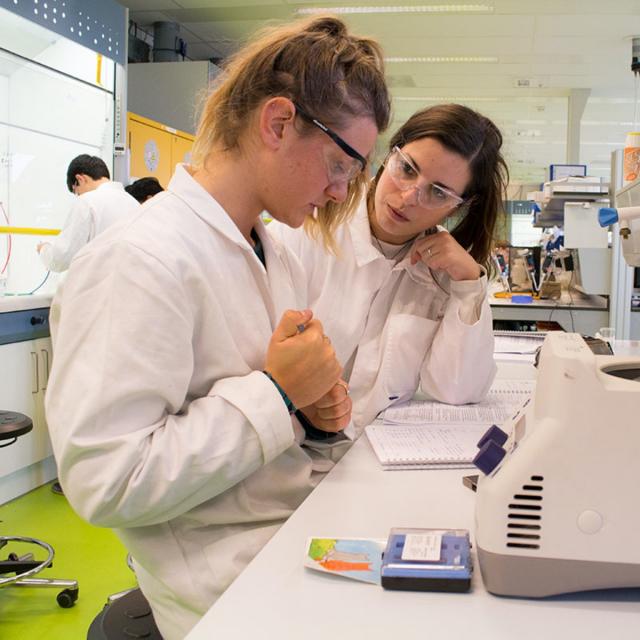
This course is developed to improve the effectiveness of laboratory classes in higher education. It aims to support teachers to improve their teaching skills for active learning in university science laboratory courses. It will show you how laboratory sessions can differ with respect to their aim and expected learning outcomes, how to engage students for learning and how to cope with their different levels of pre-knowledge and experience and probe their understanding. Last but not least it will show how you could assess students in laboratory courses.

Sep 28th 2026
5-12 Weeks
Teaching Science at University (Coursera) Coursera
University of Zurich

Teaching Science at University (Coursera)

This course will prepare you for teaching science in higher education. In this MOOC you will learn to make your knowledge as an excellent researcher accessible to your students. We will show you how to communicate science to novices as well as advanced students in science.

Oct 12th 2026
5-12 Weeks
Measuring and Maximizing Impact of COVID-19 Contact Tracing (Coursera) Coursera
Johns Hopkins University

Measuring and Maximizing Impact of COVID-19 Contact Tracing (Coursera)

This course aims to provide managers and developers of contact tracing programs guidance on the most important indicators of performance of a contact tracing program, and a tool that can be used to project the likely impact of improvements in specific indicators. Students who complete the course will be proficient in using the Contact Tracing Evaluation and Strategic Support Application (ConTESSA) to estimate the impact of their contact tracing program on transmission and strategizing about how to increase their program’s impact.Free enrollment available until December 31, 2020. Valid for one enrollment per person.

Sep 21st 2026
1 Week
Life After COVID-19: Get Ready for our Post-Pandemic Future (Coursera) Coursera
Institute for the Future

Life After COVID-19: Get Ready for our Post-Pandemic Future (Coursera)

The pandemic will create long-lasting and surprising ripple effects, even after vaccines are widely available. Are you ready for what's next? This course will give you a clear forecast of the challenges and opportunities you’re most likely to encounter over the next 3-5 years, as a direct result of the ongoing COVID-19 pandemic. Find out what risks still lie ahead; Make a plan for resilience; Play future forecasting games to stretch your imagination about what's possible; Build your post-pandemic confidence; Envision the world you want to live in when we’re all finally on the other side of COVID-19. How can you take advantage of this unprecedented moment of disruption to make positive change in your community, company or other organization?

Sep 28th 2026
4 Weeks
Hacking COVID-19 — Course 1: Identifying a Deadly Pathogen (Coursera) Coursera
University of California, San Diego

Hacking COVID-19 — Course 1: Identifying a Deadly Pathogen (Coursera)

In this course, you will follow in the footsteps of the bioinformaticians investigating the COVID-19 outbreak by assembling the SARS-CoV-2 genome. Whether you’re new to the world of computational biology, or you’re a bioinformatics expert seeking to learn about its applications in the COVID-19 pandemic, or somewhere in between, this course is for you!

Sep 21st 2026
2 Weeks
How to Manage a Remote Team (Coursera) Coursera
GitLab

How to Manage a Remote Team (Coursera)

Remote management is much more than just implementing a work-from-home policy. In this course, you’ll learn and apply remote work best practices, build your remote work policy, and prepare your team for success. This course is ideal for current managers, executives, and human resources professionals who want to learn how to lead and support a high-functioning, scalable remote team. GitLab is one of the world’s largest all-remote organizations; experts from throughout the company will guide you through in-depth lessons for leaders, people managers, and HR professionals to build, manage, and scale.

Sep 21st 2026
5-12 Weeks
Writing your World: Finding yourself in the academic space (Coursera) Coursera
University of Cape Town

Writing your World: Finding yourself in the academic space (Coursera)

Throughout the world, writing serves to express, record and even create meaningful moments. In academic spaces, writing becomes the bridge between ourselves and the world of ideas. In this course, we provide practical insights into how to write an academic essay. We show you how to develop the academic skills needed to be a competent academic writer. You will have an opportunity to engage with texts written by academics, and to see how some of the ideas in these texts are used by students in constructing an academic essay.

Sep 28th 2026
4 Weeks