Fundamentals of Remote Team Security (Coursera)

Offered by LearnQuest,
Fundamentals of Remote Team Security (Coursera)

This course is designed for professionals and students in cybersecurity and remote work and will provide essential knowledge and strategies to navigate the evolving landscape of remote work security. You will gain comprehensive insights into securing remote teams. Learners will become equipped with the skills to recognize and address the unique security challenges faced by remote work environments.

Class Deals by MOOC List - Click here and see Coursera's Active Discounts, Deals, and Promo Codes.

Through a detailed exploration of cybersecurity principles and various security tools, participants will learn how to analyze, select, and apply appropriate security solutions to safeguard remote teams. By obtaining threat assessment techniques and evaluating security service effectiveness, learners will be empowered to formulate strategic deployment plans that enhance organizational security in the context of remote work.
This course is part of the Identifying and Managing Security Gaps for Remote Teams Specialization.

Syllabus

Welcome and Module 1: Exploring the Security Landscape in Remote Teams
In this module, participants will be provided with a comprehensive overview of the intricate security dynamics within remote work environments. This module equips participants with the knowledge and skills necessary to identify and address these challenges effectively. Through a systematic exploration of various cybersecurity threats, participants will learn to classify and analyze potential risks. Additionally, the module jumps into the fundamental principles of cybersecurity specific to remote teams, enabling participants to recognize and implement strategies that enhance their organization's security posture. This module serves as an essential foundation for professionals seeking to fortify remote team security and mitigate vulnerabilities in a dynamic and ever-changing digital realm.

Module 2: Fundamentals of Security Tools for Remote Teams
This module is designed to help learners gain a comprehensive understanding of essential security tools and their significance in remote work environments. The module covers the roles and functionalities of diverse security tools, enabling learners to distinguish between them effectively. Learners will explore the core security solutions for remote teams, while also developing the ability to apply specific criteria for selecting the most suitable security tools based on unique remote team scenarios. By the end of this module, participants will be equipped with the knowledge needed to make informed decisions when enhancing the security posture of remote teams.

Module 3: Threat Assessment of Security Services for Remote Teams
This module is designed to offer participants a comprehensive understanding of the role of threat assessments in shaping effective security strategies for remote work environments. The module guides participants in aligning security services with threat assessment findings, evaluating pros and cons of diverse security solutions, and strategically planning the deployment of selected services. Through an exploration of threat assessment methodology, steps, and real-world examples, participants grasp the importance of informed decision-making and risk prioritization.

Go to Class
MOOC List is learner-supported. When you buy through links on our site, we may earn an affiliate commission.

Related Courses

Engineering Maintainable Android Apps (Coursera) Coursera
Vanderbilt University

Engineering Maintainable Android Apps (Coursera)

Engineering Maintainable Android Apps, which is a 4 week MOOC that shows by example various methods for engineering maintainable Android apps, including test-driven development methods and how to develop/run unit tests using JUnit and Robotium (or equivalent automated testing frameworks for Android), as well as how to successfully apply common Java/Android software patterns to improve the extensibility and clarity of Android apps.

Nov 9th 2026
4 Weeks
Security for Artificial Intelligence Software and Services (Coursera) Coursera
Board Infinity

Security for Artificial Intelligence Software and Services (Coursera)

The "Security Basics for Artificial Intelligence Software and Services" course provides an in-depth exploration of security measures and best practices in the context of AI. Spanning two comprehensive modules, the course begins with an introduction to the fundamentals of AI security, including ethical considerations and common threats. It then progresses to practical strategies for implementing robust security in AI development, such as secure coding, vulnerability assessment, and adherence to compliance standards.

Nov 23rd 2026
2 Weeks
Competencias digitales. Conceptos y herramientas básicas (Coursera) Coursera
Universitat Autònoma de Barcelona

Competencias digitales. Conceptos y herramientas básicas (Coursera)

Los continuos cambios tecnológicos, sobre todo en aquellos aspectos vinculados a las tecnologías de la información y la comunicación (TIC) hacen que las personas tengan la necesidad de actualizarse de forma continua para que sus conocimientos no queden obsoletos. En este contexto, para las empresas se convierte en algo imprescindible disponer de profesionales que tengan las competencias necesarias para ejercer con éxito las actividades que requieren en su lugar de trabajo.

Nov 23rd 2026
4 Weeks
Practice Exam for ISC2 Certified in Cybersecurity (CC) (Coursera) Coursera
SkillUp EdTech

Practice Exam for ISC2 Certified in Cybersecurity (CC) (Coursera)

The need for cybersecurity professionals is on the rise. According to an ISC2 report, over 4 million jobs remain open because of the lack of skilled and qualified cybersecurity professionals. ISC2’s Certified in Cybersecurity (CC) certification exam is an entry-level certification that can help you validate your cybersecurity knowledge and build credibility. If you have been preparing for the exam and want to check your readiness, this course is for you.

Nov 16th 2026
2 Weeks
TCP/IP and Advanced Topics (Coursera) Coursera
University of Colorado System

TCP/IP and Advanced Topics (Coursera)

In this course, we give an in-depth study of the TCP/IP protocols. We examine the details of how IP enables communications across a collection of networks. We pay particular attention to the hierarchical structure of IP addresses and explain their role in ensuring scalability of the Internet. The role of address prefixes and the uses of masks are explained in details. We review in details about TCP three-way handshake, flow control, and congestion control. Furthermore, we provide an introduction to some advanced topics, including Multicast, SDN and security

Nov 9th 2026
5-12 Weeks
Cybersecurity for Everyone (Coursera) Coursera
University of Maryland, College Park

Cybersecurity for Everyone (Coursera)

Cybersecurity affects everyone, including in the delivery of basic products and services. If you or your organization want to better understand how to address your cybersecurity, this is the course for you and your colleagues to take -- from seasoned professionals to your non-technical colleagues. Your instructor, Dr. Charles Harry, has served on the front lines with the NSA (National Security Agency) and as an expert advising corporate and institutional leaders on managing cybersecurity risk.

Nov 16th 2026
5-12 Weeks
Cryptography I (Coursera) Coursera
Stanford University

Cryptography I (Coursera)

Cryptography is an indispensable tool for protecting information in computer systems. In this course you will learn the inner workings of cryptographic systems and how to correctly use them in real-world applications. The course begins with a detailed discussion of how two parties who have a shared secret key can communicate securely when a powerful adversary eavesdrops and tampers with traffic.

Nov 16th 2026
5-12 Weeks
5G Network Fundamentals (Coursera) Coursera
Institut Mines-Telecom

5G Network Fundamentals (Coursera)

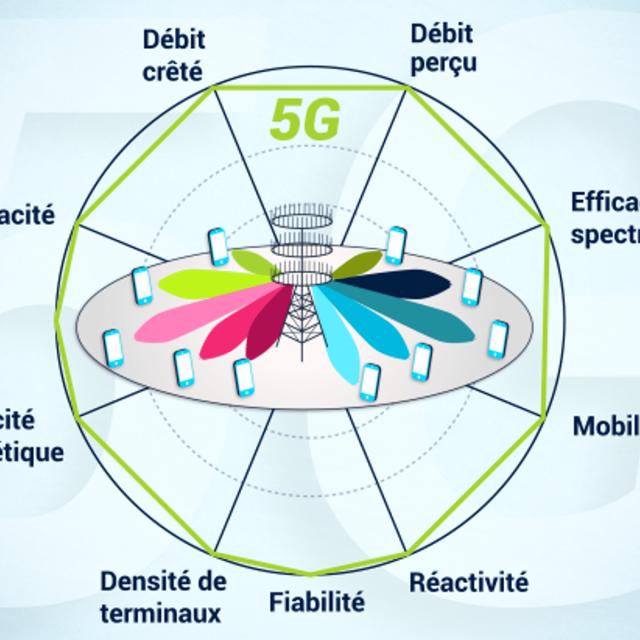
This MOOC presents the services and the architecture of 5G networks, the main principles of the new radio interface (NR), data flow management, security and the new Service-Based Architecture (SBA). In recent years, operators have been deploying 5G technology on commercial mobile networks. The latter is announced as a major technological breakthrough with speeds beyond Gbit/s, very low latencies and above all a distribution in many sectors of activity (industry, transport, medicine, etc.).

Nov 23rd 2026
5-12 Weeks
Web Connectivity and Security in Embedded Systems (Coursera) Coursera
EIT Digital

Web Connectivity and Security in Embedded Systems (Coursera)

In this course, we will explore several technologies that bring modern devices together, facilitating a network of connected things and making devices internet enabled. We will discuss rules, protocols, and standards for these devices to communicate with each other in the network. We will also go through security and privacy issues and challenges in cyber physical systems (CPS). We will explore measures and techniques for securing systems from different perspectives. Possible attack models are introduced and solutions to tackle such attacks are discussed. Moreover, some basic concepts related to privacy in cyber physical systems are presented.

Nov 9th 2026
5-12 Weeks
Hardware Security (Coursera) Coursera
University of Maryland, College Park

Hardware Security (Coursera)

In this course, we will study security and trust from the hardware perspective. Upon completing the course, students will understand the vulnerabilities in current digital system design flow and the physical attacks to these systems. They will learn that security starts from hardware design and be familiar with the tools and skills to build secure and trusted hardware.

Nov 9th 2026
5-12 Weeks
Ethical Issues in Data Science (Coursera) Coursera
University of Colorado Boulder

Ethical Issues in Data Science (Coursera)

Computing applications involving large amounts of data – the domain of data science – impact the lives of most people in the U.S. and the world. These impacts include recommendations made to us by internet-based systems, information that is available about us online, techniques that are used for security and surveillance, data that is used in health care, and many more. In many cases, they are affected by techniques in artificial intelligence and machine learning.

Nov 23rd 2026
5-12 Weeks