Writing your World: Finding yourself in the academic space (Coursera)

Writing your World: Finding yourself in the academic space (Coursera)

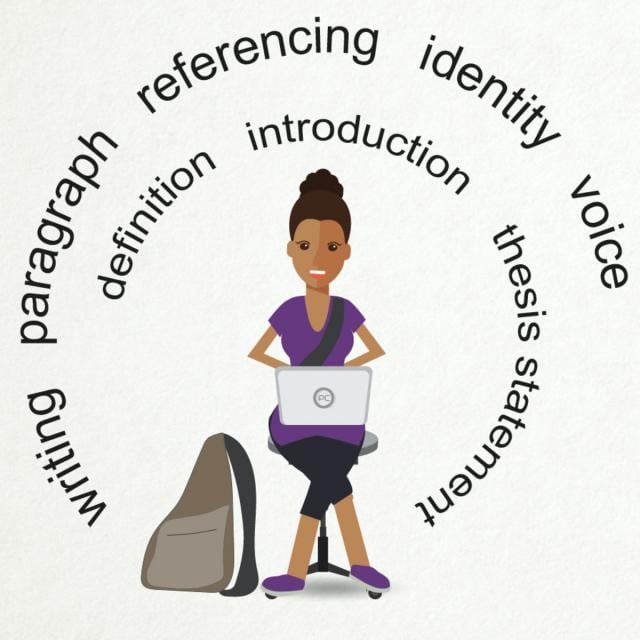
Throughout the world, writing serves to express, record and even create meaningful moments. In academic spaces, writing becomes the bridge between ourselves and the world of ideas. In this course, we provide practical insights into how to write an academic essay. We show you how to develop the academic skills needed to be a competent academic writer. You will have an opportunity to engage with texts written by academics, and to see how some of the ideas in these texts are used by students in constructing an academic essay.

Class Deals by MOOC List - Click here and see Coursera's Active Discounts, Deals, and Promo Codes.

We address some of the challenges these students face with respect to academic writing and offer you the opportunity to practice and to develop your own writing style. For this course, we centre our lessons around a specific topic - the concept of identity, since it forms such an important feature of how we locate ourselves in an ever-changing global world. In other words, this course teaches academic writing skills through getting you to write and reflect on your understanding of identity. So if you are thinking about studying at a tertiary institution, or if you just want to brush up on your academic essay writing skills, this course is for you!

Syllabus

WEEK 1
Starting to write: Understanding definitions of identity
This week, we will consider practical aspects of academic writing, such as structure and the importance of defining key terms in an essay. The term we will focus on this week is identity. After hearing Kath Woodward’s ideas on identity, our three student writers, Ada, Ziggy, and Joey will write their own definitions of identity. Emphasising that writing is a process, we will give feedback on the students writers’ definitions. We will then provide you with the opportunity to draft your definition of identity, give feedback to other learners and receive feedback from them.

WEEK 2
Developing an argument: shifting identities
Week 2 further develops the concept of identity by considering the effects of mobility on one’s identity. Throughout history, as individuals moved across borders, they were either welcomed or perceived as an outsider or a threat. In South Africa during Apartheid, people within the country were further separated into ‘homelands’, and those who challenged the boundaries such as Nelson Mandela were labelled as criminals and terrorists. To help you formulate ideas on such concepts in your essay, we now consider the features of a good academic essay focusing on the introduction. We also introduce a three-part strategy to approach your readings: preview, overview and inview. The task for this week is drafting an introduction at university level. We identify key features of an introduction, then look at introductions written by our three student writers, and provide them with constructive feedback.

WEEK 3
Supporting the argument: situating identity within culture
This week begins with a discussion of culture and its relevance when individuals become mobile, moving between geographical and social contexts. We look at a case study of a student from the United Kingdom who comes to Johannesburg, South Africa. The case study helps us to think about who owns culture and how different or similar we are across contexts. Next, we consider Thornton’s arguments about culture. He argues against the view that there are many cultures and notes that there is only culture. Thornton considers culture as a resource to which people have different degrees of access. Some examples of cultural resources are clothes, money, beliefs, ideas. Individuals draw on these to construct their identity, but unequal access to these resources that are valued gives some people more possibilities to construct identities that are dominant and more valued. This creates a semblance of difference between groups of people. As people move across borders, these differences may become heightened, because some of the cultural resources that an individual carries with her, may cease to be relevant or may be seen as threatening. So, when supporting one’s argument about what happens to identity as individuals move across borders, it is important to delve into culture and how culture creates differences, how it may accentuate boundaries, and how these may or may not impact on identity. Writing paragraphs in support of one’s argument requires close attention to how the paragraphs link with the position, and with other ideas across the paragraphs. Hence, we offer practical guidelines on paragraphing, coherence and cohesion. We give an example of a well-written paragraph and analyse its form to see why it is good. We then review paragraphs submitted by our three student writers and note what is strong and what could be improved in each. We introduce the core aspects of referencing in essays. We also explain why referencing is an important part of academic writing when we are referring to different people’s views (or voices) and distinguishing these from our own.

WEEK 4
Starting to finish: writing the first draft
This week we sum up the ground we have covered in this course. The week is about crafting your final essay draft. We recap the building blocks of writing an academic essay, relooking at the features of an introduction, body, conclusion and the purposes of cohesion, coherence and referencing. We also consider and provide engaged feedback on the draft essays written by our three virtual students. There is detailed feedback on the strengths, improvements and opportunities for further improvement on the essays. The feedback is aligned with the core skills introduced in the course, such as writing the topic sentence, linking sentences and ensuring coherence and cohesion. Thereafter we sum up the course with a discussion on the ideas of the four thinkers you were introduced to in this course, namely Woodward, Sichone, Blommaert and Thornton.


Go to Class
MOOC List is learner-supported. When you buy through links on our site, we may earn an affiliate commission.

Related Courses

Children Acquiring Literacy Naturally (Coursera) Coursera
University of California, Santa Cruz

Children Acquiring Literacy Naturally (Coursera)

In this short course you will explore the possibility that children might acquire written language in a way that is similar to how they acquire spoken language—without instruction. You will encounter various aspects of behavioral science and technology that are relevant to this proposition. You will have the opportunity to learn the the perceptual, cognitive, and neurological capacities of children during their first years of life. You will advance your understanding of children and how they learn language. You will also be more attuned to current advances in the technology of human machine interactions, and what these phenomena imply for learning to read at an early age.

Aug 3rd 2026
3 Weeks
First Step Korean (Coursera) Coursera
Yonsei University

First Step Korean (Coursera)

This is an elementary-level Korean language course, consisting of 5 lessons with 4 units, and covers 4 skills: reading, writing, listening and speaking. The main topics include basic expressions used in everyday life, such as greetings, introducing yourself, talking about your family and a daily life and so on. Each lesson covers dialogues, pronunciation, vocabulary, grammar, quizzes and role-plays.

Aug 10th 2026
5-12 Weeks
Conciencia Lingüística (Coursera) Coursera
Universidad Autónoma Metropolitana

Conciencia Lingüística (Coursera)

Al finalizar el curso serás capaz de: Tomar conciencia acerca de cómo funciona el lenguaje humano, en lo que se refiere a la formación de palabras y estructuras que usamos a diario, su combinación y sus distintas posibilidades de significado. Con ello, se espera que el estudiante desarrolle una conciencia lingüística sobre el español y, con ello, logre un mayor control sobre el uso creativo de las palabras y las oraciones en español.

Aug 10th 2026
4 Weeks
Build Your Professional ePortfolio in English (Coursera) Coursera
Georgia Institute of Technology

Build Your Professional ePortfolio in English (Coursera)

Roughly half of the world’s population is already online and so setting yourself apart from the crowd is more important than ever before. One of the best ways to do that is by creating your own ePortfolio. An ePortfolio is a site that showcases or shows your background, your resume, and samples of your work. In this course, you will learn step by step how to build the site and you’ll learn the grammar, vocabulary and writing skills needed to create it. You will learn how to apply information from your ePortfolio to other online tools like LinkedIn, Twitter, Instagram and YouTube in order to network with others so that you get a job or connect with other professionals.

Jul 27th 2026
4 Weeks
English for Effective Business Writing (Coursera) Coursera
The Hong Kong University of Science and Technology - HKUST

English for Effective Business Writing (Coursera)

This course aims to improve your Business English writing skills by developing your use of vocabulary, grammar, understanding of different business writing genres, and your ability to write professional business documents. Skills learned in this course will be used in the cross-cultural communications course and help prepare you to produce the professional business documents in the Capstone project.

Jul 27th 2026
5-12 Weeks
How to Make a Comic Book (Project-Centered Course) (Coursera) Coursera
High Tech High Graduate School of Education

How to Make a Comic Book (Project-Centered Course) (Coursera)

What you’ll achieve: In this project-centered course, you will create an original four page minicomic designed around a short story of your choosing. What you’ll need to get started: This project-centered course is designed for all-age learners (high school age and above, at least 13 years of age) who are interested in learning how to make a comic book, but have never completed one before. While comic books can be created with any kinds of materials, we recommend that learners have the following materials available to complete the project: at least one ream of 8.5x11 copy paper, #2 pencils and eraser, Sharpie-type fine point pens, ruler with inch measurements, and adjustable binding stapler. Learners should also have access to a printer and scanner (to facilitate digitizing work to be shared with peers on Coursera).

Aug 3rd 2026
5-12 Weeks
Writing for Young Readers: Opening the Treasure Chest (Coursera) Coursera
Commonwealth Education Trust

Writing for Young Readers: Opening the Treasure Chest (Coursera)

This course is for curious students and aspiring authors with a passion for writing for young readers. Participate in a dynamic online community of writers as you experiment with your own writing and develop your voice. This course will guide you with a combination of video lectures, online readings, peer reviews, and guest appearances from world-renowned children’s authors. As you work through the writing exercises, you will give and receive feedback from your peers and gain tools and techniques for improving your writing.

Jul 27th 2026
5-12 Weeks
English and Academic Preparation - Pre-Collegiate (Coursera) Coursera
Rice University

English and Academic Preparation - Pre-Collegiate (Coursera)

The English and Academic Preparation - Pre-Collegiate course is for students with a (minimum) high-intermediate level of English. It is designed to help international students develop the academic skills necessary for success in undergraduate studies at an American university while strengthening their English proficiency. Ideally, prospective students have completed or are near completion of a high school diploma in their country and would like to come to the United States to study for a bachelor’s degree.

Aug 10th 2026
4 Weeks
Critical Thinking Skills for University Success (Coursera) Coursera
The University of Sydney

Critical Thinking Skills for University Success (Coursera)

In this course, you will learn how to develop your Critical Thinking Skills to help you achieve success in your university studies. After completing this course, you will be able to: 1. Use critical thinking and argumentation in university contexts to improve academic results ; 2. Understand the importance and function of critical thinking in academic culture ; 3. Use a variety of thinking tools to improve critical thinking ; 4. Identify types of argument, and bias within arguments, in order to better evaluate the strength of arguments; 5. Use evidence to support claims in arguments ; 6. Apply critical thinking and argumentation to real world problems and issues

Aug 10th 2026
5-12 Weeks
Teach English Now! Technology Enriched Teaching (Coursera) Coursera
Arizona State University

Teach English Now! Technology Enriched Teaching (Coursera)

This course focuses on the key concepts you need in order to effectively integrate technology into your teaching, without letting it overshadow language learning. Discover current and future trends in educational technology, along with strategies for implementing these trends in the classroom and beyond. As technology is continually evolving, learn how to keep up on current technological applications through professional development networks and training opportunities.

Jul 27th 2026
5-12 Weeks
Translation in Practice (Coursera) Coursera
Nanjing University

Translation in Practice (Coursera)

This course offers you basic but valuable techniques used by a good translator in the translation between English and Chinese. We’ll discuss what is translation, what is good translation, and learn about how to produce good translations. All the examples used in this course are taken from the course instructor's own translations of various genres and topics of writing.

Aug 10th 2026
5-12 Weeks
Tricky English Grammar (Coursera) Coursera
University of California, Irvine

Tricky English Grammar (Coursera)

English is a difficult language to learn because of its many obscure grammatical rules, which are fairly easy to mess up--even for native speakers. While it’s easy for non-native speakers to get overwhelmed by confusing grammar rules, in this course, we'll provide you with tips that will help you understand the rules more easily and give you lots of practice with the tricky grammar of everyday English.

Jul 27th 2026
4 Weeks