Introduction to Food and Our Environment (Coursera)

Offered by Stanford University,
Introduction to Food and Our Environment (Coursera)

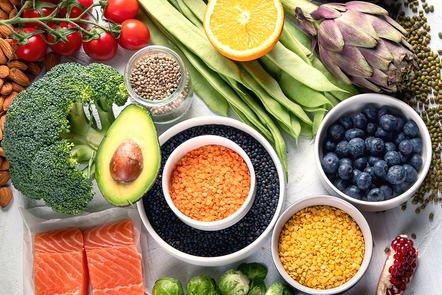
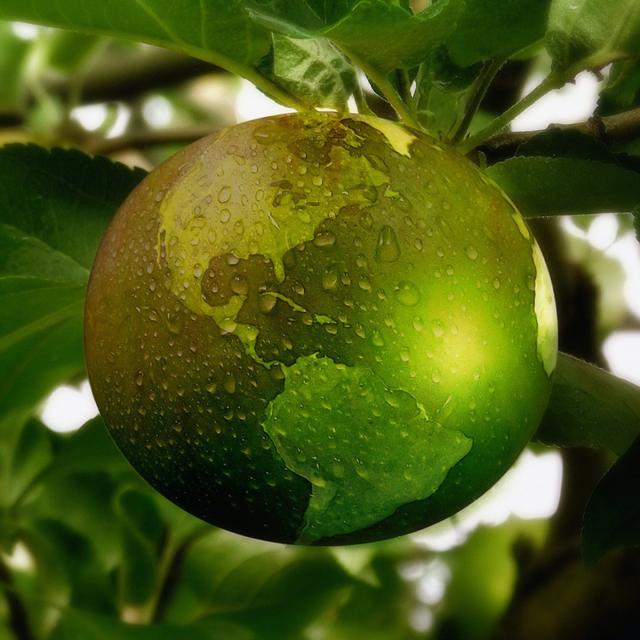
This course is designed to help learners around the world become more sustainable eaters. Together, we’ll explore key topics, like how food production impacts the environment and why meat production and protein consumption are often at the center of the debate around sustainability. We’ll introduce the pros and cons of different kinds of agriculture, fishing and food packaging, with a focus on how we can make more environmentally friendly decisions on a daily basis. We’ll also look ahead and explore some of the technology innovations that could become increasingly important as we look at the future of food for a growing global population.

Class Deals by MOOC List - Click here and see Coursera's Active Discounts, Deals, and Promo Codes.

If this is the first course you’ve ever taken on food and sustainable eating, you’ll come away with concrete tips for how you can make food choices that will protect the world we hand over to the next generation. Our planet needs many people making small changes in the right direction and we’re here to help with that. If you’re an expert in food sustainability, we hope to offer you some tools that could help you to communicate key messages to others in simple, digestible ways. Whatever your level, we hope you’ll join this discussion as we explore, together, the ways in which we can all become more sustainable eaters.
The beautiful story animations were scripted by Lucas Oliver Oswald and animated by Janine Van Schoor.
Course 2 of 3 in the Food Sustainability, Mindful Eating, and Healthy Cooking Specialization

Syllabus

WEEK 1
Eating for Our Health and the Health of Our Planet
This week, we’ll learn about what it means to be a sustainable eater, by exploring the guiding principles of sustainable eating as published by the World Health Organization. We’ll examine how our food choices shape our health and the health of our planet and why protein is often at the center of the debate.

WEEK 2
How Meat and Milk Impact Our Planet
In this module, we’ll learn about how producing different kinds of meat have different impacts on our environment. We’ll also learn why plant-based proteins are less stressful for our planet to produce than animal-based proteins - and how increasing the plant-based proteins in our diet can improve our health.

WEEK 3
How Seafood and Egg Consumption Impact Our Planet
In this module, we will explore the impact of fish and seafood on our environment, including the different kinds of wild-caught and farmed fish. We will discuss the different kinds of eggs you find in the supermarket and gain insights into how we can make the best choices possible with our food budget.

WEEK 4
The Future of Food?
In this module, we will explore the impact of packaging and food waste on our environment as well as the ways in which some forms of food packaging can prevent food waste. We’ll explore the benefits of eating locally grown foods, but also the technologies that allow global populations to have access to fresh produce all year long. Finally, we’ll explore some innovations in food technology that, if they are developed responsibly, might soon make it much easier to be a sustainable eater.

Go to Class
MOOC List is learner-supported. When you buy through links on our site, we may earn an affiliate commission.

Related Courses

Global Arctic (Coursera) Coursera
École Polytechnique Fédérale de Lausanne

Global Arctic (Coursera)

The GlobalArctic MOOC introduces you the dynamics between global changes and changes in the Arctic. This course aims to highlight the effects of climate change in the Polar region. In turn, it will underline the impacts of a warmer Arctic on the planet Earth. For human civilization, the Arctic stands both as a laboratory and a warning for human kind.

May 29th 2026
4 Weeks
An Introduction to the U.S. Food System: Perspectives from Public Health (Coursera) Coursera
Johns Hopkins University

An Introduction to the U.S. Food System: Perspectives from Public Health (Coursera)

A food system encompasses the activities, people and resources involved in getting food from field to plate. Along the way, it intersects with aspects of public health, equity and the environment. In this course, we will provide a brief introduction to the U.S. food system and how food production practices and what we choose to eat impacts the world in which we live. Through several case studies, we will discuss some key historical and political factors that have helped shape the current food system and consider alternative approaches from farm to fork.

May 11th 2026
5-12 Weeks
Food Science and Nutrition: From the Farm to You (FutureLearn) FutureLearn
University of Leeds

Food Science and Nutrition: From the Farm to You (FutureLearn)

Follow food’s fascinating journey from the farm to your body and explore new food technologies and nutrition around the world. Discover the science of food and understand the value of nutrition in our diets. On this course, you’ll learn how food science and nutrition helps us to understand and study the fascinating world of food.

Feb 16th 2026
2 Weeks
Planet Earth: Understanding and Protecting our Environment (FutureLearn) FutureLearn
University of Leeds

Planet Earth: Understanding and Protecting our Environment (FutureLearn)

Learn about the physical geography of Earth and discover how to use this knowledge to protect our natural environment. Discover the Earth’s natural systems and how human activity affects them. On this two-week course from the University of Leeds, you will discover the processes of the hydrosphere, the geosphere, and the biosphere and explore the impact of human activity and climate change on our planet.

Feb 16th 2026
2 Weeks
The Science of Weight Loss: Dispelling Diet Myths (edX) EdX
The University of Newcastle, Australia,NewcastleX

The Science of Weight Loss: Dispelling Diet Myths (edX)

Arm yourself with the knowledge and tools to make healthy eating decisions as you learn the science behind weight loss and dispel diet and nutrition myths. Whether you are trying to lose weight yourself, or are supporting others, this food and nutrition course will dispel common myths about weight loss and teach you the science behind healthy eating for a healthy weight.

Feb 22nd 2023
5-12 Weeks
Sensing Planet Earth - Water and Ice (edX) EdX
Chalmers University of Technology,ChalmersX

Sensing Planet Earth - Water and Ice (edX)

Learn how to measure and monitor the Earth’s water and ice masses to deepen your understanding of global change. Global warming. Rising sea levels. Droughts. Flooding. The melting of the polar ice caps. In this energy and earth science course, you will learn how continental water and ice masses are measured and monitored through remote sensing.

May 8th 2023
5-12 Weeks
Food & Beverage Management (Coursera) Coursera
Università Bocconi

Food & Beverage Management (Coursera)

Managing a company in the food and beverage industry is a fascinating task. The objective of this course is twofold: first, we will focus on contemporary challenges that managers and entrepreneurs in food and beverage businesses should be able to face; and second, we will provide models and tools to design and implement appropriate courses of action to satisfy customers and build an advantage over the competition.

Jun 1st 2026
5-12 Weeks
Innovación agroalimentaria (Coursera) Coursera
Universidad Nacional Autónoma de México

Innovación agroalimentaria (Coursera)

Este curso fue desarrollado por el Instituto Interamericano de Cooperación para la Agricultura (IICA) en colaboración con la Universidad Nacional Autónoma de México (UNAM) con el propósito de introducir el tema de Innovación y su importancia en el sector Agroalimentario. En un mundo donde la globalización de los mercados es imperante y el cambio climático afecta las prácticas agrícolas, la competitividad sin innovación no es procedente. Por ello, durante el curso se analiza y reconoce la innovación como un agente que promueve la competitividad.

Jun 5th 2023
4 Weeks
Seguridad agroalimentaria (Coursera) Coursera
Universidad Nacional Autónoma de México

Seguridad agroalimentaria (Coursera)

La seguridad agroalimentaria es uno de los mayores problemas a nivel mundial debido a que existen millones de personas que no tienen acceso diario a los alimentos. Por ello, es necesario revisar el concepto y analizar su importancia, elementos para la construcción de políticas para generar seguridad alimentaria, así como los riesgos e implicaciones de no implementar estas políticas. Al hacerlo, puede contribuirse al reto global actual, el cual, requiere tomar conciencia de estos aspectos mejorar las condiciones de acceso, disponibilidad, estabilidad y utilización de alimentos.

May 22nd 2023
4 Weeks
Unravelling solutions for Future Food problems (Coursera) Coursera
Universiteit Utrecht

Unravelling solutions for Future Food problems (Coursera)

Our society depends on the availability of food and accessibility to it. According to the United Nations nearly 800 million people are hungry and on the other hand, over 650 million people are obese. While many people in developing countries experience food shortage, in industrialized countries people are throwing food away. These facts show how paradoxical and complex the world’s food problem is.

May 3rd 2026
5-12 Weeks