How to Teach Computing: An Introduction to Concepts, Tools and Resources for Primary Teachers (European Schoolnet)

Offered by European Schoolnet,
How to Teach Computing: An Introduction to Concepts, Tools and Resources for Primary Teachers (European Schoolnet)

Technology is everywhere, if we like it or not. And nearly all future jobs require us to understand it. To respond to this, governments are including computing in national curricula for students of all ages. In the UK already every primary school teacher has to teach computing concepts and in many other countries more and more of us will be required to teach computing or at least integrate computing concepts, ideas and processes into our teaching. The course has been designed by teachers for teachers and will feature interviews, presentations, and activities from teachers, professors, students and computing professionals.

The course is designed as an introductory course, for you to use as a starting point to explore some of the ideas and tools further. This course is an adapted version of the How to Teach Computing: An Introduction to Concepts, Tools and Resources for Secondary Teachers course. The course explores resources and tools that can help teachers teach computing concepts in the primary school classroom. The following questions will be discussed during the course:

  • Why teach computing at primary level?
  • What to focus on when teaching computing?

An opinion on these questions will be given by professors, politicians, teachers and students.

Go to Class
MOOC List is learner-supported. When you buy through links on our site, we may earn an affiliate commission.

Related Courses

Assessment in Higher Education: Professional Development for Teachers (Coursera) Coursera
Erasmus University Rotterdam

Assessment in Higher Education: Professional Development for Teachers (Coursera)

Are you a teacher in higher education wanting to get the best out of your students and assessments? Then on behalf of Risbo, Erasmus University Rotterdam, we would like to welcome you to this MOOC on Assessment in Higher Education. In this MOOC we will guide you through the different phases of preparing, creating and evaluating the assessments in your course.

Oct 12th 2026
5-12 Weeks
Collaborative Teaching and Learning (European Schoolnet Academy) European Schoolnet Academy
European Schoolnet

Collaborative Teaching and Learning (European Schoolnet Academy)

Being able to collaborate effectively is a valuable 21st-century skill, yet teaching about or through collaboration remains rare in schools because of a lack of understanding of what real collaboration in an educational setting means, and because existing policy conditions do not always enable it to flourish. Practitioners need a dedicated space and time to experiment and better understand what collaborative teaching and learning means in practice. This course is designed to give you that opportunity

Legacy Course
Self-Paced
Mentoring in Schools (European Schoolnet Academy) European Schoolnet Academy
European Schoolnet

Mentoring in Schools (European Schoolnet Academy)

Join us on this course to explore how mentors can support and develop the work of teachers in schools. The course aims to support mentors working with teachers by offering them strategies and tools for their work with teachers as well as examples of effective mentorship approaches leading to more effective, happier, and successful teachers. The course offers a framework for mentors of all experience levels to exchange ideas, experiences and resources.

Legacy Course
Self-Paced
THINK GLOBAL: TEACHERS TRAINING COURSE (IDP-ICE) (Coursera) Coursera
University of Barcelona

THINK GLOBAL: TEACHERS TRAINING COURSE (IDP-ICE) (Coursera)

A group of seven European partners from Catalonia, Belgium, and Wales worked together on the Erasmus+ funded ‘Think Global’ project on global competence. The project seeks to address the following research question through development and piloting of practical classroom activities: What is global competence, and how can it be learned effectively?

Oct 12th 2026
5-12 Weeks
Teaching LGBTQ+ Health (Coursera) Coursera
Stanford University

Teaching LGBTQ+ Health (Coursera)

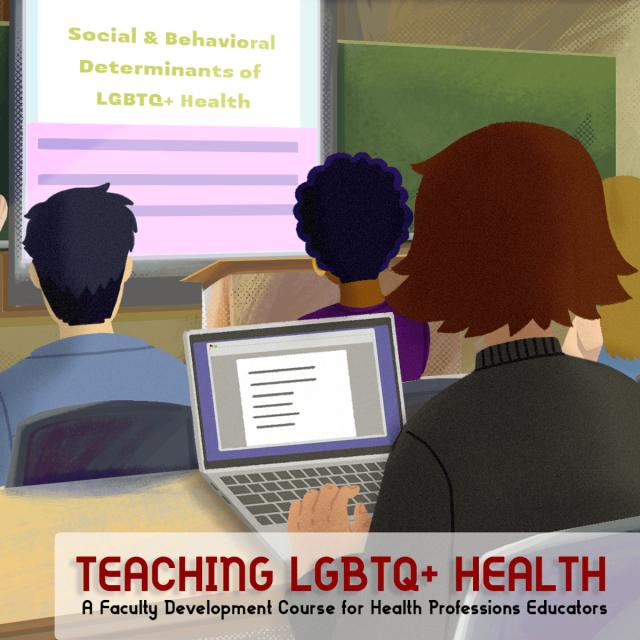
This curriculum is designed for faculty members and health professions educators. The course goals are to improve your knowledge, teaching skills, and attitudes pertaining to the provision of health care to LGBTQ+ patients.e.g. This is primarily aimed at first- and second-year undergraduates interested in engineering or science, along with high school students and professionals with an interest in programming.

Oct 12th 2026
2 Weeks
Multimodal Literacies: Communication and Learning in the Era of Digital Media (Coursera) Coursera
University of Illinois at Urbana-Champaign

Multimodal Literacies: Communication and Learning in the Era of Digital Media (Coursera)

Whereas the focus of traditional literacy pedagogy has been the written word in its standard and literary forms, this courser expands the scope of literacy learning to encompass contemporary multimodal texts and the wide range of ways of making meaning that occur in different social and cultural contexts. Another course, "Literacy Teaching and Learning: Aims, Approaches and Pedagogies" addresses pedagogical aspects of literacies. This "Multimodal Literacies" learning module does not require or expect that participants will have already completed the "Literacy Teaching and Learning" module.

Oct 12th 2026
4 Weeks
Uncommon Sense Teaching (Coursera) Coursera
Deep Teaching Solutions

Uncommon Sense Teaching (Coursera)

Do your students spend too much (or too little) time learning, with disappointing results? Do they procrastinate in their study because it’s boring and they’re easily distracted? Are you working to make your teaching even more inclusive? Uncommon Sense Teaching will give you practical new insights that will help you solve these goals and challenges, and many more.

Oct 5th 2026
4 Weeks
Innovative Practices for Engaging STEM Teaching (European Schoolnet) European Schoolnet Academy
European Schoolnet

Innovative Practices for Engaging STEM Teaching (European Schoolnet)

The “Innovative Practices for Engaging STEM teaching” course aims to provide teachers, school counsellors and career advisers with resources and ideas to increase pupils’ interest for STEM (Science, Technology, Engineering and Mathematics) subjects and careers. The course is designed in response to the worrying disengagement of young people from STEM subjects in school, and their decreasing interest in related careers. The “Innovative Practices for Engaging STEM teaching” course will last 8 weeks and will be animated by a European Schoolnet panel of experts who will contribute to it with their specific expertise and will engage participants through collaborative activities.

Legacy Course
Self-Paced
Algorithmic Thinking (Part 1) (Coursera) Coursera
Rice University

Algorithmic Thinking (Part 1) (Coursera)

Experienced Computer Scientists analyze and solve computational problems at a level of abstraction that is beyond that of any particular programming language. This two-part class is designed to train students in the mathematical concepts and process of "Algorithmic Thinking", allowing them to build simpler, more efficient solutions to computational problems.

Oct 5th 2026
4 Weeks
Opening Minds to STEM Careers (European Schoolnet Academy) European Schoolnet Academy
European Schoolnet

Opening Minds to STEM Careers (European Schoolnet Academy)

Demand for STEM (Science, Technology, Engineering and Math) professionals and associated professionals is expected to grow by around eight percent between now and 2025. This means that Europe needs more young people to pursue STEM subjects and careers to become part of a much needed qualified workforce in the coming years. In the Opening Minds to STEM Careers MOOC, we will explore different ideas and we will introduce a number of tools to help you be an active actor in STEM career guidance processes.

Self Paced
Self-Paced
ICT in Primary Education: Transforming children's learning across the curriculum (Coursera) Coursera
University of London

ICT in Primary Education: Transforming children's learning across the curriculum (Coursera)

Why and how are teachers integrating ICT (Information and Communication Technology) into primary education? In this course we analyse examples from schools in different parts of the world, and bring professional teachers, headteachers and policymakers together to share their best ideas and inspiring stories. The materials in the course are based on studies carried out for the UNESCO Institute of IT in Education, Moscow.

Oct 5th 2026
5-12 Weeks