Getting Started With Music Theory (Coursera)

Getting Started With Music Theory (Coursera)

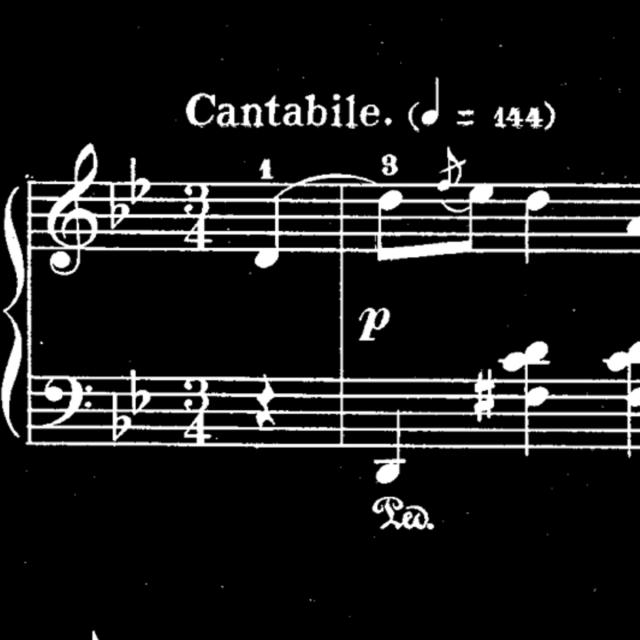
This course is a brief introduction to the elements of music theory for those with little or no music theory experience. We will explore pitch, rhythm, meter, notation, scales, keys, key signatures, meter signatures, triads, seventh chords, and basic harmony. If you listen to music or play music by ear, and you want to know more about how music is organized and notated, this course is for you.

Class Deals by MOOC List - Click here and see Coursera's Active Discounts, Deals, and Promo Codes.

By the end of the course, you should know all major and minor keys, how to read and write in treble and bass clef using standard meters and rhythmic values, and how to notate and harmonize a simple melody. This course can serve as a stand-alone basic music theory course, or it can be a springboard to more advanced theory and composition courses.
Your instructor is Bruce Taggart, Associate Professor of Music Theory at Michigan State University, in the College of Music, where he has taught undergraduate and graduate music theory since 1996.

Syllabus

WEEK 1
Basic Materials: Overview, Tonality, Notation
Learning Outcomes: By the end of this module, you should be able to: (1) discuss the elements of music, (2) explain the difference between tonal and atonal music, (3) sing the tonic in tonal music, (4) identify the fundamental and partials of a note, (5) explain the difference between chord and harmony, (6) explain the five-line staff, (7) read and write notes using treble and bass clefs, and (8) identify rhythmic values in notation. You should be able to (9) distinguish between pitch and pitch class, (10) describe octaves and how to label pitches based on octave placement, (11) identify and write accidentals and find them on the piano keyboard, (12) and define equal temperament (the artificial scale used on the modern piano) and tell how it differs from other tuning systems.

WEEK 2
Scales, Keys, and Intervals
Learning Outcomes: By the end of this module, you should be able to (1) describe the diatonic set and understand how it is used to create major and minor scales, (2) sing major and minor using solfeggio (solfege) syllables, (3) explain the difference between natural, harmonic, and melodic minor, (4) spell major and minor scales starting on any note using accidentals in treble and bass clef, and (5) spell parallel and relative major and minor scales. You should also be able to (6) identify and spell by size and quality diatonic intervals (within a key) and chromatic intervals (outside a key).

WEEK 3
Rhythm and Meter
Learning Outcomes: By the end of this module, you should be able to (1) read and write all possible rhythmic values, including dotted notes and ties, (2) understand how many notes fit within a measure in various meters, (3) determine meter signatures based on note grouping, and note grouping based on meter signatures, (4) define the types of musical accent and how they create a sense of meter, (5) distinguish between duple and triple meters in notation and by sound, and (6) describe and identify metrical syncopation. You should be able to (7) write melodies on the treble, bass, and grand staves using correct meter signatures, note values, rhythmic grouping, stem direction and beaming, and key signatures and accidentals,

WEEK 4
Chords, Triads, and Harmony
Learning Outcomes: By the end of this module, you should be able to (1) identify and spell major, minor, diminished, and augmented triads in root position and inversions, and (2) identify and spell major, minor, dominant, half-diminished, and fully diminished seventh chords in root position and inversions. You should also be able to (3) use Roman numeral labels to identify diatonic triads within a key, (4) write triads within a key when given Roman numerals, and (5) spell chords when given pop/jazz chord symbols.

Go to Class
MOOC List is learner-supported. When you buy through links on our site, we may earn an affiliate commission.

Related Courses

Exploring Beethoven's Piano Sonatas (Coursera) Coursera
Curtis Institute of Music

Exploring Beethoven's Piano Sonatas (Coursera)

Our relationship to Beethoven is a deep and paradoxical one. For many musicians, he represents a kind of holy grail: His music has an intensity, rigor, and profundity which keep us in its thrall, and it is perhaps unequalled in the interpretive, technical, and even spiritual challenges it poses to performers. At the same time, Beethoven’s music is casually familiar to millions of people who do not attend concerts or consider themselves musically inclined. Two hundred years after his death, he is everywhere in the culture, yet still represents its summit. This course takes an inside-out look at the 32 piano sonatas from the point of view of a performer.

Aug 3rd 2026
5-12 Weeks
The Blues: Understanding and Performing an American Art Form (Coursera) Coursera
University of Rochester

The Blues: Understanding and Performing an American Art Form (Coursera)

The blues is an American art form and the most important musical form in jazz. Although there are other formal paradigms of the blues, such as 8-bar or 16-bar, this course focuses on different incarnations of the 12-bar blues. There are considerable differences between Early Jazz blues, Swing blues, Bebop blues, Modal blues, and Post Bop blues.

Aug 10th 2026
5-12 Weeks
Songwriting: Writing the Lyrics (Coursera) Coursera
Berklee College of Music

Songwriting: Writing the Lyrics (Coursera)

There’s a songwriter lurking somewhere inside you, peeking around corners, wondering if it’s safe to come out. Now it is. This course is an invitation to let your inner songwriter step into the sunlight. All it takes is a simple “yes” and you’ll be climbing that windy hill, marveling at the view. If you haven’t written any or many songs, this course will show you an efficient, effective process for tailoring songs to express your ideas and emotions. If you have, you’ll look at your process differently, taking control of aspects of the process you may have not noticed.

Aug 10th 2026
5-12 Weeks
Princípios Gerais da Técnica do Violino e da Viola de Arco (Coursera) Coursera
Universidade Estadual de Campinas - UNICAMP

Princípios Gerais da Técnica do Violino e da Viola de Arco (Coursera)

Esse curso visa fornecer informações sobre aspectos básicos da técnica do violino e da viola de arco. Ao longo de 18 aulas, com duração média de 7 minutos cada, serão abordados temas como posicionamento do instrumento, maneiras de posicionar a mão esquerda, como segurar o arco, como executar os principais golpes de arco, como estudar mudanças de posição, etapas para desenvolvimento do vibrato e sugestões para a organização do estudo diário do instrumento.

Aug 10th 2026
4 Weeks
Music and Social Action (Coursera) Coursera
Yale University

Music and Social Action (Coursera)

What is a musician’s response to the condition of the world? Do musicians have an obligation and an opportunity to serve the needs of the world with their musicianship? At a time of crisis for the classical music profession, with a changing commercial landscape, a shrinking audience base, and a contraction in the number of professional orchestras, how does a young musician construct a career today? Are we looking at a dying art form or a moment of reinvigoration?

Aug 10th 2026
5-12 Weeks
Richard Schechner's Introduction to Performance Studies (Coursera) Coursera
New York University

Richard Schechner's Introduction to Performance Studies (Coursera)

Performance Studies: An Introduction explores the wide world of performance--from theatre, dance, and music to ritual, play, political campaigns, social media, and the performances of everyday life. Performance studies also ranges across cultures--Asia, Africa, the Caribbean, Europe, the Americas. And it spans historical periods from the art of the paleolithic caves to YouTube and the avantgarde. This course is devised by Richard Schechner, one of the pioneers of performance studies, in dialogue with more than a dozen expert scholars and artists.

Aug 3rd 2026
13-24 Weeks
Job Success: Get Hired or Promoted in 3 Steps (Coursera) Coursera
The State University of New York

Job Success: Get Hired or Promoted in 3 Steps (Coursera)

This course, Job Success: Get Hired or Promoted in Three Steps, will prepare you to stand out in a crowded applicant pool so that you can get hired or promoted. In three steps you will leave this course with : an upgraded social media presence (one that you can be proud of); a visual, infographic resume that will get you noticed; a professional pitch that highlights your strengths and skills.

Aug 3rd 2026
3 Weeks
The Place of Music in 21st Century Education (Coursera) Coursera
The University of Sydney

The Place of Music in 21st Century Education (Coursera)

What do children need from education now, and in the future? How is technology best used in teaching and learning? How can innovative approaches to education be reconciled with established, traditional ones? What does student-centred learning really mean? This five module course is not just for classroom or ensemble music educators. It’s suitable for anyone interested in creativity-infused education, in contemporary education issues, and in the integration and use of digital technology.

Aug 3rd 2026
5-12 Weeks
So You Think You Know Tango? (Coursera) Coursera
Emory University

So You Think You Know Tango? (Coursera)

How well do you think you know tango? This two-week mini-course is designed for music lovers, musicians, and dancers who are interested in learning more about the Argentine Tango. It will explore the many dimensions of the Argentine Tango music, including its origins, popularization during the Golden Age, dissemination abroad, evolution into an artistic music-dance form, and adoption by Argentine and international art-music composers to date.

Aug 3rd 2026
2 Weeks