EdX

The Extremes of Life: Microbes and Their Diversity (edX)

Offered by Kyoto University, KyotoUx,
The Extremes of Life: Microbes and Their Diversity (edX)

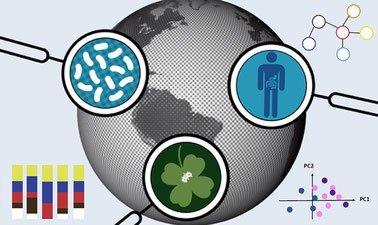
Microbes are everywhere! Find out how diverse microbial life is, and what their genome sequences tell us. Life on our planet is diverse. While we can easily recognize this in our everyday surroundings, an even more diverse world of life can be seen when we look under a microscope. This is the world of microorganisms.

Class Deals by MOOC List - Click here and see EdX's Active Discounts, Deals, and Promo Codes.

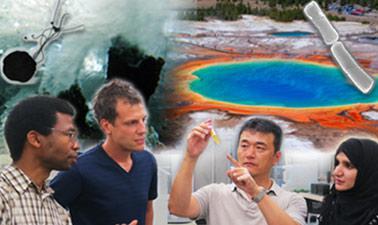
Microorganisms are everywhere, and although some are notorious for their roles in human disease, many play important roles in sustaining our global environment. We will explore these and in particular, those that thrive in the most extreme environments on our planet, the extremophiles.

In this course, we will discover how diverse life is on our planet and consider the basic principles that govern evolution. We will also learn how to classify organisms. One method is based on the different mechanisms that organisms utilize to conserve energy and obtain carbon. Another method is based on comparing sequences of common molecules present in different organisms. In the latter half of the course we will introduce the various extremophiles that have been not identified until now, and their basic characteristics. Finally, focusing on the thermophiles, we will study how proteins from thermophiles can maintain their structure and function at high temperatures.

What you'll learn:

  • Basic principles of evolution
  • Recognition of the diversity of life
  • Methods to classify organisms
  • Basic knowledge of extremophiles
  • Principles that govern protein stability

Syllabus

Week 1: Evolution and the Diversity of Life

  • Evolution is a result of diversification and selection
  • How can we classify life?
  • Phylogenetic analysis
  • The three domains of life

Week 2: Life in Boiling Water

  • Extreme environments
  • Hyperthermophiles
  • More hyperthermophiles
  • Thermostable proteins from hyperthermophiles

Week 3: Diversity of Extremophiles

  • Preparing for a hot reaction
  • Watching a hot reaction
  • Extremophiles
  • More extremophiles

Week 4: Genome Sequences

  • What they tell us
  • How can we use them?
  • Using the genome to find new metabolic pathways | Part 1 and Part 2
  • Diversity of the microbial world
Go to Class
MOOC List is learner-supported. When you buy through links on our site, we may earn an affiliate commission.

Related Courses

Human Anatomy: Musculoskeletal Cases (edX) EdX
HarvardX,Harvard University

Human Anatomy: Musculoskeletal Cases (edX)

Learn the anatomy basic to understanding five musculoskeletal injuries commonly seen in primary care medicine and orthopedic clinical specialty practice. Follow hypothetical patients from injury to operating room. Human Anatomy: Musculoskeletal Cases invites students to join medical and basic science faculty at Harvard Medical School (HMS) to learn about musculoskeletal injuries commonly seen in clinical practice.

Self Paced
Self-Paced
Food Fermentation: The Science of Cooking with Microbes (edX) EdX
HarvardX,Harvard University

Food Fermentation: The Science of Cooking with Microbes (edX)

In Food Fermentation: The Science of Cooking with Microbes, explore the history of food and beverage fermentations and how tiny microbes change and enhance flavors, aromas, and tastes in our food. What’s living in your food? Many of the foods that we consume daily owe their distinct characteristics and flavors to microbes, specifically through a biochemical process of fermentation (using bacteria, fungi, and other microorganisms to produce diverse foods).

Self Paced
Self-Paced
One Planet, One Ocean (edX) EdX
SDGAcademyX,SDG Academy

One Planet, One Ocean (edX)

A holistic view of how the ocean functions, how human interactions with the ocean can be understood, and what solutions are available to support both sustainable use and stewardship of our blue planet. Is the ocean the real final frontier? Humans have a greater understanding of the surface of the moon than they do of the depths of these waters.

Self Paced
Self-Paced
Introduction to Biology - The Secret of Life (edX) EdX
MIT,MITx

Introduction to Biology - The Secret of Life (edX)

Explore the secret of life through the basics of biochemistry, genetics, molecular biology, recombinant DNA, genomics and rational medicine. 7.00x is an introductory level biology course hosted by professor Eric Lander, who was one of the leaders of the Human Genome Project. The course content reflects the topics taught in the MIT introductory biology courses and many biology courses across the world.

Mar 12th 2024
13-24 Weeks
Exploring Psychology's Core Concepts | 走进心理学 (edX) EdX
Tsinghua University,TsinghuaX

Exploring Psychology's Core Concepts | 走进心理学 (edX)

How do you interpretThe Da Vinci Code? Isa sleepwalker aware of themselves? Is language before the mind or the contrary? This course will answer these questions and more with psychology theories. How to decipher the Da Vinci Code? Does a person know that he is sleepwalking? Which came first, language or thought? This course will use the latest and coolest psychological theories to answer these questions.

Self Paced
Self-Paced
Strategies To Improve and Incorporate Diversity, Equity and Inclusion in Healthcare (edX) EdX
StanfordOnline

Strategies To Improve and Incorporate Diversity, Equity and Inclusion in Healthcare (edX)

Find out how you can lead coalitions for change from wherever you are in your organization in order to build and sustain recruitment practices that enhance diversity, equity, and inclusion in your healthcare team and foster inclusivity in the workplace. In this course, you will discover ways to intentionally build and sustain recruitment practices that enhance diversity, equity, and inclusion in your healthcare team.

Self Paced
Self-Paced
Cell Biology: Mitochondria (edX) EdX
HarvardX,Harvard University

Cell Biology: Mitochondria (edX)

A human-centered approach to the fundamentals of cell biology with a focus on the power plants of the cell - mitochondria. The cell is a powerful case study to help us explore the functional logic of living systems. All organisms, from single-celled algae to complex multicellular organisms like us, are made up of cells. In this course, you will learn the how and why of biology by exploring the function of the molecular components of cells, and how these cellular components are organized in a complex hierarchy.

Self Paced
Self-Paced
Zoologia (edX) EdX
University of Naples Federico II,FedericaX

Zoologia (edX)

Comprendere gli animali e i sistemi naturali, attraverso il filo conduttore dell’evoluzione. Un viaggio da percorrere con l’entusiasmo di un bambino e la professionalità di uno studioso. La zoologia è la conoscenza degli animali, i nostri coinquilini. Ci sono centinaia di specie animali che interagiscono insieme a noi in una relazione di comunità o ecosistema. Questo corso di Zoologia è una passeggiata nei temi propri della materia come elemento culturale essenziale per il biologo, il naturalista e chiunque si occupi della vita.

Self Paced
Self-Paced
Specialized Cells (edX) EdX
University of Queensland,UQx

Specialized Cells (edX)

An introduction to cell physiology. Learn how specialized cells perform specific functions. The human body is composed of trillions of cells working together to perform essential body functions. Cells operate in a regulated internal environment, with different types of cells having unique properties suited to their specific functions. In this course we will dive into the complex world of human physiology, starting at the cellular level.

May 31st 2022
5-12 Weeks