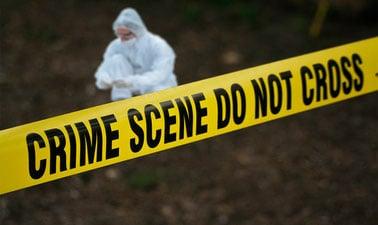
With an introduction to both genetics and forensic science, this course will show you the role of DNA in criminal investigations. Case studies illustrate how forensic investigations have changed with advances in genetics and how future developments will affect criminals and investigators.
Class Deals by MOOC List - Click here and see EdX's Active Discounts, Deals, and Promo Codes.
Have you always wanted to learn more about forensic science and crime scene investigation? Are you a fan of books, podcasts and shows featuring true crimes? Do you work or aspire to work in law enforcement, public policy, science or research and gain an understanding of DNA analysis?
In this course you will be given a clear introduction to both genetics and forensic science by geneticist expert Dr. Susan Gurney.
From understanding the different types of DNA to how DNA is collected and examined at a crime scene, this course offers you an opportunity to understand the science (molecular biology) and techniques employed by forensic scientists.
Case studies will delve into real life examples of criminal investigations where biological evidence, genetics and forensic DNA analysis was used to solve the investigation and also where genetics and forensic DNA analysis was used to exonerate people who have been imprisoned for a crime they did not commit.
You will appreciate not only how genetics has changed over the years and the effects that this has had on forensic investigation, but also how future advances in genetics might affect both future criminals and investigations.
What you'll learn
- Demonstrate a knowledge of genetics
- Understand how genetics can be utilized in a forensic investigation
- Study the ethical issues surrounding genetics and its use in forensic science, for example the National DNA Database
Syllabus
Introduction to Forensic Genetics
Purpose: The purpose of this week is to introduce the basics of genetics and forensic science. This includes:
- A basic understanding of genetics
- What is genetics
- What is DNA
- Structure of DNA
- Basics of inheritance
- An understanding of forensic science
- What is the role of a forensic scientist
- An understanding of the role of genetics in forensic science
Collecting and Examining DNA
Purpose: To explore how DNA is located at a crime scene, how it can be collected and how it is extracted from the sample. This includes:
- An understanding of how DNA can be identified at a crime scene
- An understanding of which samples might contain DNA (human DNA, plant DNA, animal DNA)
- Knowledge of how DNA can be extracted from a cell
- Knowledge of the types of analysis which can be completed using DNA
- DNA extraction
- Polymerase chain reaction
- Restriction fragment length polymorphism
- DNA extraction from a single cell
DNA Profiling
Purpose: To understand how to examine a DNA profile. One DNA profile will be used as an example, then you will work through a second profile to demonstrate their understanding. We will also discuss the importance that is placed on DNA evidence by the public and during court cases. Many people feel that if the suspect's DNA is found at a crime scene they must have committed the crime, but this may not be the case. This section includes:
- Knowledge of how to analyze a DNA profile
- Knowledge of the statistical analysis relating to DNA profiles
- Knowledge of how to confirm or disprove a DNA profile match
- An understanding of how the statistics used during course cases (for example, one in a billion chance of the DNA belonging to someone else) is calculated
- An understanding of the differences in DNA between unrelated individuals and family members
Other Types of DNA
Purpose: To introduce other types of DNA which can be used to solve crimes. We will examine the use of mtDNA in identifying unknown remains, for example its role in the torso in the Thames case, and its use in identifying victims of the September 11th World Trade Center attack. We will also look at the expanding field of plant DNA in forensic science. This has been used to like the suspect themselves or vehicles to crime scenes. This section includes:
• Knowledge of mitochondrial DNA, its structure and mode of inheritance
• An understanding of the use of mtDNA in forensic cases involving identification
• Knowledge of chloroplast DNA
• An understanding of the use of chloroplast DNA in forensic cases
Ethical Issues Relating to DNA
Purpose: To examine the ethical issues relating to DNA profiles. This week we will discuss the National DNA Database. We will look at the advantages and potential disadvantages associated with a National DNA Database, and discuss the prospect of a Universal DNA database. We will also look at using the DNA database for familial searches, which occurs when a DNA profile does not have a direct match with an individual, but the match is very close suggesting the suspect could be a family relation to the individual who is most closely matched on the DNA database. This week will also look at the future of DNA technology and how the field might advance in the future. This section includes:
- An understanding of the information contained within the DNA database
- Knowledge of the ethics issues relating to the database
- An understanding of how familial searches can be used to aid a forensic investigation.