EdX

La Química Orgánica - Un mundo a tu alcance (Parte 2) (edX)

La Química Orgánica - Un mundo a tu alcance (Parte 2) (edX)

El alumno continuará adquiriendo importantes rudimentos de la Química Orgánica, sin darse cuenta y sin necesidad de conocimientos previos. Se satisfará la curiosidad del alumno sobre la estructura molecular de sustancias, tanto naturales como otras creadas por el Químico Orgánico.

Class Deals by MOOC List - Click here and see EdX's Active Discounts, Deals, and Promo Codes.

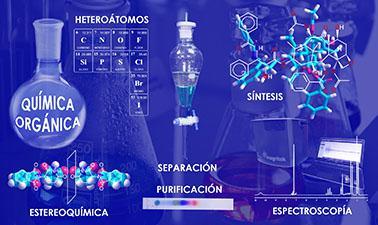
Percibirá su importancia sobre la preservación de la vida, el control de enfermedades y la producción eficiente de alimentos, así como las limitaciones que tenemos en la producción de energía y nuestra incidencia sobre el medio ambiente. Se introducirá en el apasionante arte de la separación, purificación y determinación de estructuras.

What you'll learn

  • Rudimentos de la Química Orgánica
  • Entendimiento de la estructura molecular
  • Rudimentos de las técnicas de separación y purificación
  • Nociones de las técnicas de determinación de la estructura molecular
  • Comprensión de las moléculas esenciales para la vida

Syllabus

  1. Moléculas orgánicas IV: carbono, hidrógeno y nitrógeno (aminas y amidas); otros "heteroátomos"
  2. Isomería y Estereoquímica: Estereoisomería
  3. ¿Cómo se determina la estructura de un compuesto orgánico?
  4. ¿Cómo se separa, purifica y analiza un compuesto orgánico?
  5. Algunos compuestos orgánicos cotidianos y nociones de su preparación
Go to Class
MOOC List is learner-supported. When you buy through links on our site, we may earn an affiliate commission.

Related Courses

Synchrotrons and X-Ray Free Electron Lasers (part 1) (edX) EdX
École Polytechnique Fédérale de Lausanne,EPFLx

Synchrotrons and X-Ray Free Electron Lasers (part 1) (edX)

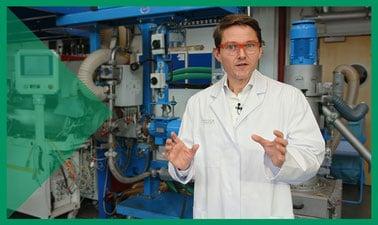
The first MOOC to provide an extensive introduction to synchrotron and XFEL facilities and associated techniques. Are you interested in investigating materials and their properties with unsurpassed accuracy and fidelity? Synchrotrons and XFELs count as Science’s premier microscopic tool in scientific endeavours as diverse as molecular biology, environmental science, cultural heritage, catalytical chemistry, and the electronic properties of novel materials, to name but a few examples.

Self Paced
Self-Paced
Irrigation Efficiency: more food with less water (edX) EdX
KU Leuven University,KULeuvenX

Irrigation Efficiency: more food with less water (edX)

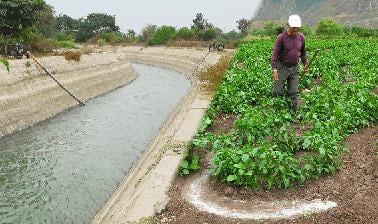
Learn to improve the efficiency of different irrigation system components over varying scales in order to extract less water from our resources while producing more food. How can we meet the demands of our ever hungrier and thirstier world? Irrigation water uses 70% of the fresh water extraction worldwide to produce 40% of the food.

Self Paced
Self-Paced
Cement Chemistry and Sustainable Cementitious Materials (edX) EdX
École Polytechnique Fédérale de Lausanne,EPFLx

Cement Chemistry and Sustainable Cementitious Materials (edX)

Learn the basics of cement chemistry and laboratory best practices for assessment of its key properties. Every day, we see concrete used all around us – to build our houses, offices, schools, bridges, and infrastructure. But few people actually understand what gives concrete its strength, resistance, and utility. The aim of this course is to offer basic cement chemistry to practitioners, as well as new students in the fields of chemistry and engineering.

Self Paced
Self-Paced
One Planet, One Ocean (edX) EdX
SDGAcademyX,SDG Academy

One Planet, One Ocean (edX)

A holistic view of how the ocean functions, how human interactions with the ocean can be understood, and what solutions are available to support both sustainable use and stewardship of our blue planet. Is the ocean the real final frontier? Humans have a greater understanding of the surface of the moon than they do of the depths of these waters.

Self Paced
Self-Paced
Energy and Thermodynamics (edX) EdX
HarvardX,Harvard University

Energy and Thermodynamics (edX)

Learn the fundamentals of chemistry and energy, from the types of energy to atomic mass and matter to enthalpy and thermodynamics. What is energy and why is it so important? How does chemistry inform energy efficiency and sustainability? Energy and Thermochemistry is an interdisciplinary, online course that introduces you to the concept of energy. Providing a foundational understanding of energy, this course shows you how energy at the molecular level forms the basis of nearly every scientific discussion of chemical, physical, and biological change.

Self Paced
Self-Paced
Reacciones de oxidación-reducción: conceptos básicos (edX) EdX
Universitat Politècnica de València,UPValenciaX

Reacciones de oxidación-reducción: conceptos básicos (edX)

En este curso online reconocerás las reacciones rédox, su ajuste y sus cálculos estequiométricos, comprenderás el funcionamiento de las celdas electroquímicas y los conceptos más importantes relacionados con las celdas electrolíticas. Las reacciones de oxidación-reducción, comunmente denominadas reacciones rédox, se producen diariamente en numerosos procesos.

Self Paced
Self-Paced
Formulación y nomenclatura de compuestos químicos (edX) EdX
Universitat Politècnica de València,UPValenciaX

Formulación y nomenclatura de compuestos químicos (edX)

Aprenderemos cómo establecer las fórmulas de los compuestos químicos inorgánicos y orgánicos más usuales y las reglas para nombrarlos. Toda la materia está formada por elementos o compuestos químicos que son resultado de la combinación de átomos. Cada compuesto presenta una determinada composición que se corresponde con una fórmula y se identifica con un nombre.

Self Paced
Self-Paced
Cell Biology: Mitochondria (edX) EdX
HarvardX,Harvard University

Cell Biology: Mitochondria (edX)

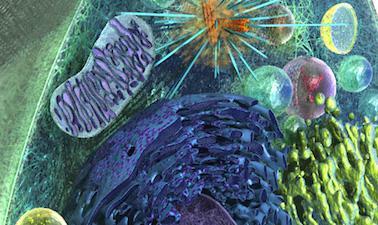
A human-centered approach to the fundamentals of cell biology with a focus on the power plants of the cell - mitochondria. The cell is a powerful case study to help us explore the functional logic of living systems. All organisms, from single-celled algae to complex multicellular organisms like us, are made up of cells. In this course, you will learn the how and why of biology by exploring the function of the molecular components of cells, and how these cellular components are organized in a complex hierarchy.

Self Paced
Self-Paced