EdX

Cell Biology: Transport (edX)

Offered by MIT, MITx,
Cell Biology: Transport (edX)

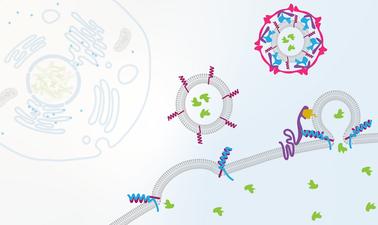
How do we know what we know about cells? Enhance your scientific thinking and data analysis skills with this in-depth adventure through cell biology. This is the first cell biology course in a four-part series. How do we know what we know about cells at a molecular level and how can we use that knowledge to design experiments to test hypotheses in cell biology?

Class Deals by MOOC List - Click here and see EdX's Active Discounts, Deals, and Promo Codes.

Building upon the concepts from biochemistry, genetics, and molecular biology from our 7.00x Introductory Biology and 7.05x BiochemistryMOOCs, these cell biology courses transition to a comprehensive discussion of biology at an experimental level.
Professors Frank Solomon and Rebecca Lamason guide you through a learning experience where you will discover experiments that answered big questions and find out what is still on the horizon. You will embark on a lively journey through cellular transport mechanisms and learn how to apply key concepts and themes of this dynamic experimental science to understand the fundamental workings of cells.
We developed the 7.06x Cell Biology series with an emphasis on:

  • Developing your scientific thinking skills including articulating hypotheses, performing thought experiments, interpreting data, and designing experiments.
  • Using data based on real scientific experiments and highlighting the scientific process in assessments.
  • Asserting that biology is an active field that changes daily through examples of research and relevance to medicine, not static information in a textbook.
  • Uniting themes and principles that inform how scientists conduct and interpret research.
  • Exploring foundational “neat experiments” that defined modern cell biology.

Implementing the science of learning in the course design.

What you'll learn

  • How to apply biochemical and genetic approaches to address fundamental questions in the transport of molecules and proteins in the cell.
  • How to evaluate the conclusions and models that scientists develop about cell biology from experimental approaches and results.
  • How to select specific empirical methods and techniques based on the different kinds of questions scientists ask.
  • How to design experiments to answer cell biology experiments with proper controls.
  • How to assess biological necessity and sufficiency from experimental results.
  • How to compare and contrast protein transport processes.
  • How to identify recurring themes in protein transport, such as the use of signal sequences, G-protein coupling, and the role of channels.

Syllabus

  • Membranes and Some Membrane-Bound Organelles
  • Experiments with Membranes and Membrane Proteins
  • Protein Trafficking to Membranes
  • Nuclear-Cytoplasmic Transport
Go to Class
MOOC List is learner-supported. When you buy through links on our site, we may earn an affiliate commission.

Related Courses

Principles of Biochemistry (edX) EdX
HarvardX,Harvard University

Principles of Biochemistry (edX)

This introduction to biochemistry explores the molecules of life, starting at simple building blocks and culminating in complex metabolism. Principles of Biochemistry integrates an introduction to the structure of macromolecules and a biochemical approach to cellular function. Topics addressing protein function will include enzyme kinetics, the characterization of major metabolic pathways and their interconnection into tightly regulated networks, and the manipulation of enzymes and pathways with mutations or drugs.

Self Paced
Self-Paced
Fundamentals of Neuroscience, Part 2: Neurons and Networks (edX) EdX
HarvardX,Harvard University

Fundamentals of Neuroscience, Part 2: Neurons and Networks (edX)

Discover what makes your brain tick in this second part of a four-part introductory series in Neuroscience. Neurons in isolation are fascinating and complicated, but the real magic of neuroscience happens in the interaction between neurons. In this course, we examine how neurons pass signals to one another and how complex dynamics can result from just a few neurons arranged in relatively simple circuits.

Self Paced
Self-Paced
AP® Biology - Part 2: Genetics (edX) EdX
Rice University,RiceX

AP® Biology - Part 2: Genetics (edX)

The second course in a comprehensive series designed to prepare you for the AP Biology exam, focusing on genetics and DNA. Preparing for the AP Biology exam requires a deep understanding of many different topics in biology as well as an understanding of the format of the AP exam and the types of questions it asks. This course is Part 2 of the AP Biology series designed to prepare you for the AP Biology exam.

No sessions available
5-12 Weeks
Global Warming Science (edX) EdX
MIT,MITx

Global Warming Science (edX)

Learn about the physics, chemistry, biology, and geology of the earth’s climate system. Global Warming Science teaches you about the risks and uncertainties of future climate change by examining the science behind the earth’s climate. You will be able to answer such questions as, “What is the Greenhouse Effect?” and “How and why has earth’s climate changed through geologic history?”

No sessions available
13-24 Weeks
Human Anatomy: Musculoskeletal Cases (edX) EdX
HarvardX,Harvard University

Human Anatomy: Musculoskeletal Cases (edX)

Learn the anatomy basic to understanding five musculoskeletal injuries commonly seen in primary care medicine and orthopedic clinical specialty practice. Follow hypothetical patients from injury to operating room. Human Anatomy: Musculoskeletal Cases invites students to join medical and basic science faculty at Harvard Medical School (HMS) to learn about musculoskeletal injuries commonly seen in clinical practice.

Self Paced
Self-Paced
The Extremes of Life: Microbes and Their Diversity (edX) EdX
Kyoto University,KyotoUx

The Extremes of Life: Microbes and Their Diversity (edX)

Microbes are everywhere! Find out how diverse microbial life is, and what their genome sequences tell us. Life on our planet is diverse. While we can easily recognize this in our everyday surroundings, an even more diverse world of life can be seen when we look under a microscope. This is the world of microorganisms.

This course is archived
4 Weeks
Zoologia (edX) EdX
University of Naples Federico II,FedericaX

Zoologia (edX)

Comprendere gli animali e i sistemi naturali, attraverso il filo conduttore dell’evoluzione. Un viaggio da percorrere con l’entusiasmo di un bambino e la professionalità di uno studioso. La zoologia è la conoscenza degli animali, i nostri coinquilini. Ci sono centinaia di specie animali che interagiscono insieme a noi in una relazione di comunità o ecosistema. Questo corso di Zoologia è una passeggiata nei temi propri della materia come elemento culturale essenziale per il biologo, il naturalista e chiunque si occupi della vita.

Self Paced
Self-Paced
Principles of Synthetic Biology (edX) EdX
MIT,MITx

Principles of Synthetic Biology (edX)

Learn how to engineer biological systems and program organisms to perform novel tasks. Do you like biology, biotechnology, or genetic engineering? Are you interested in computer science, engineering, or design? Synthetic Biology is an innovative field bringing together these subject areas and many more to create useful tools to solve everyday problems.

This course is archived
13-24 Weeks
Introduction to Biology - The Secret of Life (edX) EdX
MIT,MITx

Introduction to Biology - The Secret of Life (edX)

Explore the secret of life through the basics of biochemistry, genetics, molecular biology, recombinant DNA, genomics and rational medicine. 7.00x is an introductory level biology course hosted by professor Eric Lander, who was one of the leaders of the Human Genome Project. The course content reflects the topics taught in the MIT introductory biology courses and many biology courses across the world.

Mar 12th 2024
13-24 Weeks