EdX

Introduction to Biology - The Secret of Life (edX)

Offered by MIT, MITx,
Introduction to Biology - The Secret of Life (edX)

Explore the secret of life through the basics of biochemistry, genetics, molecular biology, recombinant DNA, genomics and rational medicine. 7.00x is an introductory level biology course hosted by professor Eric Lander, who was one of the leaders of the Human Genome Project. The course content reflects the topics taught in the MIT introductory biology courses and many biology courses across the world.

Class Deals by MOOC List - Click here and see EdX's Active Discounts, Deals, and Promo Codes.

Join Professor Eric Lander and the MITx Biology team in an exciting learning experience available for free to all enrolled learners. The 7.00x Introductory Biology course materials are available for exploration and completion by registering as an auditor or verified-track learner, including video, interactive problem sets, and exams. We strongly encourage you to work through the activities, towards a goal of learning biology.

We have optimized the course settings for learning: instant feedback after trying problems and all content available at all times for self-paced progress. You receive feedback on correctness of answers, but the problem submissions do not count toward the grade for a certificate. Instead, we offer a thorough and robust means of certifying edX learners in their mastery of the MITx introductory biology content, through a the MITx 7.00x Introduction to Biology Competency Exam. This challenging option is available only to those who register for the verified-certificate track, and successful completion of this exam is the only assessment that counts toward a certificate. We highly recommend preparing for the Competency Exam certification by using the current course materials and MIT OpenCourseWare problems. The Competency Exam is offered in the last week of every course run.
As a learner, you will first focus on the structure and function of macromolecules such as DNA, RNA and proteins. You will discover how changes in the structure of some of these macromolecules alter their functions and what the implications of such changes have on human health. As you continue in the course, you will apply an understanding of heredity and information flow within cells to human health and disease and will learn about molecular biological techniques and their potential to impact our changing world. After you complete this course, you will have a foundation in biology that will allow you to understand the remarkable medical revolution going on today.
MITx 7.00x: Introduction to Biology – The Secret of Life will let you explore the mysteries of biochemistry, genetics, molecular biology, recombinant DNA technology and genomics, and rational medicine. Good luck in your journey!

What you'll learn

  • How to describe the building blocks of life and how their interactions dictate structure and function in biology
  • How to predict genotypes and phenotypes given genetics data
  • How to explain the central dogma of molecular biology and convert DNA sequence to RNA sequence to protein sequence
  • How to use molecular tools to study biology
  • How to describe the principles of early sequencing as well as modern sequencing and the effects of these technologies on the filed of genomics
  • How to apply the principles of modern biology to issues in today's society

Go to Class
MOOC List is learner-supported. When you buy through links on our site, we may earn an affiliate commission.

Related Courses

Bipedalism: The Science of Upright Walking (edX) EdX
DartmouthX

Bipedalism: The Science of Upright Walking (edX)

Upright walking is a hallmark of being human. Explore how this unusual form of locomotion evolved and why. Have you ever wondered why humans walk on two legs rather than four? In this course, we will explore how science investigates this unusual form of locomotion. We will start our investigation by looking at the mechanics of upright walking in humans and comparing that to bipedal locomotion in large birds, bears, and apes.

Self Paced
5-12 Weeks
Molecular Biology - Part 1: DNA Replication and Repair (edX) EdX
MIT,MITx

Molecular Biology - Part 1: DNA Replication and Repair (edX)

An in-depth adventure through DNA replication and repair to strengthen your scientific thinking and experimental design skills. You’re acquainted with your DNA, but did you know that your cells synthesize enough DNA during your lifetime to stretch a lightyear in length? How does the cellular machinery accomplish such a feat without making more mistakes than you can survive?

Apr 16th 2024
5-12 Weeks
Fundamentals of Neuroscience, Part 2: Neurons and Networks (edX) EdX
HarvardX,Harvard University

Fundamentals of Neuroscience, Part 2: Neurons and Networks (edX)

Discover what makes your brain tick in this second part of a four-part introductory series in Neuroscience. Neurons in isolation are fascinating and complicated, but the real magic of neuroscience happens in the interaction between neurons. In this course, we examine how neurons pass signals to one another and how complex dynamics can result from just a few neurons arranged in relatively simple circuits.

Self Paced
Self-Paced
Biochemistry: Biomolecules, Methods, and Mechanisms (edX) EdX
MIT,MITx

Biochemistry: Biomolecules, Methods, and Mechanisms (edX)

Enhance your scientific thinking and data analysis skills with this in-depth adventure through biochemistry. Do you want to prepare for medical school, study a STEM field, become a research scientist, or transition to a career in the booming biotechnology industry? Or maybe you just want to understand the chemical reactions that govern life itself.

Apr 2nd 2024
5-12 Weeks
Specialized Cells (edX) EdX
University of Queensland,UQx

Specialized Cells (edX)

An introduction to cell physiology. Learn how specialized cells perform specific functions. The human body is composed of trillions of cells working together to perform essential body functions. Cells operate in a regulated internal environment, with different types of cells having unique properties suited to their specific functions. In this course we will dive into the complex world of human physiology, starting at the cellular level.

May 31st 2022
5-12 Weeks
Industrial Fermentation (edX) EdX
Delft University of Technology,DelftX

Industrial Fermentation (edX)

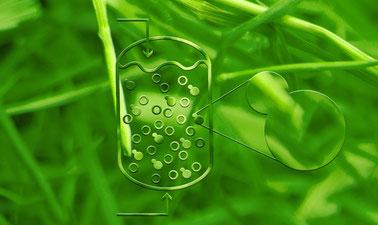
Get introduced to the essentials of industrial fermentation processes, which convert renewable feedstocks into biomaterials, chemicals, nutrition products and biofuels with the help of microorganisms. Industrial fermentation is the central operation in a broad, sustainable value chain, also involving the upstream generation and supply of renewable feedstocks, and downstream purification of the products formed.

Self Paced
Self-Paced
Human Anatomy: Musculoskeletal Cases (edX) EdX
HarvardX,Harvard University

Human Anatomy: Musculoskeletal Cases (edX)

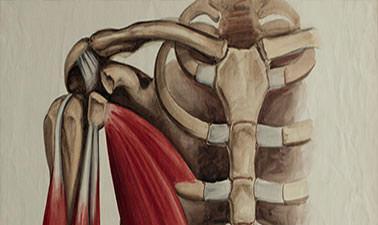
Learn the anatomy basic to understanding five musculoskeletal injuries commonly seen in primary care medicine and orthopedic clinical specialty practice. Follow hypothetical patients from injury to operating room. Human Anatomy: Musculoskeletal Cases invites students to join medical and basic science faculty at Harvard Medical School (HMS) to learn about musculoskeletal injuries commonly seen in clinical practice.

Self Paced
Self-Paced
Synchrotrons and X-Ray Free Electron Lasers (part 1) (edX) EdX
École Polytechnique Fédérale de Lausanne,EPFLx

Synchrotrons and X-Ray Free Electron Lasers (part 1) (edX)

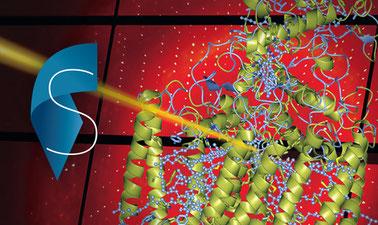
The first MOOC to provide an extensive introduction to synchrotron and XFEL facilities and associated techniques. Are you interested in investigating materials and their properties with unsurpassed accuracy and fidelity? Synchrotrons and XFELs count as Science’s premier microscopic tool in scientific endeavours as diverse as molecular biology, environmental science, cultural heritage, catalytical chemistry, and the electronic properties of novel materials, to name but a few examples.

Self Paced
Self-Paced
The Chemistry of Life (edX) EdX
Kyoto University,KyotoUx

The Chemistry of Life (edX)

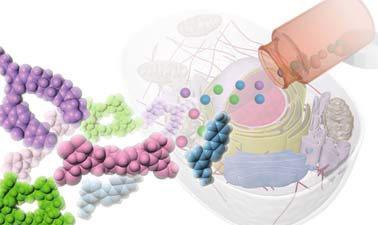
Learn how to generate ideas at the interface between chemistry and biology. Chemistry and biology are traditionally taught as separate subjects at the high school level, where students memorize fundamental scientific principles that are universally accepted. However, at the university level and in industry, we learn that science is not as simple as we once thought. We are constantly confronted by questions about the unknown and required to use creative, integrated approaches to solve these problems.

Self Paced
Self-Paced
Cell Biology: Mitochondria (edX) EdX
HarvardX,Harvard University

Cell Biology: Mitochondria (edX)

A human-centered approach to the fundamentals of cell biology with a focus on the power plants of the cell - mitochondria. The cell is a powerful case study to help us explore the functional logic of living systems. All organisms, from single-celled algae to complex multicellular organisms like us, are made up of cells. In this course, you will learn the how and why of biology by exploring the function of the molecular components of cells, and how these cellular components are organized in a complex hierarchy.

Self Paced
Self-Paced
One Planet, One Ocean (edX) EdX
SDGAcademyX,SDG Academy

One Planet, One Ocean (edX)

A holistic view of how the ocean functions, how human interactions with the ocean can be understood, and what solutions are available to support both sustainable use and stewardship of our blue planet. Is the ocean the real final frontier? Humans have a greater understanding of the surface of the moon than they do of the depths of these waters.

Self Paced
Self-Paced
Neuroscience Reconstructed: Genetics and Development (edX) EdX
École Polytechnique Fédérale de Lausanne,EPFLx

Neuroscience Reconstructed: Genetics and Development (edX)

This course will cover the basic concepts in neurogenetics; introduce the fields of genomics, transcriptomics, translatomics; classical and cutting-edge experimental approaches; and how integrative simulation can be used to derive biological meaning from genetics data and build bridges from genetics all the way to behaviour.

Self Paced
Self-Paced