Experimental Methods in Systems Biology (Coursera)

Experimental Methods in Systems Biology (Coursera)

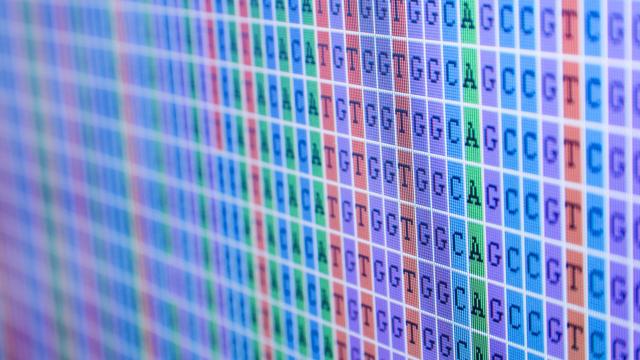
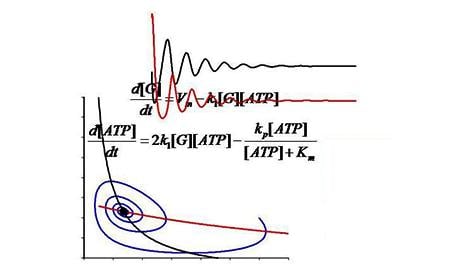
Learn about the technologies underlying experimentation used in systems biology, with particular focus on RNA sequencing, mass spec-based proteomics, flow/mass cytometry and live-cell imaging. A key driver of the systems biology field is the technology allowing us to delve deeper and wider into how cells respond to experimental perturbations. This in turns allows us to build more detailed quantitative models of cellular function, which can give important insight into applications ranging from biotechnology to human disease. This course gives a broad overview of a variety of current experimental techniques used in modern systems biology, with focus on obtaining the quantitative data needed for computational modeling purposes in downstream analyses.

Class Deals by MOOC List - Click here and see Coursera's Active Discounts, Deals, and Promo Codes.

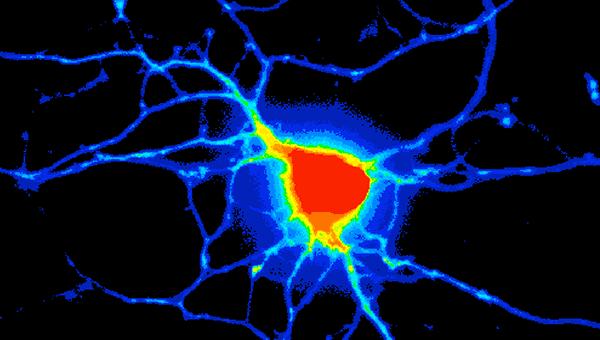
We dive deeply into four technologies in particular, mRNA sequencing, mass spectrometry-based proteomics, flow/mass cytometry, and live-cell imaging. These techniques are often used in systems biology and range from genome-wide coverage to single molecule coverage, millions of cells to single cells, and single time points to frequently sampled time courses. We present not only the theoretical background upon which these technologies work, but also enter real wet lab environments to provide instruction on how these techniques are performed in practice, and how resultant data are analyzed for quality and content.
Course 2 of 6 in the Systems Biology and Biotechnology Specialisation.

Syllabus

WEEK 1: Introduction
WEEK 2: Deep mRNA Sequencing
WEEK 3: Mass Spectrometry-Based Proteomics
WEEK 4: Midterm Exam
WEEK 5: Flow and Mass Cytometry for Single Cell Protein Levels and Cell Fate
WEEK 6: Live-cell Imaging for Single Cell Protein Dynamics
WEEK 7: Integrating and Interpreting Datasets with Network Models and Dynamical Models
WEEK 8: Final Exam
Go to Class
MOOC List is learner-supported. When you buy through links on our site, we may earn an affiliate commission.

Related Courses

Charles Darwin: El origen del evolucionismo moderno (Coursera) Coursera
Universidad Nacional Autónoma de México

Charles Darwin: El origen del evolucionismo moderno (Coursera)

Este curso está dirigido a cualquier persona que desee conocer de manera general qué es y cómo se ha explicado la evolución de las especies. Será de gran interés para alumnos, profesores y profesionales del área de ciencias biológicas y de la salud que deseen conocer los antecedentes históricos, así como los fundamentos centrales de la teoría de Charles Darwin, que configuraron el pensamiento evolutivo moderno.

Aug 10th 2026
4 Weeks
Bugs 101: Insect-Human Interactions (Coursera) Coursera
University of Alberta

Bugs 101: Insect-Human Interactions (Coursera)

Of all the animals on earth, which are the strongest for their size? What about the fastest? Who were the first animals to evolve flight? Insects take all of these titles and more! As the most abundant animals on the planet, insects and other arthropods affect our lives in so many ways. From beneficial interactions like pollination and biological pest control, to the transmission of life threatening diseases; this course will teach you about the big ways that these little arthropods impact our lives.

Aug 17th 2026
13-24 Weeks
The Science of Stem Cells (Coursera) Coursera
American Museum of Natural History

The Science of Stem Cells (Coursera)

What promise do stem cells hold for the treatment of medical conditions? In this five-part online course you will explore the history and basic biology of stem cells, learn about new research techniques, and find out how stem cells could lead to cures for diseases and to individualized medicine.

Aug 10th 2026
5-12 Weeks
Basics of Extracellular Vesicles (Coursera) Coursera
University of California, Irvine

Basics of Extracellular Vesicles (Coursera)

This course aims to provide the basic knowledge about extracellular vesicles (EV) a generic term including exosomes, microvesicles, microparticles, ectosomes, oncosomes, prostasomes, and many others. It covers areas such as EV history, nomenclature, biogenesis, EV cargo as well as the release and uptake mechanisms, collection and processing prior to isolation, different isolation methods, characterization and quantification techniques.

Aug 3rd 2026
5-12 Weeks
Business Process Modelling (Coursera) Coursera
Starweaver

Business Process Modelling (Coursera)

Learn to capture and optimize business processes using specialized diagrams. Convert insights from stakeholder interviews and document analysis into concise and precise models. Understand various notations and select the best one for your needs. This comprehensive course covers process identification, capturing, documenting, and adapting models for different audiences.

Aug 10th 2026
1 Week
Finding Hidden Messages in DNA (Bioinformatics I) (Coursera) Coursera
University of California, San Diego

Finding Hidden Messages in DNA (Bioinformatics I) (Coursera)

This course begins a series of classes illustrating the power of computing in modern biology. Please join us on the frontier of bioinformatics to look for hidden messages in DNA without ever needing to put on a lab coat. In the first half of the course, we investigate DNA replication, and ask the question, where in the genome does DNA replication begin? We will see that we can answer this question for many bacteria using only some straightforward algorithms to look for hidden messages in the genome.

Aug 3rd 2026
5-12 Weeks
Nanotechnology and Nanosensors, Part 1 (Coursera) Coursera
Technion - Israel Institute of Technology

Nanotechnology and Nanosensors, Part 1 (Coursera)

Nanotechnology and nanosensors are broad, interdisciplinary areas that encompass (bio)chemistry, physics, biology, materials science, electrical engineering and more. The present course will provide a survey on some of the fundamental principles behind nanotechnology and nanomaterials and their vital role in novel sensing properties and applications. The course will discuss interesting interdisciplinary scientific and engineering knowledge at the nanoscale to understand fundamental physical differences at the nanosensors.

Aug 10th 2026
5-12 Weeks
The Brain and Space (Coursera) Coursera
Duke University

The Brain and Space (Coursera)

This course is about how the brain creates our sense of spatial location from a variety of sensory and motor sources, and how this spatial sense in turn shapes our cognitive abilities. Knowing where things are is effortless. But “under the hood,” your brain must figure out even the simplest of details about the world around you and your position in it.

Aug 17th 2026
5-12 Weeks
Signaling actions of small molecules (Coursera) Coursera
Korea Advanced Institute of Science and Technology - KAIST

Signaling actions of small molecules (Coursera)

Our life is fine-controlled by various molecules in cells. Different types of molecules include macromolecules (e.g., protein, nucleic acid) and small molecules. In addition to classical views of central dogma, emerging roles of small molecules called metaboites have been recently proposed to significantly impact biological events. Metabolites are contiuously and dynamically produced by different metabolic pathways, thus playing key roles in energy metabolism as well as macromolecular biosynthesis/degradation. This 6 week-course will give you a solid introduction to the basic fundamentals of metabolite-mediated cell signaling.

Aug 10th 2026
5-12 Weeks