Advanced Neurobiology I (Coursera)

Offered by Peking University,
Advanced Neurobiology I (Coursera)

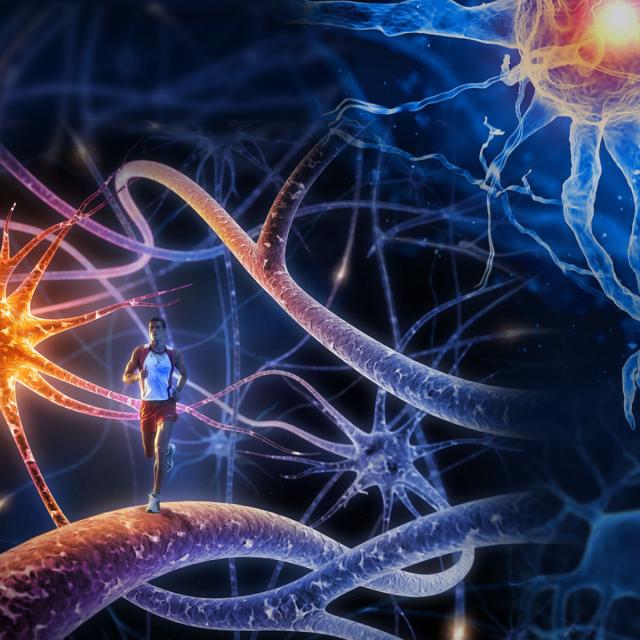
Hello everyone! Welcome to advanced neurobiology! Neuroscience is a wonderful branch of science on how our brain perceives the external world, how our brain thinks, how our brain responds to the outside of the world, and how during disease or aging the neuronal connections deteriorate. We’re trying to understand the molecular, cellular nature and the circuitry arrangement of how nervous system works.

Class Deals by MOOC List - Click here and see Coursera's Active Discounts, Deals, and Promo Codes.

Through this course, you'll have a comprehensive understanding of basic neuroanatomy, electral signal transduction, movement and several diseases in the nervous system.
This advanced neurobiology course is composed of 2 parts (Advanced neurobiology I and Advanced neurobiology II, and the latter will be online in late April or May). They are related to each other on the content but separate on scoring and certification, so you can choose either or both. It’s recommended that you take them sequentially and it’s great if you’ve already acquired a basic understanding of biology.

Syllabus

Anatomy of the Nervous System
Let's start with a basic introduction of neuroanatomy.

Morphology of the neuronal cell & Cellular and Molecular Biology of the Neuron
Let's learn more about the basic unit of the nervous system: the neuron.

Cellular and Molecular Biology of the Neuron
Let‘s continue with the neuron.

Signaling within neurons & Ion channels and membrane potentials
Let's switch to the electrical properties of the neuron.

Ion channels, membrane potential and synaptic transmission
Let's continue with the ion channels, membrane potential and synaptic transmission.

Neurotransmitter release
Let's learn more about the neurotransmitter release.

Synaptic transmission & Synapitic plasticity
Let's continue with synaptic transmission and synapitic plasticity.

Techniques in neuroscience
Let's learn some prevalent techniques in neuroscience.

Go to Class
MOOC List is learner-supported. When you buy through links on our site, we may earn an affiliate commission.

Related Courses

Experimental Methods in Systems Biology (Coursera) Coursera
Icahn School of Medicine at Mount Sinai

Experimental Methods in Systems Biology (Coursera)

Learn about the technologies underlying experimentation used in systems biology, with particular focus on RNA sequencing, mass spec-based proteomics, flow/mass cytometry and live-cell imaging. A key driver of the systems biology field is the technology allowing us to delve deeper and wider into how cells respond to experimental perturbations. This in turns allows us to build more detailed quantitative models of cellular function, which can give important insight into applications ranging from biotechnology to human disease. This course gives a broad overview of a variety of current experimental techniques used in modern systems biology, with focus on obtaining the quantitative data needed for computational modeling purposes in downstream analyses.

Jul 27th 2026
5-12 Weeks
Introduction to Psychology (Coursera) Coursera
Yale University

Introduction to Psychology (Coursera)

What are people most afraid of? What do our dreams mean? Are we natural-born racists? What makes us happy? What are the causes and cures of mental illness? This course tries to answer these questions and many others, providing a comprehensive overview of the scientific study of thought and behavior. It explores topics such as perception, communication, learning, memory, decision-making, persuasion, emotions, and social behavior. We will look at how these aspects of the mind develop in children, how they differ across people, how they are wired-up in the brain, and how they break down due to illness and injury.

Aug 3rd 2026
5-12 Weeks
Synapses, Neurons and Brains (Coursera) Coursera
Hebrew University of Jerusalem

Synapses, Neurons and Brains (Coursera)

These are very unique times for brain research. The aperitif for the course will thus highlight the present “brain-excitements” worldwide. You will then become intimately acquainted with the operational principles of neuronal “life-ware” (synapses, neurons and the networks that they form) and consequently, on how neurons behave as computational microchips and how they plastically and constantly change - a process that underlies learning and memory.

Jul 27th 2026
5-12 Weeks
Understanding Plants - Part I: What a Plant Knows (Coursera) Coursera
Tel Aviv University

Understanding Plants - Part I: What a Plant Knows (Coursera)

For centuries we have collectively marveled at plant diversity and form—from Charles Darwin’s early fascination with stems and flowers to Seymour Krelborn’s distorted doting in Little Shop of Horrors. This course intends to present an intriguing and scientifically valid look at how plants themselves experience the world—from the colors they see to the sensations they feel. Highlighting the latest research in genetics and more, we will delve into the inner lives of plants and draw parallels with the human senses to reveal that we have much more in common with sunflowers and oak trees than we may realize.

Aug 3rd 2026
5-12 Weeks
Science & Religion 101 (Coursera) Coursera
University of Alberta

Science & Religion 101 (Coursera)

This course examines the nature of both science and religion and attempts to explore the possible relationships between them. The primary purpose is to dispel the popular myth that science and religion are entrenched in a never-ending conflict. As a result, this course argues that if the limits of both science and religion are respected, then their relationship can be complementary.

Aug 3rd 2026
5-12 Weeks
Global Warming I: The Science and Modeling of Climate Change (Coursera) Coursera
University of Chicago

Global Warming I: The Science and Modeling of Climate Change (Coursera)

This class describes the science of global warming and the forecast for humans’ impact on Earth’s climate. Intended for an audience without much scientific background but a healthy sense of curiosity, the class brings together insights and perspectives from physics, chemistry, biology, earth and atmospheric sciences, and even some economics—all based on a foundation of simple mathematics (algebra).

Jul 27th 2026
5-12 Weeks
Genomics: Decoding the Universal Language of Life (Coursera) Coursera
University of Illinois at Urbana-Champaign

Genomics: Decoding the Universal Language of Life (Coursera)

What is a genome? A genome contains all of the information that a cell needs to develop, function, and reproduce itself, and all the information needed for those cells to come together to form a person, plant, or animal. Genomes contain an organism’s complete set of genes, and also the even tinier genetic structures that help regulate when and how those genes are used. The ability to regrow a torn ligament, the clues that might predict the onset of mental illness, the nutritional potential of crops, and even the history of life itself, are all encoded in genomes. By taking this course, you will discover how scientists are deciphering the language of genomes to learn how to develop sustainable food and fuel supplies, improve disease treatment and prevention, and protect our environment.

Aug 3rd 2026
5-12 Weeks
Biohacking Your Brain's Health (Coursera) Coursera
Emory University

Biohacking Your Brain's Health (Coursera)

With deteriorating health, particularly brain health, occurring at a global level, this course introduces you to methods for maximizing your brain's fitness through nutrition, exercise, meditation, and sleep. We'll debunk popular myths about prescribed practices for overall health and then uncover studies from the last few decades revealing practical routines and interventions that are proven to help improve the brain.

Aug 3rd 2026
4 Weeks
Bioinformatic Methods I (Coursera) Coursera
University of Toronto

Bioinformatic Methods I (Coursera)

Large-scale biology projects such as the sequencing of the human genome and gene expression surveys using RNA-seq, microarrays and other technologies have created a wealth of data for biologists. However, the challenge facing scientists is analyzing and even accessing these data to extract useful information pertaining to the system being studied. This course focuses on employing existing bioinformatic resources – mainly web-based programs and databases – to access the wealth of data to answer questions relevant to the average biologist, and is highly hands-on.

Jul 27th 2026
5-12 Weeks
Intellectual Humility: Theory (Coursera) Coursera
University of Edinburgh

Intellectual Humility: Theory (Coursera)

Faced with difficult questions people often tend to dismiss and marginalize dissent. Political and moral disagreements can be incredibly polarizing, and sometimes even dangerous. And whether it’s Christian fundamentalism, Islamic extremism, or militant atheism, religious dialogue remains tinted by arrogance, dogma, and ignorance. The world needs more people who are sensitive to reasons both for and against their beliefs, and are willing to consider the possibility that their political, religious and moral beliefs might be mistaken. The world needs more intellectual humility.

Aug 3rd 2026
3 Weeks