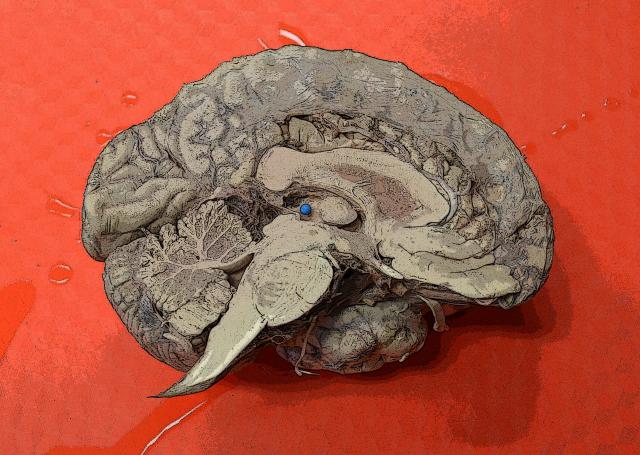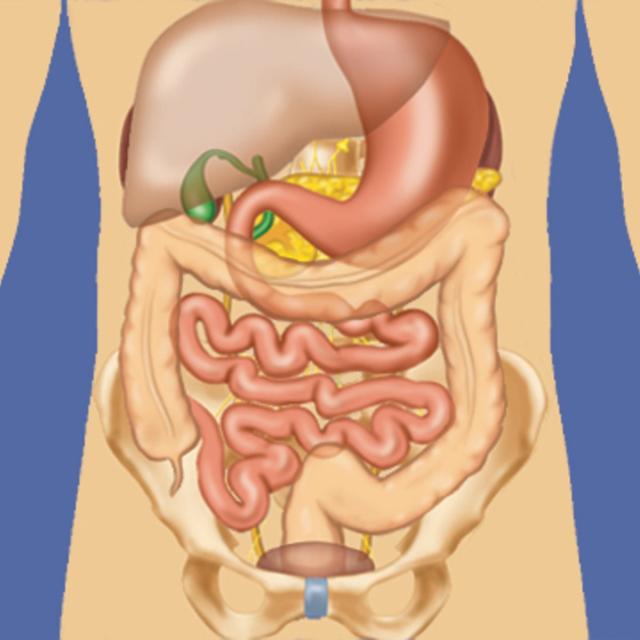
In this anatomy course you will explore the organs involved in our food digestion and discover the common causes of abdominal and pelvic pain. The latest graphics and animations will help you to find new insights and understanding of this part of the body, that has been the focus of anatomical research for centuries and presently arouses renewed scientific interest. You will explore the 3D anatomy of the organs from a basic level, providing thorough anatomical understanding, to its advanced application in surgical procedures.
Class Deals by MOOC List - Click here and see Coursera's Active Discounts, Deals, and Promo Codes.
This course will challenge you to discover and help you to understand the anatomy of the abdomen and pelvis in all its aspects, ranging from its embryological underpinnings, via digital microscopy to gross topography and its clinical applications.
The course is unique in that it continuously connects basic anatomical knowledge from the lab with its medical applications and current diagnostic techniques. You’ll get the chance to discuss anatomical and clinical problems with peers and experts in forum discussions and you will receive guidance in exploring the wealth of anatomical information that has been gathered over the centuries. Follow us on an exciting journey through the abdomen and pelvis where you digest your food but also where new life starts!
What You Will Learn
- Recognize and recall the main structures in the abdomen, also from dissection images and CT/MRI imaging
- Describe the key microscopic characteristics of some tissues and know the 4 base layers in the Gi-tract
- Describe main build, both macroscopic and microscopic, and functions of the gut associated organs like the pancreas, liver, gallbladder and spleen
- Describe the nervous pathways to and from the abdomen and pelvis including the enteric nervous system
WEEK 1
Introduction
This course is about Anatomy of the Abdomen and Pelvis. Before you dive into the content however, we invite you to read this introduction so you can improve your study success. We hope you enjoy learning in this course.
Mapping the abdomen and pelvis
Welcome to the first week of the course. Have you ever wondered what lies inside your abdomen? Do you know where the spleen or appendix is situated? Would you like to know how the physician looks at it and get the basics of a physical examination of the abdomen? Do you want to understand how all these structures can be seen on scans or X-rays? During this week you will get a better understanding of these things. We also lay the foundation for the following weeks of the course, like basic things to know about vascularization, the nervous system, embryology, and the wonderful membrane holding all these structures together: the peritoneum.
WEEK 2
Trip into the gut
After the first introduction of the abdomen with all its organs, this week we will focus at some microscopy and the first stages of gut development in the embryo. The gut starts as a simple straight tube which differentiates further into a internalized tract with specialized sections, each with its own function. You will learn how the esophagus transports your food, while its lower sphincter prevents food from returning - even if you're upside down! Then you will focus on how the stomach drenches all food in an extremely acid pool, attacking ingested bacteria and starting the digestion. That same acid would also damage the duodenum, so protective action is required. You will follow the digestion further down the tract, with its extensive folds and specialized cells and end up with more and more solid bowel contents when water is extracted in the colon. In order to demonstrate some functions further, we also have to dive into the world of microscopy. Join us on this trip into the gut with all its ingenious structural specializations along the way!
WEEK 3
The gut and its 'suppliers and purchasers'
We discussed some microscopy before and the embryonic origin of the initial gut tube and how it differentiates into specialized sections for digestion. We will now focus on the question why the bowels are not arranged symmetrically left and right, like in the rest of our body, but are closely encircling and crossing over each other. With a unique 3D animation you will learn about the rotation of the gut during development. This key concept will help you to understand the anatomical relationships of the gut with its suppliers and purchasers. The gut cannot do it alone; it needs additional organs which supply digestive chemicals such as enzymes and bile and organs that process the absorbed food further. Both the gut and these organs also need a blood supply. You will learn where their blood vessels are situated. Also, the less prominent, but very important 'sewage' system, the lymphatics, will be dealt with. In the gut area, the lymphatics are specialized in transporting fats that are absorbed from the food! Lymphatic vessels also keep an eye on pathological invaders. Unfortunately they may also spread tumor cells. In short, this week's module is for everyone who is interested in the collaboration between the abdominal organs and the gut.
WEEK 4
Knowing your peritoneal relationships
You have already learned that the bowels are not arranged symmetrically left and right. The rotation processes of the gut and its suppliers have important consequences for the peritoneal coverings of the gut and the abdominal wall. It determines why some structures lie easily accessible in the abdomen and others are more hidden away. In this week you will get a grip on difficult concepts as 'intraperitoneal' and 'retroperitoneal'. It is also a starter week about abdominal surgery. You will also learn a secret: The best way to mobilize the abdominal and pelvic organs is to separate what got adhered when the patient was just an embryo! Please feel free to dive into these embryonic matters and enjoy all the twists and turns!
WEEK 5
Protecting the internal organs
The abdominal body wall and the pelvis are the topics of this week. What happens if you push hard to pass a stool, or in reverse, how do you prevent unwantedly passing a stool when you sneeze or cough hard? It may not seem the most attractive area of the body, but the rectum and anus hold many intricacies and even nowadays new things are discovered! Weak areas in the body wall are a frequent cause of problems, for instance they can lead to inguinal hernias. You will learn about their complicated anatomy. And finally, we will dive deep in the pelvis and learn about its hidden gems: the internal genitals.
WEEK 6
Pain!
The course comes to an end with this last topic: Pain in my belly! Probably all of us have experienced abdominal pains and have witnessed its many different forms. Sometimes it can just be a slight discomfort, or it can come in waves of agony. The aches can develop gradually over several days, or strike suddenly as severe abdominal pain. In many cases the patient cannot easily locate the pain. Even shoulder pain can be caused by something going on in the abdomen! Abdominal pain is one of the most frequent reasons to seek medical attention. However, diagnosing the cause of the pain can be very difficult. Many different diseases may cause abdominal pain. Many of those do not require immediate treatment, yet others are life-threatening. The challenge is to correctly identify those dangerous cases that require prompt surgical intervention. You will learn the anatomical basis of pain and how to apply this knowledge in the diagnostic process. We will wrap up with an overview of several abdominal diseases that might all present themselves with pain.
WEEK 7
Concluding the MOOC