Digital Tools for Efficient Clinical Trials (FutureLearn)

Digital Tools for Efficient Clinical Trials (FutureLearn)

Discover how digital tools can be used for the recruitment and retention of participants within clinical trials. Learn how digital tools can be used throughout clinical trials. This four-week clinical trials course is designed to create awareness about the availability and use of digital tools for the recruitment and retention of participants within clinical trials.

Class Deals by MOOC List - Click here and see FutureLearn's Active Discounts, Deals, and Promo Codes.

You’ll explore the key tools for recruitment and retention, how they are used and their overall advantages and limitations.
Develop an understanding of what digital tools are
You’ll firstly develop an understanding of what digital tools are and how they are used within the context of clinical trials.
You’ll then evaluate examples of digital tools that have been used for recruitment and retention of participants within clinical trials.
Identify ways in which digital tools could be used to support clinical trials
You’ll then identify the ways in which digital tools can be used to support clinical trials, and will explore the evidence for the effectiveness of digital tools.
You’ll then discuss the aspects that a researcher would need to consider if they intend to use one of these tools, and identify useful further information to discover further.
Learn with clinical trial experts from the University of Southampton
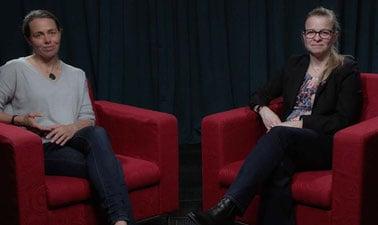
Throughout the duration of the course, you’ll be under the guidance of Jacqui Nuttall, Head of Trial Management in the Southampton Clinical Trials Unit, and Giorgos Dritsakis, a trial manager and lead researcher in the same unit.
The course will draw heavily on research findings from an NIHR-funded (National Institute for Health Research) project on research using technology in clinical trials. The team has an internationally-recognised reputation in understanding the development of successful clinical trials, and you’ll be able to engage with stakeholders throughout the process.

Syllabus

Week 1: Introduction to this course
Week 2: Digital tools for recruitment
Week 3: Digital tools for retention
Week 4: Considerations when using digital tools

What will you achieve?
By the end of the course, you‘ll be able to...

  • Develop an understanding of what we mean by 'digital tools' for clinical trials
  • Discuss examples of digital tools that have been used for recruitment and retention of participants in clinical trials
  • Identify ways in which digital tools could be used to support clinical trials
  • Evaluate the evidence for the effectiveness of different tools
  • Explore what a researcher might need to consider when planning to use digital tools in clinical trials
  • Collect ideas on where to find useful further information
  • Reflect upon how digital tools might be useful in your own context and share experiences with others
  • Investigate how to evaluate digital tools as a study within a trial to build on an evidence base.

Who is the course for?
This course is primarily intended for staff in clinical trial units (CTUs), Research Design Services (RDSs), monitoring staff in the NIHR Evaluation, Trials and Studies Coordinating Centre (NTSCC), National Institute of Health Research (NIHR) grant applicants, funding board members, referees and other professionals involved in clinical trials.


Go to Class
MOOC List is learner-supported. When you buy through links on our site, we may earn an affiliate commission.

Related Courses

Software Design Methods and Tools (Coursera) Coursera
University of Colorado System

Software Design Methods and Tools (Coursera)

Since many software developers are compulsive coders, they have created software over the years to help them do their job. There are tools which make design and its associated tasks easier. The course introduces some basic tools and techniques to help you with design. Tools aren’t always tangible, however. The last two lessons of this course discuss questions of Ethics in software development. The purpose here is, as with tools, to equip you to better carry our your responsibilities as a designer. Students will be required to have a prior knowledge of writing and delivering software and some programming knowledge in java.

Sep 14th 2026
5-12 Weeks
Medical Technology and Evaluation (Coursera) Coursera
University of Minnesota

Medical Technology and Evaluation (Coursera)

Innovations in medical technologies are one of the leading areas of economic growth in the world. Whether new technologies take the form of pharmaceutical, medical device, biotechnology, information technology of some combination of these innovations, the opportunities for both private enterprise and social welfare are substantial. However, these innovations are not without cost, and require reimbursement from either a privately or publicly financed health care delivery system to enter the marketplace.

Sep 7th 2026
4 Weeks
Mapper: Navigating Digital Career Tools (FutureLearn) FutureLearn
Founders4Schools

Mapper: Navigating Digital Career Tools (FutureLearn)

Support your students' transition into work, understand the careers they'll be entering, and give them the best chance of success. Help your students make more informed choices about their future. The job market has changed beyond all recognition over the last decade. On this course, you’ll learn how to better support your students as they make their way into the workplace.

Oct 12th 2020
4 Weeks
Introduction to Translational Research: Connecting Scientists and Medical Doctors (FutureLearn) FutureLearn
Taipei Medical University

Introduction to Translational Research: Connecting Scientists and Medical Doctors (FutureLearn)

Understand the emerging discipline of translational medicine and the process of taking research from ‘benchside’ to ‘bedside'. Translational medicine, also known as translational science or translational research, is a new, growing discipline in medicine that aims to ensure research flows from ‘benchside’ to ‘bedside’.

Self Paced
5-12 Weeks
Remote Work Revolution for Everyone (edX) EdX
HarvardX,Harvard University

Remote Work Revolution for Everyone (edX)

In Remote Work Revolution for Everyone, you will learn to excel in the virtual-work landscape. You will learn how to build trust, increase productivity, use digital tools intelligently, and remain fully aligned with your remote team. How are you thriving or surviving in your remote work environment? Remote working has long been an option for many organizations and employees. However, with the COVID-19 pandemic, many more organizations were forced to rapidly shift to remote work.

Self Paced
Self-Paced
Building R Packages (Coursera) Coursera
Johns Hopkins University

Building R Packages (Coursera)

Writing good code for data science is only part of the job. In order to maximizing the usefulness and reusability of data science software, code must be organized and distributed in a manner that adheres to community-based standards and provides a good user experience. This course covers the primary means by which R software is organized and distributed to others.

Sep 7th 2026
4 Weeks
Introduction to Good Clinical Practice (Coursera) Coursera
Novartis

Introduction to Good Clinical Practice (Coursera)

Welcome to 'Introduction to Good Clinical Practice'! This course is designed to introduce you to the basic principles and practices of Good Clinical Practice (GCP), which are essential for conducting clinical trials and ensuring the safety and well-being of human subjects. Whether you are new to the field or seeking to refresh your knowledge, this course and its coming sequel, 'Fundamentals of Good Clinical Practice' will equip you with the necessary skills and understanding to begin to navigate the complex world of clinical research.

Sep 28th 2026
3 Weeks
An Introduction to the Assessment of People at Work (FutureLearn) FutureLearn
Coventry University

An Introduction to the Assessment of People at Work (FutureLearn)

Discover the history of assessing people at work and get an overview of assessment throughout the employee life cycle. Understand how, when and why we need to assess people at work. Why do we assess people at work? How do we do it? On this course you will look into the history of assessing people at work. You will gain an overview of the methods and techniques used, as well as consider the employee life cycle to identify when we may assess people and why.

No sessions available
2 Weeks
Design and Interpretation of Clinical Trials (Coursera) Coursera
Johns Hopkins University

Design and Interpretation of Clinical Trials (Coursera)

Clinical trials are experiments designed to evaluate new interventions to prevent or treat disease in humans. The interventions evaluated can be drugs, devices (e.g., hearing aid), surgeries, behavioral interventions (e.g., smoking cessation program), community health programs (e.g. cancer screening programs) or health delivery systems (e.g., special care units for hospital admissions). We consider clinical trials experiments because the investigators rather the patients or their doctors select the treatment the patients receive.

Sep 28th 2026
5-12 Weeks
Introduction to Randomised Controlled Trials (FutureLearn) FutureLearn
University of Birmingham

Introduction to Randomised Controlled Trials (FutureLearn)

Discover the importance of trials in evidence-based medicine and learn about the trial lifecycle from conception to publication. Explore how successful clinical trials are designed and delivered Randomised controlled trials have a huge impact on society by providing evidence of the effectiveness of healthcare, social care, and public health interventions.

Self Paced
3 Weeks
How to Create an Online Course (FutureLearn) FutureLearn
University of Edinburgh

How to Create an Online Course (FutureLearn)

Discover key skills to create engaging online learning experiences. Learn how to design and develop online learning materials. Digital education is expanding faster than ever before, and learning online has become an essential part of how we teach and learn. On this two-week course, you’ll learn how to create online learning materials that are open, accessible, and engaging.

Self Paced
2 Weeks