Pre-formulation (Coursera)

Offered by Novartis,
Pre-formulation (Coursera)

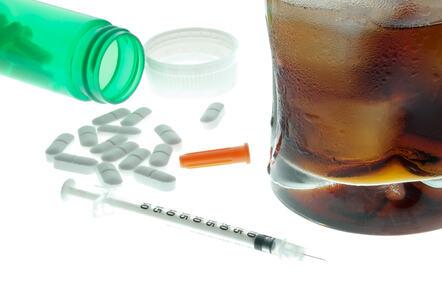
In this course we will focus on how active compounds are developed into a formulation suitable for dosing in animal studies and early human clinical trials.  Factors such as the route of administration, enhancing the solubility of the drug substance, the crystalline form of the drug substance, drug substance vs. drug product, storage requirements, and how special requirements of the patient population play a role in the design of an ideal formulation will be covered. 

Class Deals by MOOC List - Click here and see Coursera's Active Discounts, Deals, and Promo Codes.

Finally, some of the differences encountered when formulating a biologic vs. a small molecule will be discussed.
Target audience: This course is suitable for life scientists, clinicians, and individuals from fields that support drug discovery (e.g., patents, finance, licensing, etc.) interested in learning more about the pharmaceutical/biotechnology sector. Advanced undergraduate coursework or practical familiarity/working knowledge in biological sciences and organic chemistry is recommended.
This course is part of the Drug Hunting: The Science of Making New Medicines Specialization.

Syllabus

Pre-formulation, part 1
Welcome, by the end of the course students will be able to: Define the concepts of formulation, drug substance, and drug product. Describe the role of pre-formulation in drug discovery and its impact on route of administration selection. List and explain the importance of physicochemical properties in drug discovery and development. Compare and contrast the pre-formulation considerations for small molecule drugs and biologics.

Pre-formulation, part 2

Pre-formulation, part 3

Go to Class
MOOC List is learner-supported. When you buy through links on our site, we may earn an affiliate commission.

Related Courses

Capstone Project: Advanced AI for Drug Discovery (Coursera) Coursera
LearnQuest

Capstone Project: Advanced AI for Drug Discovery (Coursera)

In this capstone project course, we'll compare genome sequences of COVID-19 mutations to identify potential areas a drug therapy can look to target. The first step in drug discovery involves identifying target subsequences of theirs genome to target. We'll start by comparing the genomes of virus mutations to look for similarities. Then, we'll perform PCA to cut down our number of dimensions and identify the most common features.

Sep 7th 2026
3 Weeks
Making Data Science Work for Clinical Reporting (Coursera) Coursera
Genentech

Making Data Science Work for Clinical Reporting (Coursera)

This course is aimed to demonstrate how principles and methods from data science can be applied in clinical reporting. By the end of the course, learners will understand what requirements there are in reporting clinical trials, and how they impact on how data science is used. The learner will see how they can work efficiently and effectively while still ensuring that they meet the needed standards.

Sep 7th 2026
4 Weeks
Prescription Drug Regulation, Cost, and Access: Current Controversies in Context (edX) EdX
HarvardX,Harvard University

Prescription Drug Regulation, Cost, and Access: Current Controversies in Context (edX)

Understand how the FDA regulates pharmaceuticals and explore debates on prescription drug costs, marketing, and testing. Prescription drugs are among the most common health care interventions and have turnedsome once-fatal diseases into manageable conditions — but they have also been a growing source of controversy.

Self Paced
Self-Paced
The Opioid Crisis in America (edX) EdX
HarvardX,Harvard University

The Opioid Crisis in America (edX)

Learn about the opioid epidemic in the United States, including information about treatment and recovery from opioid addiction. On average, 130 Americans die every day from an overdose of opioids, the class of drugs that includes heroin, hydrocodone, codeine, morphine, and fentanyl. Around 70% of all opioid overdose deaths involved a prescription opioid. Drug overdose is now the leading cause of accidental death in the United States — opioid addiction is driving this epidemic.

Self Paced
Self-Paced
Drug Commercialization (Coursera) Coursera
University of California, San Diego

Drug Commercialization (Coursera)

The University of California San Diego, Skaggs School of Pharmacy and Pharmaceutical Sciences Drug Commercialization course brings you lectures from both faculty and industry experts. With this course, recorded on campus at UCSD, we seek to share our access to top people in the field who bring an unprecedented range of expertise on drug commercialization. This course will cover pharmacoeconomic, marketing strategy, intellectual property strategy, portfolio management, managed markets and strategic alliances. It will also have a lecture case study from startup to success.

Sep 14th 2026
4 Weeks
Drug Discovery (Coursera) Coursera
University of California, San Diego

Drug Discovery (Coursera)

The University of California San Diego, Skaggs School of Pharmacy and Pharmaceutical Sciences Drug Discovery course brings you lectures from both faculty and industry experts. With this course, recorded on campus at UCSD, we seek to share our access to top people in the field who bring an unprecedented range of expertise on drug discovery. In this course you will learn the drug discovery process up to the filing of an Initial New Drug Application or IND. Each week you will learn the steps that a pharmaceutical or biotech company goes through to discover a new therapeutic drug.

Sep 7th 2026
3 Weeks
Introduction to Systematic Review and Meta-Analysis (Coursera) Coursera
Johns Hopkins University

Introduction to Systematic Review and Meta-Analysis (Coursera)

We will introduce methods to perform systematic reviews and meta-analysis of clinical trials. We will cover how to formulate an answerable research question, define inclusion and exclusion criteria, search for the evidence, extract data, assess the risk of bias in clinical trials, and perform a meta-analysis.

Sep 21st 2026
5-12 Weeks
Pharmacokinetics (Coursera) Coursera
Novartis

Pharmacokinetics (Coursera)

This course begins with a review of routes of administration, ADME (absorption, distribution, metabolism, & excretion), and the use of in vivo drug concentration-time data to determine key pharmacokinetic parameters, like volume of distribution, half-life and clearance.  The course then emphasizes in vitro assays that allow rapid prediction of ADME and PK properties for evaluation of new compounds. 

Sep 7th 2026
3 Weeks
Leadership for Cancer Informatics Research (Coursera) Coursera
Johns Hopkins University

Leadership for Cancer Informatics Research (Coursera)

Informatics research often requires multidisciplinary teams. This requires more flexibility to communicate with team members with distinct backgrounds. Furthermore, team members often have different research and career goals. This can present unique challenges in making sure that everyone is on the same page and cohesively working together. This course aims to provide research leaders with guidance about: How to effectively lead and support team members on informatics projects; How to perform informatics projects well; How to support informatics collaborators, mentees, and employees; How to better support diversity within your team; Tools that can help you perform informatics projects well

Sep 7th 2026
4 Weeks