Targets, Assays & Screening (Coursera)

Offered by Novartis,
Targets, Assays & Screening (Coursera)

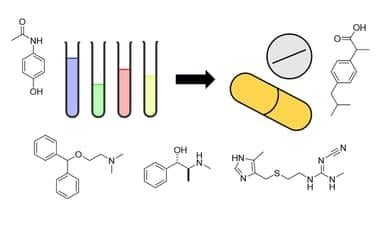
This course focuses on the early stages of drug discovery and the identification of promising compounds with which to begin the hunt for a novel drug.  Different types of assays and methods are reviewed that are used to screen libraries of molecules in the preliminary search for compounds with activity.  Methods are discussed for validating that active molecules are indeed engaging a target associated with a predicted therapeutic benefit.

Class Deals by MOOC List - Click here and see Coursera's Active Discounts, Deals, and Promo Codes.

Target audience: This course is suitable for life scientists, clinicians, and individuals from fields that support drug discovery (e.g., patents, finance, licensing, etc.) interested in learning more about the pharmaceutical/biotechnology sector. Advanced undergraduate coursework or practical familiarity/working knowledge in biological sciences and organic chemistry is recommended.
This course is part of the Drug Hunting: The Science of Making New Medicines Specialization.

Syllabus

Targets, Assays & Screening, part 1
Welcome, by the end of the course students will be able to: Recognize the differences between target-based and phenotypic drug discovery. Differentiate between common library types and screening approaches for identifying small molecule hits. Describe some of the assay types used in early screening and factors to consider in their design.

Targets, Assays & Screening, part 2

Targets, Assays & Screening, part 3

Go to Class
MOOC List is learner-supported. When you buy through links on our site, we may earn an affiliate commission.

Related Courses

Chimpanzee Behavior and Conservation (Coursera) Coursera
Duke University

Chimpanzee Behavior and Conservation (Coursera)

Chimpanzees are one of our closest living relatives, yet almost nothing was known about their behavior in the wild until Jane Goodall started her groundbreaking study of the chimpanzees of Gombe, Tanzania in 1960. This study continues today, following the same chimpanzee families that Jane Goodall first encountered over 55 years ago. Guided by three course instructors who have lived and worked with the Gombe chimpanzees, you will learn how Goodall’s early discoveries changed our view of human uniqueness.

Sep 28th 2026
5-12 Weeks
Diagnosing Health Behaviors for Global Health Programs (Coursera) Coursera
Johns Hopkins University

Diagnosing Health Behaviors for Global Health Programs (Coursera)

Health behavior lies at the core of any successful public health intervention. While we will examine the behavior of individual in depth in this course, we also recognize by way of the Ecological Model that individual behavior is encouraged or constrained by the behavior of families, social groups, communities, organizations and policy makers. We recognize that behavior change is not a simplistic process but requires an understanding of dimensions like frequency, complexity and cultural congruity. Such behavioral analysis is strengthened through the use of a toolkit of theoretical models and practical frameworks.

Sep 28th 2026
4 Weeks
Literature Case Studies in Drug Discovery (edX) EdX
Davidson College,DavidsonX

Literature Case Studies in Drug Discovery (edX)

Once a person understands the ideas of drug efficacy, potency, pharmacokinetics, and safety, original research articles can be readily understood. The Journal of Medicinal Chemistry of the American Chemical Society regularly publishes a series of articles called Drug Annotations. These articles summaries a drug discovery program from a pharmaceutical company. The article covers everything from the indication of the drug, key pathways and promising drug targets within the pathways, library screening, lead selection, lead optimization, and both preclinical safety and PK/ADME studies. The articles are excellent articles for students who are testing their knowledge of drug discovery.

Self Paced
Self-Paced
Measuring Pharmacodynamics: From Ligand Binding to Clinical Outcomes (edX) EdX
Davidson College,DavidsonX

Measuring Pharmacodynamics: From Ligand Binding to Clinical Outcomes (edX)

Drugs are biologically active compounds. Drug discovery and drug development rely on methods for measuring biological activity. The term “activity” is quite general. In practice, a substance’s biological activity can refer to how a substance affects a biological pathway, cell-level responses, safety risks, how long a substance resides within in a system, as well as a substance’s effects in an organism (called pharmacodynamics). The design of methods for measuring activity is a critical aspect of drug discovery. The design of robust and informative methods can accelerate the drug discovery and development process.

Self Paced
Self-Paced
Bioinformatic Methods II (Coursera) Coursera
University of Toronto

Bioinformatic Methods II (Coursera)

Large-scale biology projects such as the sequencing of the human genome and gene expression surveys using RNA-seq, microarrays and other technologies have created a wealth of data for biologists. However, the challenge facing scientists is analyzing and even accessing these data to extract useful information pertaining to the system being studied. This course focuses on employing existing bioinformatic resources – mainly web-based programs and databases – to access the wealth of data to answer questions relevant to the average biologist, and is highly hands-on.

Sep 28th 2026
5-12 Weeks
Design and Interpretation of Clinical Trials (Coursera) Coursera
Johns Hopkins University

Design and Interpretation of Clinical Trials (Coursera)

Clinical trials are experiments designed to evaluate new interventions to prevent or treat disease in humans. The interventions evaluated can be drugs, devices (e.g., hearing aid), surgeries, behavioral interventions (e.g., smoking cessation program), community health programs (e.g. cancer screening programs) or health delivery systems (e.g., special care units for hospital admissions). We consider clinical trials experiments because the investigators rather the patients or their doctors select the treatment the patients receive.

Sep 28th 2026
5-12 Weeks
Gender and Sexuality: Diversity and Inclusion in the Workplace (Coursera) Coursera
University of Pittsburgh

Gender and Sexuality: Diversity and Inclusion in the Workplace (Coursera)

What is sex? What is gender? What is sexuality? What do we mean by LGBTQIA? How are these concepts related to the workplace? How have our understandings of these terms changed over time, and how have these changes impacted work and culture? To help you answer these important questions, this course will introduce you to the exciting field of gender, sexuality, and women's studies, and to LGBTQIA identities.

Sep 28th 2026
4 Weeks
Curanderismo: Traditional Healing of the Mind, Energy & Spirit (Coursera) Coursera
University of New Mexico

Curanderismo: Traditional Healing of the Mind, Energy & Spirit (Coursera)

As the third of four courses on Curanderismo, the art of Hispanic/Latino traditional medicine, this course focuses specifically on traditional healing of mind, energy and spirit. As an educational and cultural platform, this course will share a number of traditional body therapies. Trained traditional healers will share their knowledge of cleansings from different cultures such as spiritual, energetic and Tonalli Cleansing.

Sep 28th 2026
5-12 Weeks
Preclinical Safety (Coursera) Coursera
Novartis

Preclinical Safety (Coursera)

Patient safety is of paramount importance for any drug discovery program.  This course looks at some of the lessons learned which have influenced how promising molecules are currently evaluated for safety risks.  In vitro and in vivo toxicology and safety studies are discussed, why they are performed, and how the data they provide guide a safety risk assessment, including determining a therapeutic index or safety window for a drug. 

Sep 7th 2026
3 Weeks
Voice Disorders: What Patients and Professionals Need to Know (Coursera) Coursera
Icahn School of Medicine at Mount Sinai

Voice Disorders: What Patients and Professionals Need to Know (Coursera)

Knowledge regarding vocal production physiology and management options for voice disorders have experienced rapid growth over the past 40 years. This growth has resulted in a knowledge gap amongst patients and practitioners. Entirely new subspecialties of laryngology under otolaryngology and vocology under speech-language pathology have developed in response to this gap. This MOOC (Massive Open Online Course) is designed to educated patients, allied healthcare providers, vocal trainers/coaches, general medical practitioners and otolaryngologists.

Sep 28th 2026
5-12 Weeks
Population Health: Study Design (Coursera) Coursera
Leiden University

Population Health: Study Design (Coursera)

Health care professionals increasingly have to make clinical decisions in aging and diverse populations. Also, they have to deal with rising health care costs, fragmented health care supply and advancing medical technologies and IT systems. These developments go beyond every day practice and will require new skills. In this course we will walk you through key steps in designing a research study, from formulating the research question to common pitfalls you might encounter when interpreting your results.

Sep 28th 2026
4 Weeks