Basic Photography (Allversity)

Offered by Allversity,
Basic Photography (Allversity)

In this course we will explore the exciting blend of art and science that is photography. When you leave this course we hope you have a broad understanding of how photography works, its history, and how to make amazing photographs of your own.

To do this course you don't need a fancy camera, just an interest in photography and some creativity.

1. Course Introduction: Basic Photography

Welcome to the Allversity Photography Course! This is the first of many videos that will introduce you to the basic principles guiding the technical and artistic aspects of photography. We hope you like our work and that you share it with your friends!

2. What is Photography?

This lesson is an introduction to the basics of photography. This lesson with introduce you to the idea of what a photograph is, to the people who use photography, and what different styles of photographs there are out there.

3. What is Composition?

4. Introduction to Exposure

Are your photos too light? Or too dark? It probably has to do with you exposure. Before you dive into our lessons about ISO, Aperture and Shutter Speed check out this little video which explains the very basics of exposure!

5. Holding Your Camera

So how do you hold your camera? Chances are you could use a refresher. Take a look and this video to learn more.

6. A Quick History of Photography

In this lesson we will take a quick jump through the history of photography, from it's beginnings until the advent of digital photography. This lesson is meant to give you an idea of how photography began and how it has transformed through the years.

7. Composition: Rule of Thirds

8. What is ISO?

Have you ever wondered why to choose one speed film over another? Or what the difference between ISO 200 and ISO 400 are on your camera? Well fear now more, this video will answer those questions and many more!

9. How Does a Camera Work?

To understand the basic concept of photography one really needs to understand what a camera is. This lesson will show you the progression of the camera from a basic pinhole-camera into a modern digital camera.

10. Composition: Textures Patterns and Shapes

11. How Shutter Speeds Work

12. Composition: Capturing Motion

13. Types of Cameras

There are a lot of cameras out there and humans have tried just about everything, but in this lesson we will learn about a few of them. So sit back, or lean forward, and enjoy the lesson!

14. Composition: Camera Angles and Viewpoint

15. Aperture and Depth of Field in Photography

So what is the difference between f/2.8 and f/8? Why does one image maybe have a background that is more in focus that another? Well, it probably all has to do with the depth of field in your images. Take a look at this lesson to see how it all works and how you can integrate it into your own photography.

16. What Makes a Good Digital Camera?

In this lesson we will take a quick look at what makes a good camera and what things you should keep in mind when buying a camera. So pull out your notebook and follow along!

17. Composition: Leading Lines

18. The Simple Math of Correct Exposure

19. Composition: Angle of Light

20. Introduction to Lenses

In this lesson we will take a quick look at lenses! How they work and what they are made of!

21. Composition: Bokeh

Did you know that you can use focus as a tool in composition? This is one of the best trick out there for getting great images, so take a look at this lesson and give it a try with your own camera!

22. What Makes a Good Lens?

In this lesson we will take a quick look at lenses! What makes a good one, what makes a bad one, and what is the difference?

23. How to Meter a Photograph

Are your photos too light? Or too dark? Maybe you need a little lesson on how your camera reads light.

24. Bracketing Exposure for Better Photographs

25. Cleaning a Point and Shoot Camera Like a Pro!

In this lesson we are going to learn how to clean a point and shoot camera! If you have ever wanted to know how to clean that finger-print on your lens or how to professionally clean you camera take a look!

26. Exposure Reciprocity in Photography

27. Building your Photography Kit

In this lesson we are going to take a look at what items make a complete photography kit. You won't need almost any of these things to complete the course, but you can keep in in mind for the future!

28. How Stops of Light Work

29. Cleaning Your SLR Camera Like a Pro

30. Cleaning Your SLR Lens Like a Pro

31. Practice: Low-Light Photography

Ever wondered how to get great photos at night? This lesson will give you some tips on how to do it. So grab a notebook and take a look!

Note: This course is currently not available.

Related Courses

Accessibility to the Scenic Arts (Coursera) Coursera
Universitat Autònoma de Barcelona

Accessibility to the Scenic Arts (Coursera)

Is your show accessible? When we ask about accessibility to shows, most people think about access for wheel chairs: the sitting arrangements and where their WC is accessible. When we ask for more details, people usually think about producing a show where persons with disabilities are performing, for example producing a show where there is some dancing with people on wheel chairs.

Oct 19th 2026
5-12 Weeks
Teaching the Violin and Viola: Creating a Healthy Foundation (Coursera) Coursera
Northwestern University

Teaching the Violin and Viola: Creating a Healthy Foundation (Coursera)

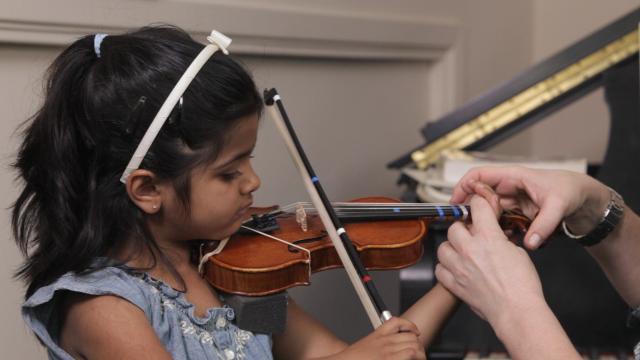
Join us as we explore the fundamental principles and early stages of teaching violin and viola through a series of engaging video lectures and lesson demonstrations, including: 1) Master classes with some of the world’s top string pedagogues, 2) Individual lesson demos of teaching violin/viola set up, left and right hand technique and pieces from the early violin/viola repertoire, 3) Group lesson demos of teaching music theory, ear training and fun activities that encourage good playing habits, and 4) A “field trip” to the violin shop, where we will outfit a new beginning student with a proper instrument and bow.

Oct 26th 2026
5-12 Weeks
Specialty Topics: Biology Across Disciplines (Coursera) Coursera
University of Colorado Boulder

Specialty Topics: Biology Across Disciplines (Coursera)

In this course, we will explore the applicability and relationship of biology to the arts, business, and psychology. First, we’ll discuss art as a foundational practice to biology and how biology as a science can explain how we interact with the arts, in particular, our experiences making and listening to music. Next, we will discuss the business of biology and how research is funded and the process of clinical trials and human subjects research.

Oct 12th 2026
5-12 Weeks
In the Studio: Postwar Abstract Painting (Coursera) Coursera
The Museum of Modern Art

In the Studio: Postwar Abstract Painting (Coursera)

Want to know how some of the 20th century’s most celebrated artists made abstract paintings? This course offers an in-depth, hands-on look at the materials, techniques, and thinking of seven New York School artists, including Willem de Kooning, Yayoi Kusama, Agnes Martin, Barnett Newman, Jackson Pollock, Ad Reinhardt, and Mark Rothko. Through studio demonstrations and gallery walkthroughs, you’ll form a deeper understanding of what a studio practice means and how ideas develop from close looking, and you’ll gain a sensitivity to the physical qualities of paint.

Oct 26th 2026
5-12 Weeks
Modern Art & Ideas (Coursera) Coursera
The Museum of Modern Art

Modern Art & Ideas (Coursera)

Welcome to Modern Art & Ideas! This course is designed for anyone interested in learning more about modern and contemporary art. Over the next five weeks, you will look at art through a variety of themes: Places & Spaces, Art & Identity, Transforming Everyday Objects, and Art & Society. Each week kicks off with a video that connects works of art from The Museum of Modern Art’s collection to the theme. You will hear audio interviews with artists, designers, and curators and learn more about selected works in the additional readings and resources.

Oct 19th 2026
5-12 Weeks
ART of the MOOC: Activismo y Movimientos Sociales (Coursera) Coursera
Duke University,Creative Time

ART of the MOOC: Activismo y Movimientos Sociales (Coursera)

Este curso es para activistas, artistas y pensadores que deseen entender mejor el cambio social y participar en él. El contenido del curso enfoca en la coincidencia prolífica y emocionante entre el arte socialmente comprometido y prácticas culturales generadas por recientes movimientos sociales en todo el mundo. Más que evaluar la eficacia política de actividades como el luto, la escucha, la organización, el baile, o la fiesta, las conferencias examinan tales actividades culturales al lado y dentro de la práctica artística contemporánea.

Oct 12th 2026
5-12 Weeks
Guitar Performance Techniques (Coursera) Coursera
Berklee College of Music

Guitar Performance Techniques (Coursera)

Your favorite guitarist didn't become your favorite guitarist without the support of other musicians. The most important skill for a guitarist to learn is the exact same skill that was so important in kindergarten: playing well with others. Guitar Performance Techniques gives guitarists the essential and practical skills to play well with others in any ensemble situation.

Oct 26th 2026
4 Weeks
Plagues, Witches, and War: The Worlds of Historical Fiction (Coursera) Coursera
University of Virginia

Plagues, Witches, and War: The Worlds of Historical Fiction (Coursera)

A unique and exciting introduction to the genre and craft of historical fiction, for curious students, aspiring authors--anyone with a passion for the past. Read classics of the genre, encounter bestselling writers of historical fiction, and discover your own historical archive while interacting with a global community of interested readers.

Oct 12th 2026
5-12 Weeks
ART of the MOOC: Public Art and Pedagogy (Coursera) Coursera
Duke University,Creative Time

ART of the MOOC: Public Art and Pedagogy (Coursera)

Students of this course may try their hand at their own public art interventions, or simply focus on learning from the theory of public practice and its recent history. Designed by artist and Duke professor, Pedro Lasch, and co-taught by Creative Time artistic director, Nato Thompson, this course presents public culture and art in their radically reinenvented contemporary forms. The lectures link major developments of recent decades to wider topics like spatial politics, everyday social structures, and experimental education.

Oct 12th 2026
5-12 Weeks
English Composition I (Coursera) Coursera
Duke University

English Composition I (Coursera)

You will gain a foundation for college-level writing valuable for nearly any field. Students will learn how to read carefully, write effective arguments, understand the writing process, engage with others' ideas, cite accurately, and craft powerful prose. Course Learning Objectives: summarize, analyze, question, and evaluate written and visual texts; argue and support a position; recognize audience and disciplinary expectations; identify and use the stages of the writing process; identify characteristics of effective prose; apply proper citation practices; discuss applying your writing knowledge to other writing occasions

Oct 26th 2026
5-12 Weeks