Plagues, Witches, and War: The Worlds of Historical Fiction (Coursera)

Plagues, Witches, and War: The Worlds of Historical Fiction (Coursera)

A unique and exciting introduction to the genre and craft of historical fiction, for curious students, aspiring authors--anyone with a passion for the past. Read classics of the genre, encounter bestselling writers of historical fiction, and discover your own historical archive while interacting with a global community of interested readers.

Class Deals by MOOC List - Click here and see Coursera's Active Discounts, Deals, and Promo Codes.

Syllabus

WEEK 1
Course Roadmap
In this module Professor Holsinger poses a working definition of historical fiction and sets expectations for the course content and assignments.

WEEK 2
What is Historical Fiction?
In this module Professor Holsinger details the history of the historical fiction novel through the 18th and 19th centuries.

WEEK 3
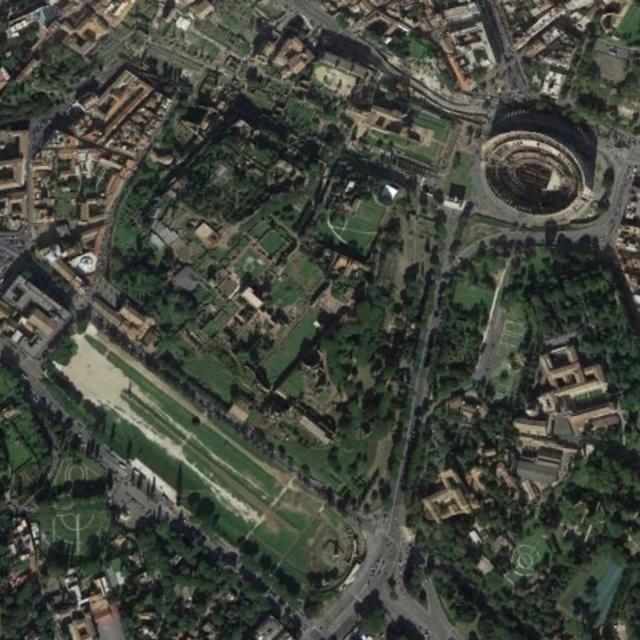
Poetry and Exile in Ancient Rome: Jane Alison
In this module author and professor Jane Alison interacts with the seminar class students of Professor Holsinger’s at UVa to discuss her experience writing “The Love Artist.”

WEEK 4
Two Centuries of Historical Fiction
This module reviews the history of historical fiction looking at major works and authors from the 18th and 19th century including The Leatherstocking Tales, William Wells Brown, and Charles Dickens.

WEEK 5
19th Century Historical Fiction
This module dives into the works of Anna Katharine Green and Professor Holsinger provides an overview of the forces that are effecting the craft of historical fiction.

WEEK 6
Seminar with Katherine Howe
In this module author Katherine Howe interacts with the seminar class students of Professor Holsinger’s Historical Fiction class to discuss her book “Deliverance Dane.”

WEEK 7
Seminar with Geraldine Brooks
In this module author Geraldine Brooks interacts with the seminar class students of Professor Holsinger’s Historical Fiction class to discuss her book “Year of Wonders.”

WEEK 8
Seminar with Mary Beth Keane
In this module author Mary Beth Keane interacts with the seminar class students of Professor Holsinger’s Historical Fiction class to discuss her book “Fever.”

WEEK 9
Seminar with Yangsze Choo
In this module author Yangsze Choo interacts with the seminar class students of Professor Holsinger’s Historical Fiction class to discuss her book “The Ghost Bride.”

WEEK 10
Dialogues in Historical Fiction
This module consists of a series of interviews with authors and Professor Holsinger. Authors include: Michael McKeon, Eva Stachniak, David Robbins, Matthew Pearl and Andrew Taylor.

WEEK 11
Assignments and Wrap-Up
This module has the two voluntary assignments for the course: Identifying a Historical Archive and Writing Historical Fiction. The module also contains the closing remarks video of Professor Holsinger.

WEEK 12
Resources
This module includes the course readings, a list of archival resources, and an overview of the authors included in the course.

Go to Class
MOOC List is learner-supported. When you buy through links on our site, we may earn an affiliate commission.

Related Courses

In the Studio: Postwar Abstract Painting (Coursera) Coursera
The Museum of Modern Art

In the Studio: Postwar Abstract Painting (Coursera)

Want to know how some of the 20th century’s most celebrated artists made abstract paintings? This course offers an in-depth, hands-on look at the materials, techniques, and thinking of seven New York School artists, including Willem de Kooning, Yayoi Kusama, Agnes Martin, Barnett Newman, Jackson Pollock, Ad Reinhardt, and Mark Rothko. Through studio demonstrations and gallery walkthroughs, you’ll form a deeper understanding of what a studio practice means and how ideas develop from close looking, and you’ll gain a sensitivity to the physical qualities of paint.

Aug 3rd 2026
5-12 Weeks
The Holocaust - An Introduction (II): The Final Solution (Coursera) Coursera
Tel Aviv University,Yad Vashem

The Holocaust - An Introduction (II): The Final Solution (Coursera)

The Holocaust was an inconceivable historical event, which forever robbed Western culture of its innocence. As civilized human beings, we fail to understand how events of such horror could have taken place, and how an idea so inhumanly warped could have spread like wildfire through an entire continent, instigating the systematic annihilation of millions of Jews.

Aug 10th 2026
3 Weeks
Art and the Digital Transformation (Coursera) Coursera
Copenhagen Business School

Art and the Digital Transformation (Coursera)

More than two decades into the new millennium, it is difficult to envision a future in which digital technologies do not play a significant role. Digital technologies frequently make a lot of promises. However, in recent years, we have seen an increasing number of artists address fundamental issues of the Digital Transformation, such as surveillance, lack of representation, and digital illiteracy. Artists have demonstrated that, while digital technologies have the potential to support processes leading to greater equality, they are frequently viewed as perpetuating and even exacerbating inequalities.

Aug 10th 2026
5-12 Weeks
Applied Public History: Places, People, Stories (Coursera) Coursera
University of London

Applied Public History: Places, People, Stories (Coursera)

This course introduces learners to applied public history: understanding and interpreting the past today, and engaging diverse communities in the practice of making and sharing histories. The course draws on project case studies, expert insights and diverse perspectives to model exciting approaches to researching and sharing the history of places and people. Learners will develop a toolkit to apply in their own practice, by participating in discussion, quizzes, creative activities and mini masterclasses. What kinds of stories can we discover through research into the history of places and people?

Aug 10th 2026
5-12 Weeks
The Emergence of the Modern Middle East - Part II (Coursera) Coursera
Tel Aviv University

The Emergence of the Modern Middle East - Part II (Coursera)

This course will discuss the developments in the Middle East from the early 20th century to the present. It will discuss the rise and retreat of Arab nationalism, the problems of internal cohesion of the Arab states, issues of religion and state, and the evolution of Islamist politics. It will also focus on the evolution of the Arab-Israeli conflict and its impact on the region and will conclude with an in depth analysis of the “Arab Spring” by placing these contemporary revolutionary events in their historical context.

Aug 10th 2026
5-12 Weeks
Art & Ideas: Teaching with Themes (Coursera) Coursera
The Museum of Modern Art

Art & Ideas: Teaching with Themes (Coursera)

This course is designed to help build critical skills that support theme-based teaching practices and build confidence in incorporating modern and contemporary art into interdisciplinary lesson plans. By addressing themes and questions that arise in relation to modern and contemporary art, the course will help you to think creatively about links to your curriculum and the ways that you can tap into students’ knowledge and life experience.

Aug 10th 2026
5-12 Weeks
Understanding China, 1700-2000: A Data Analytic Approach, Part 1 (Coursera) Coursera
The Hong Kong University of Science and Technology - HKUST

Understanding China, 1700-2000: A Data Analytic Approach, Part 1 (Coursera)

The purpose of this course is to summarize new directions in Chinese history and social science produced by the creation and analysis of big historical datasets based on newly opened Chinese archival holdings, and to organize this knowledge in a framework that encourages learning about China in comparative perspective. Our course demonstrates how a new scholarship of discovery is redefining what is singular about modern China and modern Chinese history.

Aug 3rd 2026
5-12 Weeks
Music and Social Action (Coursera) Coursera
Yale University

Music and Social Action (Coursera)

What is a musician’s response to the condition of the world? Do musicians have an obligation and an opportunity to serve the needs of the world with their musicianship? At a time of crisis for the classical music profession, with a changing commercial landscape, a shrinking audience base, and a contraction in the number of professional orchestras, how does a young musician construct a career today? Are we looking at a dying art form or a moment of reinvigoration?

Aug 10th 2026
5-12 Weeks
A Journey through Western Christianity: from Persecuted Faith to Global Religion (200 - 1650) (Coursera) Coursera
Yale University

A Journey through Western Christianity: from Persecuted Faith to Global Religion (200 - 1650) (Coursera)

This course follows the extraordinary development of Western Christianity from its early persecution under the Roman Empire in the third century to its global expansion with the Jesuits of the early modern world. We explore the dynamic and diverse character of a religion with an enormous cast characters. We will meet men and women who tell stories of faith as well as of violence, suppression, and division.

Aug 10th 2026
5-12 Weeks