Reality Bites: Introduction to metaphysics (Coursera)

Reality Bites: Introduction to metaphysics (Coursera)

Speculative metaphysics is challenging, but this course will whet your appetite for it, because it explains fundamental metaphysical problems and views in terms of what you can find in your kitchen and what happens in it when you cook and enjoy food.

Class Deals by MOOC List - Click here and see Coursera's Active Discounts, Deals, and Promo Codes.

Here are the 8 bites on the menu.

  • The first module 1 explains that metaphysics is about the ingredients and recipes of the world, i.e., which kinds of entities exist and how they relate to one another.
  • Modules 2 and 3 invite you to reflect on whether the properties of ingredients -such as their shape and weight- are separate from and if so, how they come together in the ingredients.
  • Modules 4 to 7 are about cooking: its most important ingredient is time and most cooking consists in causing changes to the ingredients over time. Yet some ingredients persist: although they undergo changes, they remain the same. Moreover, cooking minimally involves putting two or more ingredients together, so that they compose a whole. Hence modules 4 to 7 deal with time, causation, persistence and composition respectively.
  • Finally, the last module touch on the smells, tastes and other qualitative aspects of our experiences when enjoying food.

Bon appétit!

Syllabus

WEEK 1
Metaphysics
The introductory module explains what this thing called metaphysics is and what's it all about, namely: metaphysics is about all and everything. Furthermore, week 1 introduces ontology as the core of metaphysics, and explains its most fundamental methodological principles, like parsimony, and methodological tools, like Quine's method to determine one's ontological commitments.

WEEK 2
Universals
The second module deals with the most famous and infamous problem in the whole history of metaphysics, i.e., the problem of universals. Whereas objects or 'particulars' can only be in one place at the same time, properties seem to be present in many places at the same time. This raises the question whether properties are, in contrast to particulars, transcendent or immanent 'universals'. Alternatively, properties can be reduced to classes of particulars, resemblances between particulars, or 'tropes', i.e., abstract particulars.

WEEK 3
Substance
In more than one way, the problem of substance is the converse of the problem of universals. If two objects share all their properties, what individuates them from each other? And how do objects bear their properties? Does it take properties to be able to bear properties? Or if that quicks off an infinite regress, are substances propertyless substrata, naked substrata? Or mere bundles of properties, whether universals or tropes? Or still, are substances thick or thin particulars?

WEEK 4
Time
We all think that we know that time passes. But there are some interesting metaphysical problems with time and its alleged passage. Firstly, do only objects and persons that exist now, really exist? Or also past objects and persons? Or perhaps even future objects and persons? Furthermore, is time real? Because, as McTaggart argues, if change is fundamental to time, the ordering of events in terms of past, present and future is, on the one hand, fundamental, and on the other hand, incoherent.

WEEK 5
Causality
If one event causes another event, is there a relation of necessity between the two? Famously, Hume argued there was no natural necessity, and he proposed to reduce causation either to regularity or to counterfactual dependency. However, there are many objections and alternatives to Humeanism. Perhaps, causation is singular, simple or rather diverse.

WEEK 6
Persistance
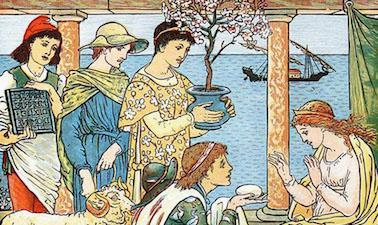
Objects can undergo changes and yet remain the same over time. They 'persist'. But what does that mean? What does it involve? In this module the conceptions and the arguments for and against 4 views about persistence are compared. Our starting point is the classic riddle of the Ship of Theseus.

WEEK 7
Composition
The special composition question is the question when objects together become parts of a whole? Although it's intuitive that sometimes they do and sometimes they don't, it turns out to be notoriously difficult to pinpoint a criterion. That motivates numerous metaphysicians to argue for extreme answers: either that there are no composite objects at all, or that every single combination of disparate object constitutes a further, composite object.

WEEK 8
Response-dependence
In the final module, our relation to the mind-independent world is at stake. Are certain properties, like colors and sounds, secondary qualities, meaning that they exist in the world merely as dispositions to trigger certain responses or experiences in us? And what is the scope of these secondary qualities, this response-dependency?
Go to Class
MOOC List is learner-supported. When you buy through links on our site, we may earn an affiliate commission.

Related Courses

Magic in the Middle Ages (Coursera) Coursera
University of Barcelona

Magic in the Middle Ages (Coursera)

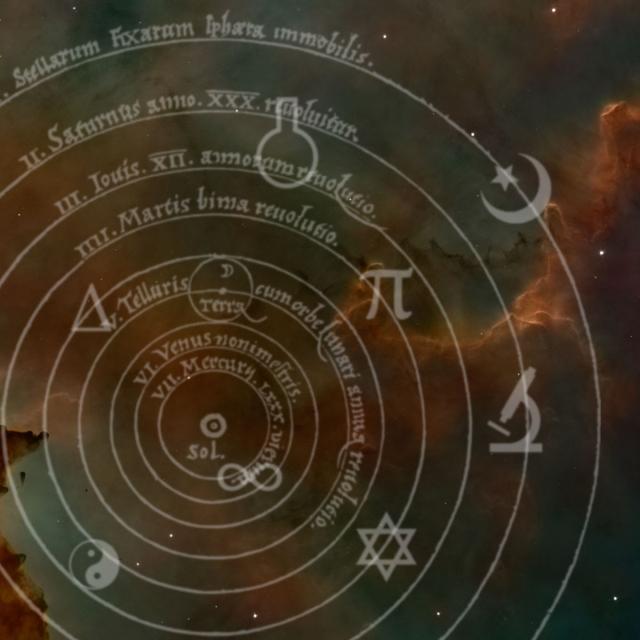
Magical thought has always attracted human imagination. In this course we will introduce you to the Middle Ages through a wide conception of magic. Students will have an approach to medieval culture, beliefs and practices from the perspective of History and History of Science. Popular magic, as well as learned magic (alchemy, geomancy and necromancy) will be addressed. Moreover, we will also deal with how eastern practices and texts influenced western culture. In July 2016, the course will contain a brand-new module devoted to astrology. Magic in the Middle Ages offers a captivating overview of medieval society and promotes reflection about certain stereotypes associated with this period.

Oct 12th 2026
5-12 Weeks
Introduction to Philosophy (Coursera) Coursera
University of Edinburgh

Introduction to Philosophy (Coursera)

This course will introduce you to some of the main areas of research in contemporary philosophy. Each module a different philosopher will talk you through some of the most important questions and issues in their area of expertise. We’ll begin by trying to understand what philosophy is – what are its characteristic aims and methods, and how does it differ from other subjects? Then we’ll spend the rest of the course gaining an introductory overview of several different areas of philosophy.

Oct 5th 2026
5-12 Weeks
AP® English Literature & Composition – Part 1: Stories (edX) EdX
University of California, Berkeley,BerkeleyX

AP® English Literature & Composition – Part 1: Stories (edX)

Enhance your ability to read and write about great literature in preparation for the AP® English Literature & Composition exam. This course prepares you to read more deeply and write more clearly about works of literature. Through an engaging collection of videos, authentic readings, and support material from a variety of sources, you will learn to appreciate literature from different genres. This course will focus on reading, interpreting and writing about fiction and gothic literature.

Self Paced
Self-Paced
AP® English Literature & Composition – Part 2: Poems (edX) EdX
University of California, Berkeley,BerkeleyX

AP® English Literature & Composition – Part 2: Poems (edX)

Learn how to read and interpret poetry and enhance your reading and writing skills in preparation for the AP® English Literature & Composition exam. This course prepares you to read more deeply and write more clearly about works of literature. Through an engaging collection of videos, authentic readings, and support material from a variety of sources, you will learn to appreciate literature from different genres. You will learn about different genres of poetry and the history of some of our greatest poets.

Self Paced
Self-Paced
Environmental Challenges: Human Impact in the Natural Environment (FutureLearn) FutureLearn
University of Leeds

Environmental Challenges: Human Impact in the Natural Environment (FutureLearn)

Complexity in nature arises from a myriad of simple interactions. How can this lead to an unpredictable dynamism? Complex patterns in ecology are not always causal and predictable. Populations have their own dynamics that can be independent of external environmental conditions. In this course we look at the way that natural systems are organised; although living systems are complex, there are also some fairly constant patterns and relationships.

Self Paced
2 Weeks
Historia de las reglas del fútbol en Inglaterra y en Argentina (Coursera) Coursera
Universidad Austral

Historia de las reglas del fútbol en Inglaterra y en Argentina (Coursera)

El curso es accesible para todos los aficionados al fútbol ya sean del nivel de un principiante como el de un profesional dado que describe de una manera clara y sencilla cómo se originó el fútbol en Inglaterra en el Siglo XIV y el modo en que se fueron desarrollando las reglas de juego, que comprenden la forma en que los futbolistas lo practicaban (con los pies, con las manos, con o sin arcos, el tamaño de la pelota, del campo de juego, cantidad de jugadores por lado, etc.) y las reglas de competición, que ordenan cómo se organiza una federación nacional, el formato de los campeonatos, los requisitos que deben cumplir los clubes afiliados, la fiscalización de los resultados, etc.

Oct 12th 2026
5-12 Weeks
Philosophy, Science and Religion: Philosophy and Religion (Coursera) Coursera
University of Edinburgh

Philosophy, Science and Religion: Philosophy and Religion (Coursera)

Philosophy, Science and Religion mark three of the most fundamental modes of thinking about the world and our place in it. Are these modes incompatible? Put another way: is the intellectually responsible thing to do to ‘pick sides’ and identify with one of these approaches at the exclusion of others? Or, are they complementary or mutually supportive? As is typical of questions of such magnitude, the devil is in the details. For example, it is important to work out what is really distinctive about each of these ways of inquiring about the world. In order to gain some clarity here, we’ll be investigating what some of the current leading thinkers in philosophy, science and religion are actually doing.

Oct 12th 2026
5-12 Weeks
The Changing Landscape of Ancient Rome. Archaeology and History of the Palatine Hill (Coursera) Coursera
Sapienza University of Rome

The Changing Landscape of Ancient Rome. Archaeology and History of the Palatine Hill (Coursera)

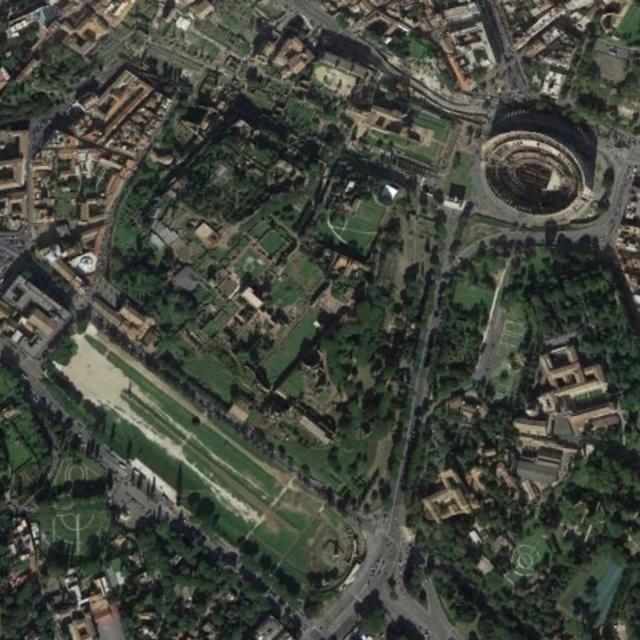
Studying ancient - as well as medieval or modern - cities basically means telling local urban stories based on the reconstruction of changing landscapes through the centuries. Given the fragmentary nature of archaeological evidence, it is necessary to create new images that would give back the physical aspect of the urban landscape and that would bring it to life again. We are not just content with analyzing the many elements still visible of the ancient city.

Oct 12th 2026
5-12 Weeks
Ancient Philosophy: Plato & His Predecessors (Coursera) Coursera
University of Pennsylvania

Ancient Philosophy: Plato & His Predecessors (Coursera)

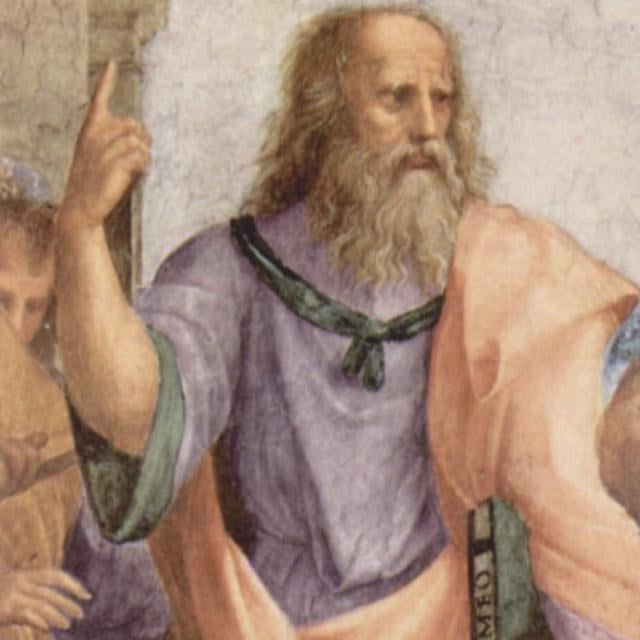
What is philosophy? How does it differ from science, religion, and other modes of human discourse? This course traces the origins of philosophy in the Western tradition in the thinkers of Ancient Greece. We begin with the Presocratic natural philosophers who were active in Ionia in the 6th century BCE and are also credited with being the first scientists.

Oct 12th 2026
4 Weeks
Material Behavior (Coursera) Coursera
Georgia Institute of Technology

Material Behavior (Coursera)

Have you ever wondered why ceramics are hard and brittle while metals tend to be ductile? Why some materials conduct heat or electricity while others are insulators? Why adding just a small amount of carbon to iron results in an alloy that is so much stronger than the base metal? In this course, you will learn how a material’s properties are determined by the microstructure of the material, which is in turn determined by composition and the processing that the material has undergone.

Oct 5th 2026
5-12 Weeks