EdX

Medicinal Chemistry: The Molecular Basis of Drug Discovery (edX)

Offered by Davidson College,
Medicinal Chemistry: The Molecular Basis of Drug Discovery (edX)

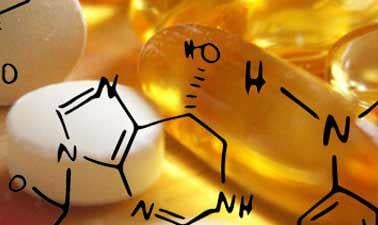
Gain a better understanding of the drug discovery process to learn how safe, effective drugs are developed and optimized. This medicinal chemistry course explores how chemists modify a molecule’s structure to design a safe and effective drug.

Class Deals by MOOC List - Click here and see EdX's Active Discounts, Deals, and Promo Codes.

This course opens with a brief history of drug discovery and introduces the modern drug approval process. Then, we will transition to learning about receptors and enzymes, the body’s molecules most often targeted by drugs. We will also discuss the topics of pharmacokinetics (drug adsorption, elimination, and half-life) and metabolism. The course closes with units on how potential drug molecules are identified and subsequently optimized into safe and effective drugs.

What you'll learn:

  • How to measure the activity of enzymes and receptors
  • Methods for modeling a drug’s half-life
  • How to predict and alter the metabolism of a molecule
  • Techniques for discovering molecules with desired biological activity
  • Approaches for optimizing a molecule into a safe and effective drug

Syllabus

Week 1: Pre-Regulatory Medicine and the Drug Approval Process Early natural products and synthetic molecules used as drugs Safety issues in the first drugs Modern drug discovery and approval process Intellectual property issues with drugs
Week 2: Drug Targets Structure of proteins Enzymes, enzymatic activity, and inhibition Receptors and molecules that modulate their activity Examination 1
Week 3: Pharmacokinetics Drug transport in the blood Clearance Volume of distribution Compartment modeling
Week 4: Metabolism Types of metabolic reactions Genetic and population effects Prodrugs Examination 2
Week 5: Binding, Structure, and Diversity Intermolecular forces Drug-target complementarity Molecular diversity and chemical libraries Combinatorial chemistry
Week 6: Lead Discovery Drug screening Filtering hits to find leads Existing drugs and natural products as leads
Week 7: Lead Optimization Functional group replacements Alkyl group replacements Isosteres and bioisosteres Peptidomimetics Examination 3


Go to Class
MOOC List is learner-supported. When you buy through links on our site, we may earn an affiliate commission.

Related Courses

Human Anatomy: Musculoskeletal Cases (edX) EdX
HarvardX,Harvard University

Human Anatomy: Musculoskeletal Cases (edX)

Learn the anatomy basic to understanding five musculoskeletal injuries commonly seen in primary care medicine and orthopedic clinical specialty practice. Follow hypothetical patients from injury to operating room. Human Anatomy: Musculoskeletal Cases invites students to join medical and basic science faculty at Harvard Medical School (HMS) to learn about musculoskeletal injuries commonly seen in clinical practice.

Self Paced
Self-Paced
Practical Improvement Science in Health Care: A Roadmap for Getting Results (edX) EdX
HarvardX,Harvard University

Practical Improvement Science in Health Care: A Roadmap for Getting Results (edX)

Learn the skills and tools of improvement science to make positive changes in health, healthcare, and your daily life. Developed through a collaboration between HarvardX and the Institute for Healthcare Improvement, PH 556x: Practical Improvement Science in Health Care: A roadmap for getting results will provide learners with the valuable skills and simple, well-tested tools they need to translate promising innovations or evidence into practice.

Self Paced
Self-Paced
Algorithms and Data Structures Capstone (edX) EdX
University of California, San Diego,UC San DiegoX

Algorithms and Data Structures Capstone (edX)

Synthesize your knowledge of algorithms and biology to build your own software for solving a biological challenge. Building a fully-fledged algorithm to assemble genomes from DNA fragments on a real dataset is an enormous challenge with major demand in the multi-billion dollar biotech industry. In this capstone project, we will take the training wheels off and let you design your own optimized software program for genome sequencing.

Self Paced
Self-Paced
Fundamentals of Neuroscience, Part 2: Neurons and Networks (edX) EdX
HarvardX,Harvard University

Fundamentals of Neuroscience, Part 2: Neurons and Networks (edX)

Discover what makes your brain tick in this second part of a four-part introductory series in Neuroscience. Neurons in isolation are fascinating and complicated, but the real magic of neuroscience happens in the interaction between neurons. In this course, we examine how neurons pass signals to one another and how complex dynamics can result from just a few neurons arranged in relatively simple circuits.

Self Paced
Self-Paced
Backyard Meteorology: The Science of Weather (edX) EdX
HarvardX,Harvard University

Backyard Meteorology: The Science of Weather (edX)

Learn to forecast the weather just by looking out your window. The weather forecasts we see every day are based on an army of meteorological sensing networks and intensive computer modeling. Before the rise of these technologies, predictions were made by methods like discerning cloud formations and wind directions.

Self Paced
Self-Paced
Cement Chemistry and Sustainable Cementitious Materials (edX) EdX
École Polytechnique Fédérale de Lausanne,EPFLx

Cement Chemistry and Sustainable Cementitious Materials (edX)

Learn the basics of cement chemistry and laboratory best practices for assessment of its key properties. Every day, we see concrete used all around us – to build our houses, offices, schools, bridges, and infrastructure. But few people actually understand what gives concrete its strength, resistance, and utility. The aim of this course is to offer basic cement chemistry to practitioners, as well as new students in the fields of chemistry and engineering.

Self Paced
Self-Paced
Reacciones químicas y cálculos estequiométricos (edX) EdX
Universitat Politècnica de València,UPValenciaX

Reacciones químicas y cálculos estequiométricos (edX)

Aprenderás los conceptos básicos de las reacciones químicas y profundizarás en su estudio cuantitativo (estequiometría). Con este curso aprenderás los conceptos básicos relacionados con las reacciones químicas y profundizarás en su estudio desde el punto de vista cuantitativo, es decir su estequiometría. Entenderás el comportamiento de los gases y las disoluciones y aplicarás las leyes que regulan su comportamiento en los procesos químicos en los que participan.

Self Paced
Self-Paced
Implant Dentistry (edX) EdX
University of Hong Kong,HKUx

Implant Dentistry (edX)

Learn Implant Dentistry from world-class specialists and researchers! Join the state of art in the biology, the technology and clinical management in implant dentistry today! Follow leading specialists, researchers and teachers of Implant Dentistry from more than 10 countries around the world led by HKU's Implant Dentistry MOOC team to explore the biology, the technology and clinical management in implant dentistry today.

Self Paced
Self-Paced
Bipedalism: The Science of Upright Walking (edX) EdX
DartmouthX

Bipedalism: The Science of Upright Walking (edX)

Upright walking is a hallmark of being human. Explore how this unusual form of locomotion evolved and why. Have you ever wondered why humans walk on two legs rather than four? In this course, we will explore how science investigates this unusual form of locomotion. We will start our investigation by looking at the mechanics of upright walking in humans and comparing that to bipedal locomotion in large birds, bears, and apes.

Self Paced
5-12 Weeks
Principles of Biochemistry (edX) EdX
HarvardX,Harvard University

Principles of Biochemistry (edX)

This introduction to biochemistry explores the molecules of life, starting at simple building blocks and culminating in complex metabolism. Principles of Biochemistry integrates an introduction to the structure of macromolecules and a biochemical approach to cellular function. Topics addressing protein function will include enzyme kinetics, the characterization of major metabolic pathways and their interconnection into tightly regulated networks, and the manipulation of enzymes and pathways with mutations or drugs.

Self Paced
Self-Paced
Science & Cooking: From Haute Cuisine to Soft Matter Science (physics) (edX) EdX
HarvardX,Harvard University

Science & Cooking: From Haute Cuisine to Soft Matter Science (physics) (edX)

Top chefs and Harvard researchers explore how traditional and modernist cooking techniques can illuminate basic principles in chemistry, physics, and engineering. Learn about elasticity, viscosity, mayonnaise, baking, and more! In this course, which investigates physical transformations in food, we will be visited by world-famous chefs who use a number of different styles and techniques in their cooking. Each chef will demonstrate how he or she prepares delicious and interesting creations, and we will explore how fundamental scientific principles make them possible.

Self Paced
Self-Paced
Science & Cooking: From Haute Cuisine to Soft Matter Science (chemistry) (edX) EdX
HarvardX,Harvard University

Science & Cooking: From Haute Cuisine to Soft Matter Science (chemistry) (edX)

Top chefs and Harvard researchers explore how everyday cooking and haute cuisine can illuminate basic principles in chemistry, physics, and engineering. Learn about food molecules and how chemical reactions can affect food texture and flavor. During each module of this course, chefs reveal the secrets behind some of their most famous culinary creations — often right in their own restaurants. Inspired by such cooking mastery, the Harvard team will then explain the science behind the recipe.

Self Paced
Self-Paced