EdX

Quantum Mechanics of Molecular Structures (edX)

Quantum Mechanics of Molecular Structures (edX)

Learn two methods used to determine molecular structures and their properties in this introduction to Quantum Mechanics. Knowing the geometrical structure of the molecules around us is one of the most important and fundamental issues in the field of chemistry. This course introduces the two primary methods used to determine the geometrical structure of molecules: molecular spectroscopy and gas electron diffraction.

Class Deals by MOOC List - Click here and see EdX's Active Discounts, Deals, and Promo Codes.

In molecular spectroscopy, molecules are irradiated with light or electric waves to reveal rich information, including:

  • Motions of electrons within a molecule (Week 1),
  • Vibrational motions of the nuclei within a molecule (Week 2), and
  • Rotational motions of a molecule (Week 3).

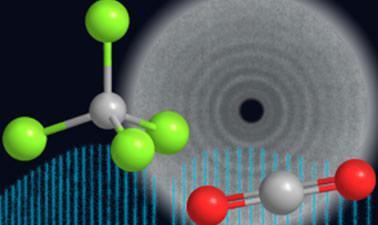
In the gas electron diffraction method, molecules are irradiated with an accelerated electron beam. As the beam is scattered by the nuclei within the molecule, the scattered waves interfere with each other to generate a diffraction pattern. In week 4, we study the fundamental mechanism of electron scattering and how the resulting diffraction images reveal the geometrical structure of molecules.
By the end of the course, you will be able to understand molecular vibration plays an important role in determining the geometrical structure of molecules and gain a fuller understanding of molecular structure from the information obtained by the two methodologies.
What you'll learn:

  • Two major methods to determine the geometrical structure of molecules in the gas phase: molecular spectroscopy and gas electron diffraction
  • How to quantize various motions of molecules, extract the quantized energy levels, and determine the geometrical structure of molecules from the spectrum
  • The fundamental mechanism of electron scattering on the basis of quantum mechanics and how to determine the geometrical structure of molecules from gas electron diffraction images

Go to Class
MOOC List is learner-supported. When you buy through links on our site, we may earn an affiliate commission.

Related Courses

Pre-University Physics (edX) EdX
Delft University of Technology,DelftX

Pre-University Physics (edX)

Prepare for your technical studies by reviewing the fundamentals of physics. Become familiar with the way physics and physics-related topics are taught at university level. Physics is the foundation of many important science and engineering disciplines. Understanding its basics is fundamental for advanced studies. In this course, you will have the chance to review the fundamentals either for your own interest, or to ensure you have a smooth start in the first year of your Bachelor’s degree.

Self Paced
Self-Paced
Is this Physics or Magic? Learning Physics through Minds-on Science Demonstration (edX) EdX
National University of Singapore,NUS

Is this Physics or Magic? Learning Physics through Minds-on Science Demonstration (edX)

Is this MOOC an introduction to Physics or Magic? Here's calling all curious minds from every corner of the globe to join us to learn physics via science demonstrations which are exciting, visually appealing and thought provoking. In this MOOC, you'll get to witness how demonstrations can add reality and vividness to the process of concept formation, and pick up one or two scientific nuggets along the way.

Sep 5th 2023
5-12 Weeks
Introduction to Quantum Science & Technology (edX) EdX
Purdue University,PurdueX

Introduction to Quantum Science & Technology (edX)

Learn about fundamental concepts and engineering challenges of quantum technologies. Emerging quantum systems are disruptive technologies redefining computing and communication. Teaching quantum physics to engineers and educating scientists on engineering solutions are critical to address fundamental and engineering challenges of the quantum technologies.

Aug 21st 2023
13-24 Weeks
Quantum Mechanics for Scientists and Engineers 2 (edX) EdX
StanfordOnline

Quantum Mechanics for Scientists and Engineers 2 (edX)

This course covers key topics in the use of quantum mechanics in many modern applications in science and technology, introduces core advanced concepts such as spin, identical particles, the quantum mechanics of light, the basics of quantum information, and the interpretation of quantum mechanics, and covers the major ways in which quantum mechanics is written and used in modern practice.

Self Paced
Self-Paced
Introduction to Quantum Transport (edX) EdX
Purdue University,PurdueX

Introduction to Quantum Transport (edX)

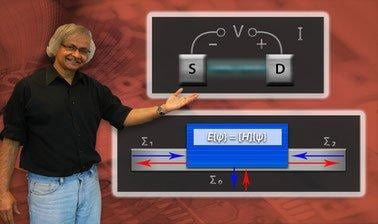
This course introduces the non-equilibrium Green’s function (NEGF) method widely used to describe quantum effects in nanoscale devices, along with its applications to spintronic devices. This course introduces the Schrödinger equation, using the tight-binding method to discuss the concept of bandstructure and E(k) relations, followed by an introduction to the NEGF method with simple illustrative examples. Concept of spinors is introduced along with the application of the NEGF method to spintronic devices.

Feb 12th 2024
5-12 Weeks
Cosmic Rays, Dark Matter, and the Mysteries of the Universe (edX) EdX
Waseda University,WasedaX

Cosmic Rays, Dark Matter, and the Mysteries of the Universe (edX)

Join us on a unique exploration of one of the universe’s deepest mysteries: cosmic rays. In the Universe, high-energy cosmic rays are violently propagating in space. While we know these cosmic rays come from outside of the solar system, exactly how and where they originate is a mystery. Professor Shoji Torii from Waseda University and many researchers from around the world, believe that understanding about their origin will help resolve the mysteries of the Universe, such as, supernova remnants, dark matter, and even the Universe’s evolution.

Self Paced
Self-Paced
Quantum Mechanics (edX) EdX
Georgetown University,GeorgetownX

Quantum Mechanics (edX)

Learn the quantum mechanics needed to prepare you for the second quantum revolution (focused on quantum sensing). We use a new way to teach quantum for undergraduates by focusing on conceptual ideas and operator manipulations. This allows us to discuss more applications to experiment usually done. You need a background in the full calculus sequence and in math methods. Freshman physics and modern physics is recommended. This course is appropriate for physicists, chemists and engineers.

Aug 21st 2023
13-24 Weeks
Quantum Mechanics for Everyone (edX) EdX
Georgetown University,GeorgetownX

Quantum Mechanics for Everyone (edX)

Learn the fundamental notions of quantum mechanics at a level that is accessible to everyone. Quantum Mechanics for Everyone is a six-week long MOOC that teaches the basic ideas of quantum mechanics with a method that requires no complicated math beyond taking square roots (and you can use a calculator for that).

Jun 8th 2023
5-12 Weeks
Cavity Quantum Optomechanics (edX) EdX
École Polytechnique Fédérale de Lausanne,EPFLx

Cavity Quantum Optomechanics (edX)

Fundamentals of optomechanics. Basic principles, recent developments and applications. Optomechanics is the study of the interaction between light and mechanical systems which can result in the manipulation of the state of both light and the mechanics. The nature of this interaction gives rise to a wide range of applications in both fundamental physics and technological advancements. In this course, you will learn the concepts and tools required for conducting research in the field of cavity optomechanics.

Self Paced
Self-Paced