EdX

Applied Quantum Computing I: Fundamentals (edX)

Offered by Purdue University, PurdueX,
Applied Quantum Computing I: Fundamentals (edX)

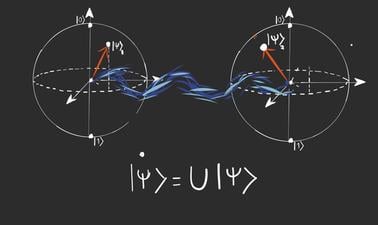
Learn the fundamental postulates of quantum mechanics and how they can be mapped onto present-day quantum information processing models, including computation, simulation, optimization, and machine learning.

Class Deals by MOOC List - Click here and see EdX's Active Discounts, Deals, and Promo Codes.

This fundamentals course is part 1 of the series of quantum computing courses and covers aspects from fundamentals to present-day hardware platforms to quantum software and programming. This course provides the essential foundations required to understand computing models built from the principles of quantum mechanics.
This course requires a minimal set of engineering and science prerequisites but will allow students to develop a physical and intuitive understanding of the topics.
Attention:
Quantum Computing 1: Fundamentals is an essential prerequisite to Quantum Computing 2: Hardware and Quantum Computing 3: Algorithm and Software. Learners should plan to complete Fundamentals before enrolling in the Hardware or the Algorithm and Software courses.
This course is part of the Quantum Technology: Computing MicroMasters and Quantum Technology: Detectors and Networking MicroMasters.

What you'll learn

  • Postulates of quantum mechanics
  • Gate-based quantum computing
  • Quantum errors and error correction
  • Adiabatic quantum computing
  • Quantum simulation
  • Quantum machine learning
Go to Class
MOOC List is learner-supported. When you buy through links on our site, we may earn an affiliate commission.

Related Courses

The Einstein Revolution (edX) EdX
HarvardX,Harvard University

The Einstein Revolution (edX)

Traces Albert Einstein’s engagement with relativity, quantum mechanics, Nazism, nuclear weapons, philosophy, the arts, and technology. Albert Einstein has become the icon of modern science. Following his scientific, cultural, philosophical, and political trajectory, this course aims to track the changing role of physics in the 20th and 21st centuries.

Self Paced
Self-Paced
The Quantum Internet and Quantum Computers: How Will They Change the World? (edX) EdX
Delft University of Technology,DelftX

The Quantum Internet and Quantum Computers: How Will They Change the World? (edX)

Discover quantum computers and the quantum internet. Learn the principles and promises behind these developments and how they will impact our future. There is no doubt that quantum computers and the quantum internet will have a great impact on our world. But we don’t yet know quite how. As with traditional computers - we will only see the effects in the decades to come.This course will provide you with a basic understanding of quantum computing and the quantum internet. Together, we’ll peek into the fascinating world of quantum phenomena, such as qubits, superposition, and entanglement.

Self Paced
Self-Paced
Introduction to Computer Science and Programming (edX) EdX
Tokyo Institute of Technology,TokyoTechX

Introduction to Computer Science and Programming (edX)

The term “Computation” refers to the action performed by a computer. A computation can be a basic operation and it can also be a sophisticated computer simultation requiring a large amount of data and substantial resources. This course aims at introducing learners with no prior knowledge to basics and key concepts of computer science. By following the lectures and exercises of this course you will have an understanding of algorithms and you will get a real experience of programming using the language Ruby.

Self Paced
Self-Paced
Recommender Systems: Behind the Screen (edX) EdX
Université de Montréal,UMontrealX

Recommender Systems: Behind the Screen (edX)

How are items recommended when you’re browsing for movies, jobs or clothing online? Register here and you’ll discover the fundamental concepts and methods allowing the most relevant item suggestions to users from e-commerce to online advertisement. In this course, you will explore and learn the best methods and practices in recommender systems, which are an essential component of the online ecosystem. This course was developed by IVADO and HEC Montréal as part of a workshop that took place in Montreal.

Self Paced
5-12 Weeks
Fundamentals of TinyML (edX) EdX
HarvardX,Harvard University

Fundamentals of TinyML (edX)

Focusing on the basics of machine learning and embedded systems, such as smartphones, this course will introduce you to the “language” of TinyML. What do you know about TinyML? Tiny Machine Learning (TinyML) is one of the fastest-growing areas of Deep Learning and is rapidly becoming more accessible. This course provides a foundation for you to understand this emerging field.

Self Paced
Self-Paced
Essentials of Genomics and Biomedical Informatics (edX) EdX
IsraelX

Essentials of Genomics and Biomedical Informatics (edX)

This course presents clinicians and digital health enthusiasts with an overview of the data revolution in medicine and how to exploit it for research and in the clinic. The course will not make you a bioinformatician but will introduce the main concepts, tools, algorithms, and databases in this field.

Self Paced
5-12 Weeks
Data Science: R Basics (edX) EdX
HarvardX,Harvard University

Data Science: R Basics (edX)

Build a foundation in R and learn how to wrangle, analyze, and visualize data. This course will introduce you to the basics of R programming. You can better retain R when you learn it to solve a specific problem, so you’ll use a real-world dataset about crime in the United States. You will learn the R skills needed to answer essential questions about differences in crime across the different states.

Self Paced
Self-Paced
High-Dimensional Data Analysis (edX) EdX
HarvardX,Harvard University

High-Dimensional Data Analysis (edX)

A focus on several techniques that are widely used in the analysis of high-dimensional data. If you’re interested in data analysis and interpretation, then this is the data science course for you. We start by learning the mathematical definition of distance and use this to motivate the use of the singular value decomposition (SVD) for dimension reduction and multi-dimensional scaling and its connection to principle component analysis.

Self Paced
Self-Paced