EdX

Quantum Computer Systems Design II: Principles of Quantum Architecture (edX)

Quantum Computer Systems Design II: Principles of Quantum Architecture (edX)

This course explores the basic design principles of today's quantum computer systems. In this course, students will learn to work with the IBM Qiskit software tools to write simple quantum programs and execute them on cloud-accessible quantum hardware.

Class Deals by MOOC List - Click here and see EdX's Active Discounts, Deals, and Promo Codes.

This quantum computing course explores the basic design principles of today's quantum computer systems. In this course, students will learn to work with the IBM Qiskit software tools to write simple programs in Python and execute them on cloud-accessible quantum hardware. Topics covered in this course include:

  • Introduction to systems research in quantum computing
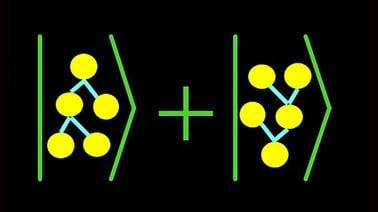
  • Fundamental rules in quantum computing, Bloch Sphere, Feynman Path Sum
  • Sequential and parallel execution of quantum gates, EPR pair, no-cloning theorem, quantum teleportation
  • Medium-size algorithms for NISQ (near-term intermediate scale quantum) computers
  • Quantum processor microarchitecture: classical and quantum control
  • Quantum program compilation and qubit memory management

Keywords: quantum computing, computer science, linear algebra, compiler, circuit optimization, python, qiskit, quantum algorithms, quantum technology, superposition, entanglement, qubit technology, superconducting qubit, transmon qubit, ion-trap qubit, photonic qubit, real quantum computers

What you'll learn

  1. Understand design principles of full-stack quantum software design
  2. Understand several examples of quantum system inefficiencies
  3. Learn how to apply several classical software techniques to improve quantum hardware reliability and performance
  4. Learn examples of how classical software techniques can be applied to make quantum systems more reliable and efficient
  5. Learn how to think about the overall design of a quantum system and how the software and hardware work together
  6. Develop unique skills to be more competitive in seeking a position in quantum software development

This course is part of the Quantum Computer Systems Design Professional Certificate.

Syllabus

Module 1 (Intro to Quantum Computation and Programming)

  • Lec 00 - Quantum Computing Systems – Current State-of-Play
  • Lec 01 - From bits to qubits
  • Lec 02 - QASM and logic gate decomposition
  • Lec 03 - Basic quantum programs

Module 2 (Principles of Quantum Architecture)

  • Lec 04 - Program compilation and synthesis
  • Lec 05 - Program compilation and synthesis II
  • Lec 06 - Gate scheduling and parallelism
  • Lec 07 - Qubit mapping and memory management

Module 3 (Working with Noisy Systems)

  • Lec 08 - NISQ algorithms
  • Lec 19 - Noisy quantum systems
  • Lec 10 - Noise-aware quantum compiling

Prerequisites:
Introduction to Quantum Computing for Everyone (Part 1 and Part 2)
Module I (Intro to Quantum Computation and Programming)
Go to Class
MOOC List is learner-supported. When you buy through links on our site, we may earn an affiliate commission.

Related Courses

Introduction to Quantum Computing for Everyone (edX) EdX
University of Chicago,UChicagoX

Introduction to Quantum Computing for Everyone (edX)

This first course in quantum computing is for novices and requires learners to have only basic algebra. It covers the future impacts of quantum computing, provides intuitive introductions of quantum physics phenomenon, and progresses from single operations to a complete algorithm. Quantum computing is coming closer to reality, with 80+ bit machines in active use. This course provides an intuitive introduction to the impacts, underlying phenomenon, and programming principles that underlie quantum computing.

Self Paced
Self-Paced
Quantum Technologies for Decision Makers (edX) EdX
University of Queensland,UQx

Quantum Technologies for Decision Makers (edX)

Quantum technology is all around yet many of us can readily be confused by the science, let alone the trajectories to identifying commercial opportunities. In such a context, making strategic decisions when the science and engineering are shifting presents many innovation dilemmas. Our interest lies in exploring enough of the science to boost our understanding so that we can make informed decisions to allocate resources that create and harness emerging opportunities.

Mar 28th 2023
4 Weeks
Dynamic Programming, Greedy Algorithms (Coursera) Coursera
University of Colorado Boulder

Dynamic Programming, Greedy Algorithms (Coursera)

This course covers basic algorithm design techniques such as divide and conquer, dynamic programming, and greedy algorithms. It concludes with a brief introduction to intractability (NP-completeness) and using linear/integer programming solvers for solving optimization problems. We will also cover some advanced topics in data structures.

Jul 20th 2026
4 Weeks
Nanotechnology and Nanosensors, Part 1 (Coursera) Coursera
Technion - Israel Institute of Technology

Nanotechnology and Nanosensors, Part 1 (Coursera)

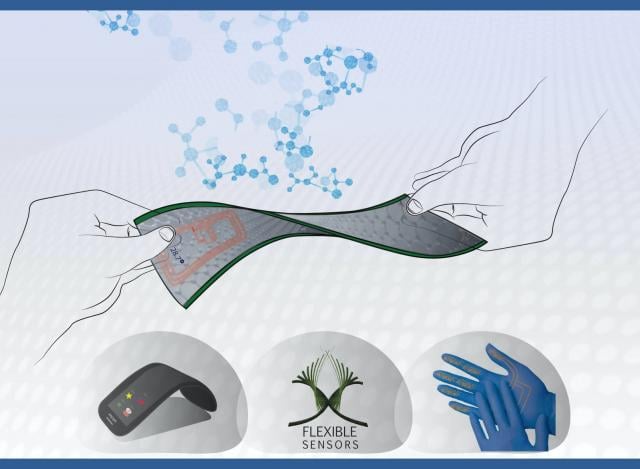
Nanotechnology and nanosensors are broad, interdisciplinary areas that encompass (bio)chemistry, physics, biology, materials science, electrical engineering and more. The present course will provide a survey on some of the fundamental principles behind nanotechnology and nanomaterials and their vital role in novel sensing properties and applications. The course will discuss interesting interdisciplinary scientific and engineering knowledge at the nanoscale to understand fundamental physical differences at the nanosensors.

Jul 13th 2026
5-12 Weeks
Quantum Machine Learning (with IBM Quantum Research) (openHPI) OpenHPI
Hasso-Plattner-Institut

Quantum Machine Learning (with IBM Quantum Research) (openHPI)

Whether we stream our favorite series, develop new drugs or have us being chauffeured by a self-driving car -- machine learning is an essential part of our modern life, and of our future. But the growing amount of data and our increasing demands pose difficulties for today's classical computers. Can quantum computing overcome these challenges? What potentials does the emerging field of quantum machine learning have? In this course, we will not only learn about quantum machine learning and its prospects, but we will also solve concrete tasks with both classical and quantum models.

Jan 11th 2023
2 Weeks
Understanding Quantum Computers (FutureLearn) FutureLearn
Keio University

Understanding Quantum Computers (FutureLearn)

Explore the key concepts of quantum computing and find out how it’s changing computer science with this introductory course. In this course, we will discuss the motivation for building quantum computers, cover the important principles in quantum computing, and take a look at some of the important quantum computing algorithms.

Self Paced
3 Weeks
Quantum Mechanics and Quantum Computation (edX) EdX
University of California, Berkeley,BerkeleyX

Quantum Mechanics and Quantum Computation (edX)

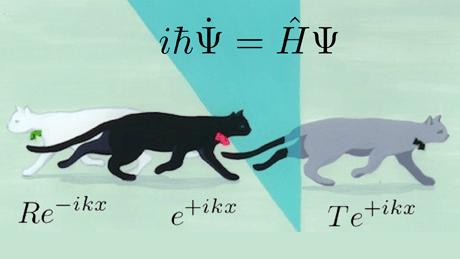
A simple conceptual introduction to quantum mechanics and quantum computation. Quantum computation is a remarkable subject building on the great computational discovery that computers based on quantum mechanics are exponentially powerful. This course aims to make this cutting-edge material broadly accessible to undergraduate students, including computer science majors who do not have any prior exposure to quantum mechanics.

No sessions available
5-12 Weeks
Applied Quantum Computing II: Hardware (edX) EdX
Purdue University,PurdueX

Applied Quantum Computing II: Hardware (edX)

Learn how present-day material platforms are built to perform quantum information processing tasks. This course is part 2 of the series of Quantum computing courses, which covers aspects from fundamentals to present-day hardware platforms to quantum software and programming. The goal of part 2 is to provide the essential understanding of how the fundamental quantum phenomena discussed in part 1 can be realized in various material platforms and the underlying challenges faced by each platform.

Feb 12th 2024
5-12 Weeks
Quantum Detectors (edX) EdX
Purdue University,PurdueX

Quantum Detectors (edX)

Learn about quantum sensors and devices that extract maximal information from the world around us. Classical detectors and sensors are ubiquitous around us from heat sensors in cars to light detectors in a camera cell phone. Leveraging advances in the theory of noise and measurement, an important paradigm of quantum metrology has emerged. Here, ultra-precision measurement devices collect maximal information from the world around us at the quantum limit.

Feb 12th 2024
5-12 Weeks
Quantum Computing for Your Classroom 10-12 (edX) EdX
The University of British Columbia,UBCx

Quantum Computing for Your Classroom 10-12 (edX)

Quantum Computing for Your Classroom is an activity focused, self-paced course designed to help educators integrate an exciting new field into their physics and computer science classrooms. This course seeks to help bridge that gap by providing activities and knowledge of quantum computing that high school educators can integrate into their existing classrooms, providing the children of today with the future proof skills needed for tomorrow.

Self Paced
Self-Paced