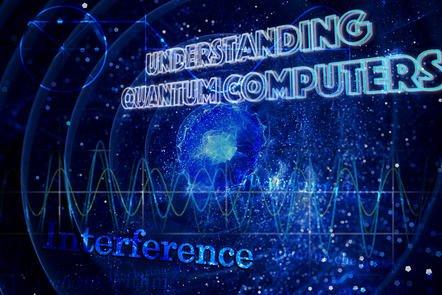
Understanding Quantum Computers (FutureLearn)

Offered by Keio University,
Understanding Quantum Computers (FutureLearn)

Explore the key concepts of quantum computing and find out how it’s changing computer science with this introductory course. In this course, we will discuss the motivation for building quantum computers, cover the important principles in quantum computing, and take a look at some of the important quantum computing algorithms.

Class Deals by MOOC List - Click here and see FutureLearn's Active Discounts, Deals, and Promo Codes.

We will finish with a brief look at quantum computing hardware and the budding quantum information technology industry.
Key concepts will be explained graphically, with minimal mathematics required.

What topics will you cover?

  • Waves and interference
  • Quantum superposition and entanglement
  • Computational complexity
  • The quantum Fourier transform
  • Shor’s algorithm for factoring large numbers
  • Quantum chemistry and machine learning
  • Physical phenomena as quantum bits (qubits)
  • Quantum computing hardware
  • Quantum error correction

-The quantum information technology industry

What will you achieve?
By the end of the course, you'll be able to...

  • Describe a few key applications of quantum computing
  • Explain the role of quantum computing in the future and recognize the role of Moore’s Law in the future of computing
  • Prepare for a mathematical course in quantum information concepts
  • Explore the value proposition in available and forthcoming quantum information technology products
  • Identify the importance of quantum superposition, entanglement and interference in quantum algorithms
Go to Class
MOOC List is learner-supported. When you buy through links on our site, we may earn an affiliate commission.

Related Courses

Using Artificial Intelligence (AI) Technologies for Business Planning and Decision-making (FutureLearn) FutureLearn
Coventry University,Institute of Coding

Using Artificial Intelligence (AI) Technologies for Business Planning and Decision-making (FutureLearn)

Discover how artificial intelligence can support business leaders to implement data-driven decision-making and planning. Learn how to move from data to knowledge that can inform your decision-making. On this course, you will learn how AI technology and AI processes can help businesses with both human and automated business planning and decision-making.

No sessions available
2 Weeks
Artificial Intelligence in Bioinformatics (FutureLearn) FutureLearn
Taipei Medical University

Artificial Intelligence in Bioinformatics (FutureLearn)

Discover the future of bioinformatics and learn how AI models of bioinformatics data help us to understand biological processes. Study the use of AI, machine learning, and deep learning in bioinformatics. This course will teach you the fundamentals of how AI is applied in the field of bioinformatics.

Self Paced
3 Weeks
The Finite Element Method for Problems in Physics (Coursera) Coursera
University of Michigan

The Finite Element Method for Problems in Physics (Coursera)

This course is an introduction to the finite element method as applicable to a range of problems in physics and engineering sciences. The treatment is mathematical, but only for the purpose of clarifying the formulation. The emphasis is on coding up the formulations in a modern, open-source environment that can be expanded to other applications, subsequently.

Oct 5th 2026
13-24 Weeks
Kinematics: Describing the Motions of Spacecraft (Coursera) Coursera
University of Colorado Boulder

Kinematics: Describing the Motions of Spacecraft (Coursera)

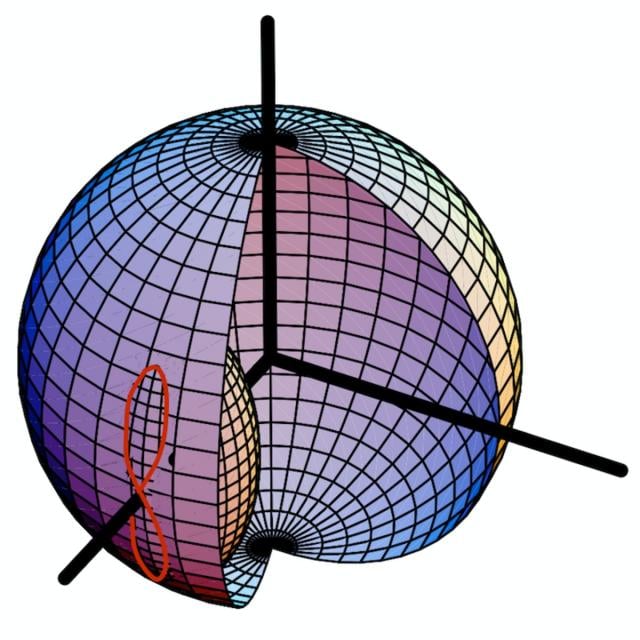
The movement of bodies in space (like spacecraft, satellites, and space stations) must be predicted and controlled with precision in order to ensure safety and efficacy. Kinematics is a field that develops descriptions and predictions of the motion of these bodies in 3D space. This course in Kinematics covers four major topic areas: an introduction to particle kinematics, a deep dive into rigid body kinematics in two parts (starting with classic descriptions of motion using the directional cosine matrix and Euler angles, and concluding with a review of modern descriptors like quaternions and Classical and Modified Rodrigues parameters).

Oct 5th 2026
4 Weeks
Introduction to Quantum Information (Coursera) Coursera
Korea Advanced Institute of Science and Technology - KAIST

Introduction to Quantum Information (Coursera)

The course provides an introduction to quantum information at a beginning graduate level. It focuses on the fundamental understanding of how information is processed with quantum systems and how the quantum properties apply to computing and communication tasks. The course begins by presenting quantum theory as the framework of information processing. Quantum systems are introduced with single and two qubits. Axioms of quantum theory such as states, dynamics, and measurements are explained as preparation, evolution, and readout of qubits. Quantum computing and quantum communication are explained.

Oct 5th 2026
5-12 Weeks
Nanotechnology and Nanosensors, Part 1 (Coursera) Coursera
Technion - Israel Institute of Technology

Nanotechnology and Nanosensors, Part 1 (Coursera)

Nanotechnology and nanosensors are broad, interdisciplinary areas that encompass (bio)chemistry, physics, biology, materials science, electrical engineering and more. The present course will provide a survey on some of the fundamental principles behind nanotechnology and nanomaterials and their vital role in novel sensing properties and applications. The course will discuss interesting interdisciplinary scientific and engineering knowledge at the nanoscale to understand fundamental physical differences at the nanosensors.

Oct 5th 2026
5-12 Weeks
Foundation of Structural Dynamics (Coursera) Coursera
ISAE-SUPAERO

Foundation of Structural Dynamics (Coursera)

A course with variable geometry where everyone, we hope, will find personal benefits. The parts can be studied sequentially or independently; and inside each part, elementary learning items can be picked up. Globally, this course proposes a deep knowledge of fundamental dynamics, with possible explicit and implicit applications in structural dynamics, but also in physics and control of any dynamic system (automatics, …).

Oct 5th 2026
5-12 Weeks
Data Science in Stratified Healthcare and Precision Medicine (Coursera) Coursera
University of Edinburgh

Data Science in Stratified Healthcare and Precision Medicine (Coursera)

An increasing volume of data is becoming available in biomedicine and healthcare, from genomic data, to electronic patient records and data collected by wearable devices. Recent advances in data science are transforming the life sciences, leading to precision medicine and stratified healthcare. In this course, you will learn about some of the different types of data and computational methods involved in stratified healthcare and precision medicine.

Oct 5th 2026
5-12 Weeks
Foundations of Data Science: K-Means Clustering in Python (Coursera) Coursera
University of London,Goldsmiths, University of London

Foundations of Data Science: K-Means Clustering in Python (Coursera)

This MOOC, designed by an academic team from Goldsmiths, University of London, will quickly introduce you to the core concepts of Data Science to prepare you for intermediate and advanced Data Science courses. It focuses on the basic mathematics, statistics and programming skills that are necessary for typical data analysis tasks.

Oct 5th 2026
5-12 Weeks
Particle Physics: an Introduction (Coursera) Coursera
University of Geneva

Particle Physics: an Introduction (Coursera)

This course introduces you to subatomic physics, i.e. the physics of nuclei and particles. More specifically, the following questions are addressed: What are the concepts of particle physics and how are they implemented?; What are the properties of atomic nuclei and how can one use them?; How does one accelerate and detect particles and measure their properties?; What does one learn from particle reactions at high energies and particle decays?; How do electromagnetic interactions work and how can one use them?; How do strong interactions work and why are they difficult to understand?; How do weak interactions work and why are they so special?; What is the mass of objects at the subatomic level and how does the Higgs boson intervene?; How does one search for new phenomena beyond the known ones?; What can one learn from particle physics concerning astrophysics and the Universe as a whole?

Oct 5th 2026
5-12 Weeks