FUN

Villes du monde en système (FUN)

Villes du monde en système (FUN)

Les villes regroupent déjà la moitié de la population mondiale et en concentreront les trois quarts avant la fin de ce siècle. C’est donc là que les sociétés doivent résoudre les problèmes majeurs pour leur durabilité, tant en matière de développement économique, de transition écologique, que d’équité sociale. Une bonne compréhension de la diversité des villes et de ce qui la cause est essentielle pour la réussite de ces évolutions nécessaires.

Dans ce MOOC, nous expliquerons comment l’organisation des villes en systèmes permettant l’exploitation des ressources en réseau a engendré des villes de tailles très inégales et une diversité de leurs activités et de leurs trajectoires. Nous verrons qu’en même temps cela a créé de fortes solidarités et interdépendances entre les villes bien connectées. Nous montrerons comment l’expression géographique du peuplement et de l’organisation politique des territoires intervenue à des époques différentes a construit des formes et des structures urbaines originales. Nous en examinerons trois grands types avec des exemples pris partout dans le monde, pour décoder les ressorts de l’organisation interne des villes et de leur organisation en systèmes dans des territoires et des réseaux.

A l’issue de ce cours, vous aurez une vision globale de ce qui fait la diversité des villes en termes de dimension, d’activité économique, de composition sociale, de variétés paysagères et culturelles à travers le monde. Vous aurez des clés pour comprendre quelles sont les marges de manœuvre des actions qui contribuent à leur évolution. Vous aurez une conscience claire des richesses associées à la diversité urbaine en termes de solutions possibles pour la durabilité du développement et le « vivre ensemble ».

Format
Le MOOC se déroule sur 5 semaines de cours et propose :

  • de courtes séquences vidéo (environ une heure par semaine, en séquences de 5 à 10 minutes) ;
  • des documents d'accompagnement à télécharger (graphiques, cartes, glossaire, bibliographie, etc.) ;
  • des exercices, simulations, études de cas ;
  • un questionnaire d’auto-évaluation pour faire le point sur vos acquis à la fin de chaque semaine.

Un forum, encourageant l’échange et la discussion, sera animé par l’équipe pédagogique.

Prérequis
Les prérequis correspondent au niveau baccalauréat.
Ce MOOC peut être suivi à plusieurs niveaux : comme un panorama de la géographie urbaine du monde, illustré de nombreux exemples, ou comme une introduction aux grandes théories et modèles urbains, permettant des approfondissements scientifiques et pratiques. Il intéressera plus particulièrement les enseignants en histoire et géographie, les lycéens et les étudiants de géographie, les professionnels du développement économique des villes et du tourisme, du geomarketing et de l’exploitation des « big data » pour les « smart cities », les responsables d’associations locales.

Plan du cours

Semaine 1 : des concentrations organisées
Semaine 2 : des inégalités de taille
Semaine 3 : les villes et l’économie
Semaine 4 : inégalités et tensions sociales en ville et entre villes
Semaine 5 : des villes intelligentes
Go to Class
MOOC List is learner-supported. When you buy through links on our site, we may earn an affiliate commission.

Related Courses

Introduction to Complexity Science (Coursera) Coursera
National University of Singapore

Introduction to Complexity Science (Coursera)

This course explores the features of complexity science. Our world is connected by an abundance of complex systems. Across all levels of organizations from physical, biological world to the social world, we may think of the connectivity between individual elements and how they interact and influence each other. For example, how humans transmit pandemics within a group, how cars interact in the traffic system and how networks connect in governmental organizations. Although these systems are diverse and different, they have surprisingly huge features in common.

Aug 10th 2026
5-12 Weeks
Greening the Economy: Lessons from Scandinavia (Coursera) Coursera
Lund University

Greening the Economy: Lessons from Scandinavia (Coursera)

How can we live a good life on one planet with over seven billion people? This course will explore greening the economy on four levels – individual, business, city, and nation. We will look at the relationships between these levels and give many practical examples of the complexities and solutions across the levels. Scandinavia, a pioneering place advancing sustainability and combating climate change, is a unique starting point for learning about greening the economy. We will learn from many initiatives attempted in Scandinavia since the 1970s, which are all potentially helpful and useful for other countries and contexts.

Aug 10th 2026
5-12 Weeks
Strong sustainability and Europe (FUN) FUN
Université Clermont Auvergne

Strong sustainability and Europe (FUN)

Sustainable development, popularized by the Brundtland Report, was defined at the end of the 1980s in three spheres (economic, environmental and social). It is this representation that continues today to be disseminated to the public and to large companies. The objective of this MOOC is to question the major challenges of development for Europe in a perspective of strong sustainability (energy, climate, biodiversity, food, mobility, agriculture, natural resources, education...) and to propose alternatives.

Sep 12th 2022
5-12 Weeks
Technological challenges of participatory smart cities (FUN) FUN
INRIA

Technological challenges of participatory smart cities (FUN)

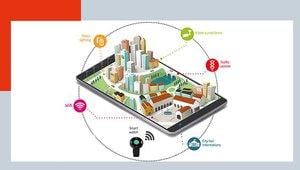
The course is a high level introduction to the constituents of the smart cities’ digital infrastructures, from the network up to the software layers. The proposed survey highlights the technical aspects to be taken into account to create practical services and to develop smarter cities involving citizen participation. In particular, it will impart information on privacy and interoperability aspects.

Mar 30th 2019
5-12 Weeks
Aeroecology: Exploring Biodiversity with Radar (Coursera) Coursera
University of Leeds

Aeroecology: Exploring Biodiversity with Radar (Coursera)

Learn how aeroecology, a discipline that studies airborne life forms, has been revolutionised with the use of radar with this unique course. This course is designed to help scientists, researchers as well as ecology enthusiasts to develop skills in using radar to explore biodiversity. You will explore the origins and evolution of radar from a military technology to a powerful tool with multiple scientific applications, including aeroecology. You will then be introduced to studying global biodiversity trends and learn how to evaluate traditional methods and emerging technologies used by scientists to monitor the natural world.

Aug 10th 2026
2 Weeks
Climate Change and Water in Mountains: A Global Concern (Coursera) Coursera
University of Geneva

Climate Change and Water in Mountains: A Global Concern (Coursera)

What is climate change? How are mountain regions affected by the evolution of water resources and their uses? What kind of risks need to be considered? Mountains are recognized as particularly sensitive physical environments where intense and rapid changes have in the past, and may increasingly in the future, place pressure on their resource base.

Aug 10th 2026
5-12 Weeks
Sustainable Agricultural Land Management (Coursera) Coursera
University of Florida

Sustainable Agricultural Land Management (Coursera)

This course will cover the agricultural and urban water quality issues in Florida, their bases, land and nutrient management strategies, and the science and policy behind the best management practices (BMPs). Students will learn to evaluate BMP research and analyze its role in determining practices and policies that protect water quality.

Aug 10th 2026
5-12 Weeks
Circular Economy - Sustainable Materials Management (Coursera) Coursera
Lund University,Delft University of Technology,EIT RawMaterials,VITO,Geological Survey of Denmark and Greenland - GEUS,National Technical University of Athens - NTUA,Ghent University

Circular Economy - Sustainable Materials Management (Coursera)

This course looks at where important materials in products we use every day come from and how these materials can be used more efficiently, longer, and in closed loops. This is the aim of the Circular Economy, but it doesn’t happen on its own. It is the result of choices and strategies by suppliers, designers, businesses, policymakers and all of us as consumers.

Aug 10th 2026
5-12 Weeks
Corporate Sustainability. Understanding and Seizing the Strategic Opportunity (Coursera) Coursera
Università Bocconi

Corporate Sustainability. Understanding and Seizing the Strategic Opportunity (Coursera)

In this course, thought leaders in a wide variety of management and economics fields illustrate how to assess and seize the opportunities offered by these global emergencies. They will offer new ways to understand the purpose and the logic of success of the business enterprise in this new context, providing ideas and examples on how to manage the transition process to realize the value creation potential from corporate sustainability for all involved stakeholders.

Aug 10th 2026
5-12 Weeks
Smart Cities - Management of Smart Urban Infrastructures (Coursera) Coursera
École Polytechnique Fédérale de Lausanne

Smart Cities - Management of Smart Urban Infrastructures (Coursera)

Learn about Smart Cities within the context of management of urban infrastructures. The introduction of Smart urban technologies into legacy infrastructures has resulted in numerous challenges and opportunities for contemporary cities and will continue to do so. This course will help you to understand how to make the best of these smart technologies in your cities’ legacy infrastructures.

Aug 14th 2026
5-12 Weeks
Discover Best Practice Farming for a Sustainable 2050 (Coursera) Coursera
University of Western Australia

Discover Best Practice Farming for a Sustainable 2050 (Coursera)

The Discover Best Practice Farming for a Sustainable 2050 Course is based on a clear vision: imagine best practice farming for 2050, start to implement these strategies now, all the while making sure it will still be profitable. At UWA we're doing just that with the Future Farm 2050 Project, set on a mixed-enterprise farm in Western Australia and we want you to learn how it can be done in your part of the world.

Aug 10th 2026
5-12 Weeks
Oil & Gas Industry Operations and Markets (Coursera) Coursera
Duke University

Oil & Gas Industry Operations and Markets (Coursera)

The oil and gas industry has an enormous impact on all aspects of daily life. Individuals, corporations, and national governments make financial and policy decisions based on the cost, use, and availability of these two natural resources. This two-week course looks at the two most fundamental aspects of the oil and gas industry, its operations and markets, each of which is addressed as a separate module in the course.

Aug 5th 2026
2 Weeks