Vehicle Dynamics I: Accelerating and Braking (iversity)

Vehicle Dynamics I: Accelerating and Braking (iversity)

From Bugatti Veyron to Volkswagen Beetle, from racing to passenger car: study about their acceleration and braking and learn from two applications from automotive mechatronics.

In this first part of Vehicle Dynamics, we illuminate the longitudinal dynamic aspects of vehicles.
Clear and brief: acceleration and braking.
In Detail: After an introduction, we will look at driving resistances and slip, explain the demand of power and limits of a car, then clarify the needs for a clutch and gears and look at the rear and front weights during acceleration and braking. The course will be finished by two applications from automotive mechatronics.
By the end of the course you will …

  • understand basic principles of accelerating and braking a car.
  • know the driving resistances and their influences on vehicle dynamics.
  • understand the discrepancy between demands and limits of powertrain.
  • understand the necessity of gears and clutch.
  • understand the correlation between braking, wheel load and recovery of energy.
  • be able to calculate simple properties of a car.

Course structure

This course has a total of 12 chapters, and the topics for each chapter are the following:
Chapter 1: Preliminaries
Chapter 2: Introduction and Rolling Resistance
Chapter 3: Resistances: Grading, Acceleration, Aerodynamic Drag
Chapter 4: Real and ideal characteristic maps
Chapter 5: Approximation of the ideal map: Clutch and transmission
Chapter 6: Driving performance and axle loads
Chapter 7: ABS: Anti-lock Braking System
Chapter 8: ACC
Chapter 9: Homework Solutions Chapters 1 -3
Chapter 10: Homework Solutions Chapter 4 - 5
Chapter 11: Homework Solutions Chapter 6 - 8
Chapter 12: Solution of the exam
Go to Class
MOOC List is learner-supported. When you buy through links on our site, we may earn an affiliate commission.

Related Courses

Nanotechnology: A Maker’s Course (Coursera) Coursera
Duke University,University of North Carolina,North Carolina State University

Nanotechnology: A Maker’s Course (Coursera)

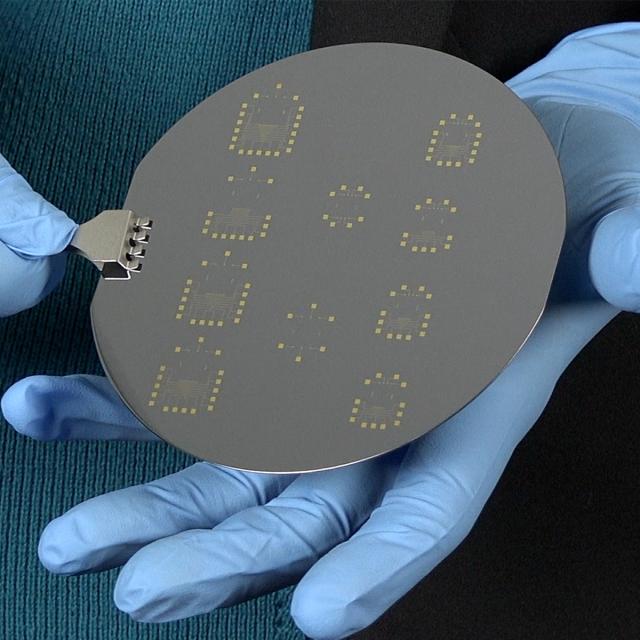
How can we create nano-structures that are 10,000 times smaller than the diameter of a human hair? How can we “see” at the nano-scale? Through instruction and lab demonstrations, in this course you will obtain a rich understanding of the capabilities of nanotechnology tools, and how to use this equipment for nano-scale fabrication and characterization.

Oct 5th 2026
5-12 Weeks
Modelling and Simulation using Simulink (iversity) Iversity
Hochschule RheinMain - Wiesbaden Rüsselsheim

Modelling and Simulation using Simulink (iversity)

Do you want to use Simulink® to simulate technical systems? Do you want to control real systems using an Arduino® microcontroller? Then this MOOC's for you. Enrol today! The main objective of this MOOC is to teach you how to use of Simulink® as a simulation tool suitable for a broad variety of application domains. We will specifically focus on topics of interaction of the simulation models with the real world using Arduino Microcontrollers and Simulink®'s corresponding Arduino Support Package.

No sessions available
5-12 Weeks
Railway Engineering: An Integral Approach (edX) EdX
Delft University of Technology,DelftX

Railway Engineering: An Integral Approach (edX)

Discover the science and complexity behind the exciting world of metro, tram and railway systems. Have you ever wondered what it takes to get your train on the right platform at the scheduled time every day? Understanding the complexity behind today’s sophisticated railway systems will give you a better insight into how this safe and reliable transportation system works. We will show you the many factors which are involved and how multiple people, behind the scenes, have a daily task that enables you to get from home to work. Journey with us into the world of rail - a complex system that connects people, cities and countries.

Oct 14th 2026
5-12 Weeks
Big History - From the Big Bang until Today (Coursera) Coursera
University of Amsterdam

Big History - From the Big Bang until Today (Coursera)

Welcome to this Big History course! In this course, renowned scientists and scholars from the University of Amsterdam and beyond will take you on a journey from the Big Bang until today while addressing key questions in their fields. After completing this journey you will have developed a better understanding of how you and everything around you became the way they are today.

Sep 28th 2026
4 Weeks
The Finite Element Method for Problems in Physics (Coursera) Coursera
University of Michigan

The Finite Element Method for Problems in Physics (Coursera)

This course is an introduction to the finite element method as applicable to a range of problems in physics and engineering sciences. The treatment is mathematical, but only for the purpose of clarifying the formulation. The emphasis is on coding up the formulations in a modern, open-source environment that can be expanded to other applications, subsequently.

Oct 5th 2026
13-24 Weeks
Controle de Sistemas no Plano-s (Coursera) Coursera
Instituto Tecnológico de Aeronáutica

Controle de Sistemas no Plano-s (Coursera)

Após esse curso você será capaz de esboçar o Lugar Geométrico das Raízes (LGR - Root Locus) do denominador da Função de Transferência em Malha Fechada a partir dos polos e zeros da Função de Transferência em Malha aberta. Você também será capaz de projetar controladores de avanço de fase para atender simultaneamente requisitos de desempenho de amortecimento e de velocidade da resposta.

Sep 28th 2026
5-12 Weeks
Fundamentals of Fluid-Solid Interactions (Coursera) Coursera
École Polytechnique

Fundamentals of Fluid-Solid Interactions (Coursera)

What is fluid-solid interactions ? It is what happens when the motions of a fluid and of a solid are somehow coupled. This happens all the time, around you when leaves flutter in the wind, inside you when your heart beats, above you when wings of a plane vibrate, under the sea... The idea behind this MOOC is to give you the basic tools to be able to predict and eventually mitigate things called flutter, galloping, sloshing, vortex-induced vibrations, added mass, to cite a few. We are going to consider any possible domains of applications such as civil engineering, aerospace engineering, nuclear engineering , ocean engineering, biomechanics and even food processing !

Oct 5th 2026
5-12 Weeks
Kinematics: Describing the Motions of Spacecraft (Coursera) Coursera
University of Colorado Boulder

Kinematics: Describing the Motions of Spacecraft (Coursera)

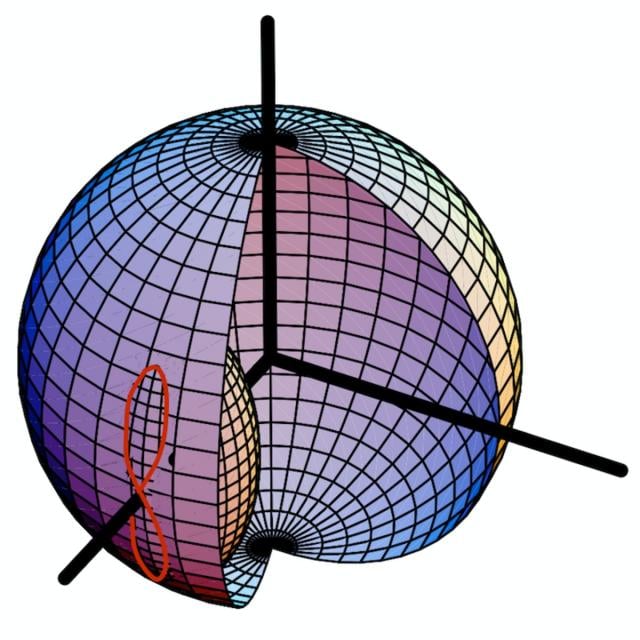
The movement of bodies in space (like spacecraft, satellites, and space stations) must be predicted and controlled with precision in order to ensure safety and efficacy. Kinematics is a field that develops descriptions and predictions of the motion of these bodies in 3D space. This course in Kinematics covers four major topic areas: an introduction to particle kinematics, a deep dive into rigid body kinematics in two parts (starting with classic descriptions of motion using the directional cosine matrix and Euler angles, and concluding with a review of modern descriptors like quaternions and Classical and Modified Rodrigues parameters).

Oct 5th 2026
4 Weeks
The Sun and the Total Eclipse of August 2017 (Coursera) Coursera
University of Colorado Boulder

The Sun and the Total Eclipse of August 2017 (Coursera)

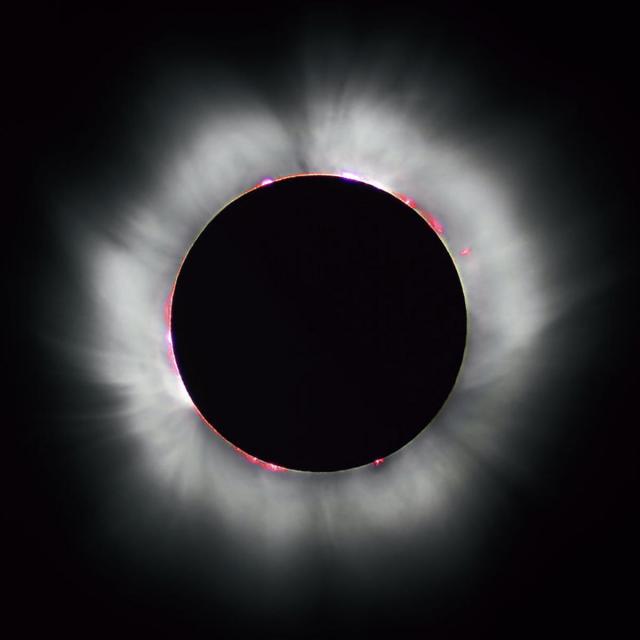
A total eclipse is one of the most spectacular sights you can ever see! It looks like the end of the world may be at hand. There is a black hole in the sky where the sun should be. Pink flames of solar prominences and long silver streamers of the sun's corona stretch across the sky. It gets cold, and animals do strange things. People scream and shout and cheer, and remember the experience their whole life. But total eclipses are important scientifically as well.

Sep 28th 2026
5-12 Weeks